USD boosted by bond yields, AUD vulnerable

The USD rallied further overnight helped by a Fed FOMC statement that was less downbeat than in January, with no hint of any further quantitative easing. In combination with a solid February retail sales report and upward revisions to December and January, US bond yields pushed higher. US 2-year Treasury yields hit their highest since the beginning of August 2011, which given the strong correlation with the USD, provided further support to the currency.

The highest FX sensitivity to yield differentials is found in JPY, AUD, SEK, and CAD over the past 3-months. However, among these US yields have only widened against Japan over recent days meaning this currency is the most vulnerable. For the other currencies their yields have actually been widening against the USD. Over the near term, the USD is set to remain well supported, especially as data releases over the rest of the week will maintain the tone of strengthening economic activity.

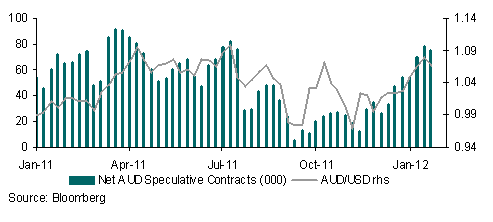
AUD looks increasingly vulnerable to further short term slippage. At least partly explaining the recent drop in AUD/USD is a narrowing in Australia’s yield advantage over the US. A spate of weaker data over recent weeks has helped to undermine the currency including Q4 GDP data which revealed a far slower pace of growth than had been expected. Weak jobs data reinforced the view that the economy is spluttering.

The net result is that Australian interest rate futures have rallied and implied yields have dropped in contrast to the US where futures have sold off in the wake of strengthening economic data. The casualty of all of this is the AUD and it appears that further downside risks are in store for the currency. Indeed my quantitative models show that the AUD continues to trade well above its short term ‘fair value’. For those wanting to take medium term long positions in the AUD I would suggest rebuilding longs around 1.03-1.04 versus USD.
USD finding support, AUD slipping

US bond yields look relatively well supported and in turn this is providing a degree of support for the USD. In this respect the firmer than consensus reading in a gauge of service sector activity, the February US ISM non-manufacturing survey (57.3 versus 56.8 in January) which contrasted with relatively weak service sector purchasing managers’ indices (PMI) in Europe, helped to maintain the healthy yield differential between the US and German bunds.

Combined with the generally ‘risk off’ sentiment pervading markets, in part due to the weaker PMI data, the USD looks to be in good form early in the week. The next market mover will be Wednesday’s ADP jobs report (a measure of jobs growth in the services sector), which will provide clues to Friday’s February non-farm payrolls outcome. In the meantime the fact that the speculative market (IMM) is positioned short USD (for the first time since September 2011) suggests that the room for further USD selling looks limited, with the USD index looking well supported above 79.00.

AUD and other high beta currencies lost more ground in the wake of the drop in the Chinese non-manufacturing PMI in February. AUD remains highly reactive to Chinese data releases given the high and growing exposure of Australia’s economy to China. Given the likelihood of a soft landing in China this year, the medium term damage to the AUD will be limited and I stil look for AUD/USD to reach 1.10 by year-end.

Over the near term however, there is scope for more AUD downside but much will depend on the outcome of the Reserve Bank of Australia (RBA) policy meeting. Expectations of rate cuts have diminished following recently better data and a less dovish statement at the last RBA meeting. A relatively benign statement will offer the AUD little support, leaving AUD exposed to a drop to technical support to just under 1.06 versus the USD.

Posted in Australia, FX, US. Tags: , , , , , . Leave a Comment »

Euro pain, Australian and New Zealand dollars vulnerable

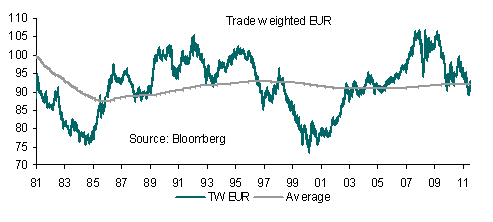
EUR appreciation has been painful for many, especially those looking for a turn in the currency over recent days. Unfortunately, for these investors, the EUR may yet strengthen further in the short term before any reversal is seen. Indeed, using valuations to justify a bearish view may not be a particularly strong argument at present given that the EUR trade weighted index is trading close to its historical average level while IMM data reveals that the speculative market remains significantly short EUR.

Additionally, my quantitative models reveal that the short term ‘fair value’ for EUR/USD is close to 1.40. While longer term fair value is undoubtedly much lower, it could take some time before the EUR declines to such levels. This is not encouraging news for EUR bears but there are some signs that the upmove in EUR/USD may not persist. Currently EUR/USD is trading above its 100-day moving average but since July last year, it has failed to remain above its 100 day moving average level for more than a few days.

There are definite signs that commodity currencies are topping out. Both the AUD and NZD have failed to extend gains over recent weeks. Perhaps valuation concerns are finally begging to catch up with these currencies (both are close to 2 standard deviations from average purchasing power parity while my quantitative models reveals a divergence with short term fair value) while speculative positioning according to IMM data remains at high levels. AUD and NZD even look stretched relative to interest rate differentials.

A wider than forecast January trade deficit in New Zealand did not bode well for the NZD but near term direction for both currencies will still depend on the gyrations in risk appetite given the strong correlation that both AUD and NZD have with risk aversion. Notably the the improvement in risk appetite has stalled in February, leaving AUD and NZD exposed to lofty valuations.

Greek tensions hit EUR, Aussie jobs boost AUD

Eurozone tensions continue to act as a weight on global market sentiment and the EUR. Talk of a delay of part or all of the second Greek bailout until after elections in April has intensified speculation of a disorderly Greek default. Chinese support for Europe expressed yesterday has done little to alleviate the strain. Attention will now turn to the meeting of the Eurogroup in Brussels on Monday.

Relatively positive US economic data including a jump in the NAHB homebuilders survey to its highest level since May 2007 and hints by Federal Reserve officials of support for more quantitative easing in the minutes of the Jan 24-25 FOMC meeting have failed to outweigh negative developments in Europe.

A ‘risk off’ tone will filter through markets today. Data wise, US Philly Fed and housing starts will continue the positive tone of US releases, while in Europe bond auctions in France and Spain will be watched closely.

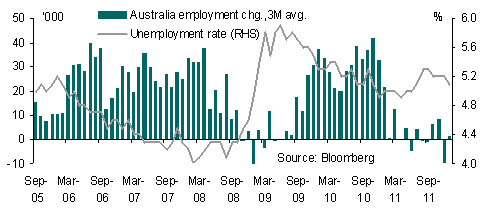
Australian jobs data for January came in stronger than forecast, rising by 46.3k compared to consensus of 10k. The unemployment rate surprisingly dropped to 5.1%. The increase in jobs more than made up for last month’s disappointment and highlights some signs of stability in job market conditions. Moreover, the data supports last week’s decision by the Reserve Bank of Australia (RBA) to keep rates on hold.


AUD jumped on the data but I expect the follow through to be limited especially given the fact that the AUD remains one of the most sensitive currencies to risk aversion. Upside will be restrained to resistance around 1.0788 versus USD today.

USD in a lose-lose situation, AUD caution

News that Moody’s Investor service cut the debt ratings on six European countries while revising its outlook on the UK’s and France’s AAA rating to “negative” dampened sentiment for the EUR. Markets will likely trade cautiously ahead of tomorrow’s meeting of European Union Finance Ministers especially as it appears that at least Germany and Netherlands remain sceptical of Greece’s austerity plans, which could frustrate the approval of a second EUR 130 billion bailout package.

The USD is firmer overnight but still struggling to make headway in an environment of improving risk appetite. The fact that USD speculative positioning has dropped sharply to its lowest level since September last year highlights a major shift in USD sentiment. The USD is currently in a lose-lose situation helped neither by economic data or risk appetite. For example a healthy gain in January retail sales expected today, will help to boost risk appetite which in turn will help maintain pressure on the USD.

Encouragingly for the USD, 2 year bond yields have been rising since the start of February in line with firmer economic data. However, rather than giving the USD a boost (except vs. JPY) it has been outweighed by the fact that bond yields elsewhere have risen even more aggressively. The net result is that the prospects for the USD to strengthen further look somewhat restrained over the short term.

AUD has benefited from a firmer tone to risk appetite at the start of the week but for a currency in which speculative positioning is fast approaching all time highs I would be cautious of adding to long positions at current levels. Remaining one of the most sensitive currencies to gyrations in risk appetite the AUD will continue to be mainly driven by global events especially the Greek saga.

Nonetheless, there a few data releases at home that will capture market attention, in particular the January jobs report on Thursday. After a surprisingly large 29.3k fall in December a bounce is expected in January, with around a 15k increase likely. The report will provide clues to just how long the RBA will pause in its rate cutting cycle. I suspect that even a positive outcome will have a briefly positive impact on AUD, with the currency set to struggle to break above resistance around its 2012 high at 1.0845 versus USD.