US dollar restrained further

The USD will continue to be restrained by poor weather conditions and lower US Treasury yields (around 2.6%), especially against the JPY which has also been supported by higher risk aversion and consequent safe haven demand. The USD index is at threat from dropping to its October 2013 lows around 78.998 (currently 79.828)

A similar story applies to the CHF, with USD/CHF hitting its lowest level since late 2011 around 0.8783. This pattern will not change in the short term, especially given the potential escalation in tensions in the Ukraine, keeping the CHF under upward pressure as safe haven inflows increase. EUR/CHF has dropped sharply as a result, with the resolve of the Swiss National Bank to support its line in the sand at 1.20 set to be tested shortly.

Risk currencies in contrast will likely come under growing short term pressure including AUD, NZD and many emerging market currencies. AUD/USD will likely trade with a heavy tone even though the RBA is unlikely to cut policy rates at its meeting tomorrow.

EUR benefitted from the upside surprise for Eurozone inflation but has run into resistance around 1.3800 versus USD. Speculative EUR positioning has continued to rise but the fact that CFTC IMM positioning has risen to above its 3 month average suggests that further EUR gains will be more limited.

Indeed although the USD continues to be restrained by weaker data and lower US yields, the potential for a dovish surprise from the ECB will limit the ability of the EUR to capitalise on USD weakness this week. Strong technical resistance for EUR/USD will be found around 1.3894 (2013 high).
Posted in eurozone, Japan, US. Tags: , , , , . Leave a Comment »

AUD resilient, JPY downside risks

Against the backdrop of concerns about Chinese growth and a weaker path for China’s currency, the AUD has failed to make any headway over recent days. Perhaps more interesting is the fact that AUD remains one of the best performing currencies despite such concerns. From a positioning perspective the market is still net short AUD, albeit less so over recent weeks, implying that there is still scope for short covering.

The rally in commodity prices over recent days will likely have helped the AUD but notably it’s the wrong commodities that are rallying. For instance, iron ore prices have dropped sharply. Nonetheless, improving risk appetite is giving AUD some relief and downside risks to the currency remain limited, with its resilience set to continue. Consequently AUD/USD is set to see strong buying interest on any dip to technical support around 0.927.

USD/JPY has been range bound over recent sessions failing to make any significant headway above the 102.50 level. The consolidation in US Treasury yields is a factor capping gains in USD/JPY but an improvement in risk appetite and gains in Japanese equity markets will likely help fuel some downside risks for JPY over the near term.

There are also signs that after several weeks of net inflows, Japan is finally beginning to register renewed outflows of portfolio capital which ought to add further downward pressure on the JPY. The fact that the speculative market remains net short JPY may limit the pace of JPY depreciation, however. It is difficult to see JPY volatility decline further from already very low levels but a break of current ranges may require a bigger move in US Treasury yields. We remain long USD/JPY at 102.39.

Remaining constructive on AUD

In contrast to the consensus view I remain rather constructive on the AUD. As reflected in the RBA minutes today the central bank has shifted its stance somewhat, effectively closing the door on further policy easing while finding it difficult to talk the currency lower as inflation pushes higher.

Separately although Chinese growing is slowing this year assuming that growth does not fall too far and too quickly the AUD is unlikely to suffer much from this source.

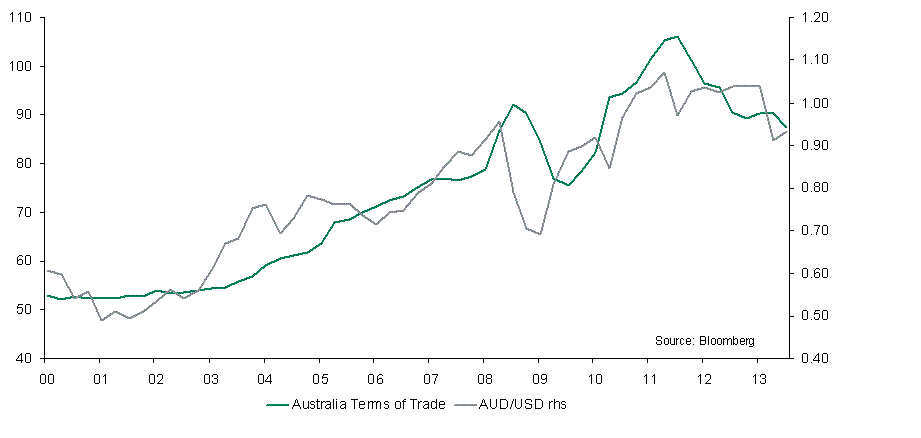
A lot bad news for AUD has been largely priced in. Firstly, the drop in AUD/USD has been consistent with the deterioration in terms of trade.

Secondly Australia’s broad basic balance position is quite healthy as strong direct investment and portfolio inflows counter a current account deficit.

Thirdly, even when looking at China’s growth trajectory the AUD is at a level which discounts this. Near term resistance for AUD/USD is seen around 0.9087.

AUDTOT

Posted in Australia, FX. Tags: . Leave a Comment »

AUD hit by weak jobs data

AUD has been one of the best performing major currencies so far in February. Better than expected Chinese trade data released yesterday was a boon for the AUD given Australia’s strong trade links with China. Moreover, as markets have backed away from RBA policy easing expectations AUD has gained a sound footing.

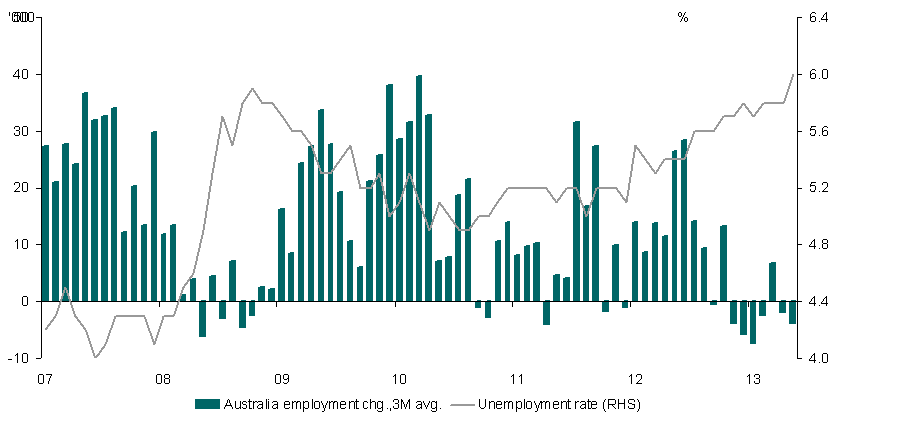
Positive sentiment for the AUD was dashed today however, following the release of January jobs data which came in worse than expected at -3.7k versus +15k consensus. The details were weak too, with the unemployment rate rising to a 10 year high of 6% and participation rate dropping to 64.5%.

The data will clearly restrain AUD in the short term, but is unlikely to spark renewed risks of further policy easing given a rise in inflation pressures. In this respect, AUD is set to continue to show some resilience over coming weeks. Near term AUD/USD support is seen around 0.8915.

AUDjobs

Posted in Australia. Tags: , , . Leave a Comment »

Australian dollar rallies, Korean won bounces back

On the currency front, the best performers so far this year have been an odd combination of JPY, NZD and AUD versus USD. JPY has benefitted from both compressed yield differentials with the US and risk aversion but its gains are likely to reverse over the coming weeks as these factors reverse.

I have been generally more constructive on AUD and NZD than the consensus and remain so. Both AUD and NZD look oversold and will gradually appreciate further, especially as both the RBA and RBNZ have now likely ended their easing cycles, with the latter set to raise policy rates by the end of this quarter. AUD/USD breached 0.90 this morning helped by a strong business confidence reading for January.

Most Asian currencies have rebounded so far this month, with some of the biggest losers over January recording gains. The KRW has been the best performer in February recording gains despite continued outflows of equity capital. Korea has recorded $1.26 billion in equity outflows so far this month, the highest among Asian countries.

In contrast bond inflows into Korea have been relatively solid over January and this continued into February, helping to provide some support to KRW despite equity outflows. Helping the KRW is the fact that is much less sensitive to US bond yields than many other Asian currencies helping it to avoid any fallout from higher US yields in February. USD/KRW is on path for a break below support around 1070.