EUR range, CAD looks good versus AUD

Ahead of the European Central Bank (ECB) meeting and outcome of the Greek private sector involvement (PSI) debt swap it is very difficult to see the EUR moving out of ranges. I expect no surprises from the ECB and therefore little FX impact. Downward revisions to ECB growth forecasts will however, underpin the more negative tone to the EUR exhibited over recent days.

The bigger risk is the outcome of the PSI. Reports that Greece is nearing the minimum level of PSI participation of 66% will help erase market concerns of a complete collapse of the debt deal, but the risk of forcing a collection action clause and triggering credit default swaps (CDS) remains very much alive. EUR/USD is unlikely to recoup much of its recent losses against this background but will also not sustain any drop below technical support around 1.3055.

The CAD has pivoted around the parity level with the USD over recent weeks, showing little inclination to undertake a significant move in either direction. Notably USD/CAD has failed to sustain gains above its 200-day moving average level around 0.9997. Nonetheless, the CAD has held up relatively well compared to its commodity currency peers, specifically the AUD and NZD, which have both fallen over recent days.

The breakdown in correlation highlights the fact that CAD is regaining some of its old allure as a ‘turbo dollar’. My quantitative estimates show that USD/CAD has some further downward potential but I prefer to play potential CAD upside versus the AUD. The Bank of Canada (BoC) meeting today will do little to derail the CAD, with an unchanged policy decision in prospect, leaving the CAD to maintain gains against AUD.
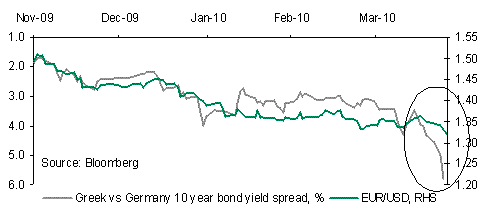
Greek debt blows out, EUR takes a hit

In light of the continued blow out in Greek bond yields, CDS and spreads versus German bonds, here is a chart of what it means for the EUR.   Unfortunately it’s not good news as it implies that EUR/USD should be trading closer to 1.20.   

The Eurostat report that Greece’s public sector deficit to GFP in 2009 was bigger than initially thought (13.6% compared to the original Greek government estimate of 12.7%) has done further damage.  Moody’s ratings downgrade of Greece to A3 dealt a further blow.  

This means that any attempt to reduce the deficit is now more difficult whilst the probability of a debt restructuring is growing , with rumours speculating that the haircut on Greek debt could be as much as 50%. 

Ouch.

Not quite a Greek tragedy, but close

Not quite a Greek tragedy but getting there. Greece’s announcement of a three-year plan to reduce its burgeoning fiscal deficit has not convinced markets. Greece’s 5-year CDS widened out to around 333bps whilst 10-year sovereign spreads widened further. There has been some contagion in other European countries notably Spain, Portugal, Ireland, Italy, Poland etc.

The plan which aims to cut the budget deficit from 12.7% to 2.8% of GDP by the end of 2012 appears to be very optimistic if not unrealistic. One of the main problems is not related to the magnitude of deficit reduction but to the starting point of 12.7% of GDP which is more realistically around 14-15% of GDP.

The deficit is planned to be cut by 4% this year alone which seems tough given the likelihood that the economy will contract this year and thereby increase the cyclical portion of the deficit. However, the major concern is the ability of the Greek authorities to cut nominal wages and pensions and in areas where inefficiency and corruption are widespread, such hospital and defense spending.

Greece needs to convince the European Commission and if the negative reaction by markets is anything to go by it may need further revisions including more drastic spending cuts as well as concrete plans for structural reforms. Greece will also find it difficult to ignore the skeptical market reaction given that the country aims to raise around EUR 54 billion to fund its public debt.

Greek concerns and similar countries elsewhere in Europe will likely act as a major weight on the EUR in the days ahead. Interestingly GBP seems to be a beneficiary. The situation does not appear to have a happy ending in sight and more pain looks likely. Rumours/talk of a Eurozone break-up are likely to intensify, however unrealistic such an event may be. ECB President Trichet dampened speculation in his speech following the ECB meeting that Greece could exit the euro but also confirmed that there would be no special treatment for Greece.

AUD and NZD outperformance

Just as the euro looked as though it was showing some signs of rebounding following the battering it received in the wake of the downgrade of Greece’s credit ratings, S&P placed Spain on credit watch negative from neutral, which helped drag EUR/USD all the way down again. Expect more to come as sovereign risk concerns / fiscal deficit remain in focus. EUR/USD was helped by the usual sovereign demand, preventing a test of technical support around 1.4625 but another push lower is likely over the short term.

Despite a tough budget from Ireland yesterday, it alongside the likes of Latvia, Ireland, Hungary and Portugal will remain on the ratings agencies’ hit lists. Eurozone periphery bond spreads have widened sharply against bunds but even larger countries in Europe such as Italy have seen an increase in funding costs. Added to these concerns are the lingering uncertainties about Dubai as reflected in the continued rise in CDS.

In contrast, growth worries are receding quickly in Australia where another robust jobs report was released. Employment rose 31.2k in November, with an upward revision to the previous month, to 27.2k from 24.5k initially. The details looked good too, with much of the jobs increase coming from full time hires (30.8k). The jobless rate fell to 5.7% compared to 5.8% in October. Taken together with the hawkish slant to the RBNZ statement, the data will help keep the AUD and NZD resilient to any sell off in risk trades.

The decision by the RBNZ to leave interest rates unchanged at 2.5% came as no surprise. However, Governor Bollard did shift away from the earlier pledge not to hike interest rates until H2 10 and stated that a hike could come around the middle of 2010. The RBNZ also upgraded its growth forecasts. A rate hike could come even earlier in my view, a factor likely to keep the NZD well supported.

Markets will digest more interest rate decisions today, in the UK and Switzerland. No change is likely from both the BoE and SNB but the issue of QE will remain at the forefront, especially given the split decision by the BoE MPC at the last meeting. As for the SNB the usual concerns about CHF strength are likely to be expressed but the tone of the SNB’s comments are likely to remain dovish, expressing little urgency to begin implementing an exit strategy.

The US data slate is light but does include weekly jobless claims and October trade data. There will be more interest than usual on the claims data given the surprise in last week’s payrolls report. Claims have been on an improving trend declining at a more rapid pace than previous recessions and markets will eye the numbers to determine whether they point to further improvement in payrolls or whether they suggest the November data was merely an aberration.