
Reading this article in the WSJ “Hedge Funds Try ‘Career Trade’ Against Euro“, it would seem that there is an increasing amount of investors, especially hedge funds, looking for the EUR to fall to parity against the USD. It is hard to believe that only a few months ago it looked as though the EUR was heading back towards its previous highs around 1.60 hit in April 2008.
Following the surge in the USD during the financial crisis EUR/USD dropped to below 1.25 in November 2008 and then managed to eek out some gains as risk appetite improved and the USD came under pressure during most of 2009.
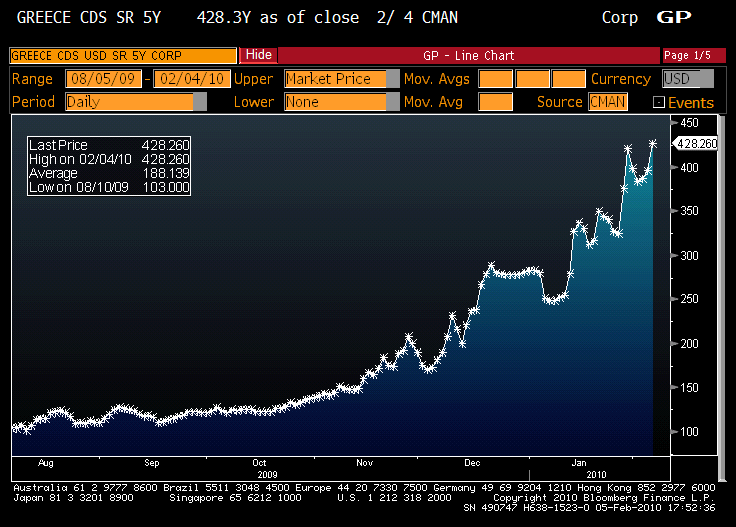
The picture towards the end of 2009 reversed as initially investors covered short USD positions and then bought USDs on rising risk aversion and growing problems in Greece. The trend looks well set now and a move even lower beckons for EUR/USD.
So how low will it go? It is tempting to say that record short speculative positioning in EUR/USD means that the market is already stretched and like an elastic band pulled too far the EUR could rebound sharply. On the other hand the band could also snap and in the case of EUR/USD this would imply a collapse in the currency as other investors join the bandwagon of selling EUR.
It is difficult to see any quick resolution to the problems in Europe at present. Growing social/ labour unrest in the wake of austerity measures to cut burgeoning fiscal deficits highlight that implementing budget cuts mean tough political choices. Greece has borne the brunt of this unrest but it appears to be spreading across Europe.
In the past countries could devalue their way out of their debt problems but this solution is not available to individual countries in the eurozone. Another option is to inflate your way out of the debt but again this is something that the European Central Bank (ECB) will not tolerate and could do much greater long term damage.
So the only viable solution is to cut spending, raise taxes, implement reforms and raise retirement ages, all of which will fuel plenty of tensions in the countries concerned. The difficulty of raising taxes was highlighted by the fact that even Greek tax inspectors have gone on strike, a fact which makes a mockery out of the government’s plans.
Assuming that austerity measures are actually carried out it will mean that growth in Greece and many of the other bigger countries in Europe that carry out these measures will weaken further, making a “double-dip” scenario for the eurozone economy more likely.
The bottom line is that it is extremely difficult to see the EUR make a sustainable recovery against this background. Yes, the market is positioned short but so what? We may see short positioning increase further before any stability in the EUR is achieved.
The last time EUR/USD was at parity was in December 2002. Given the lack of alternatives in Europe at present another test of parity does not look as inconceivable as it did only a few months ago.

 ECONOMETER