US dollar under pressure

US stocks have clawed back almost all their losses registered in the wake of the mini emerging markets crisis in January. The S&P 500 closed at 1838.63, up 0.48% on Friday. The rally in stocks is impressive considering the run of weaker than forecast US data releases over recent weeks although investors appear to be placing much of the blame on poor weather conditions. The gains in US stocks echoes the generalized improvement in risk appetite, with sentiment towards emerging markets also having stabilized.

The USD continues to be a casualty of the firmer risk tone, with a lack of upward momentum in US yields also not helping the currency (10 year US Treasury yield around 2.7428%). The USD index is now close to its lows for the year around 80.00, with the JPY and commodity currencies the biggest gainers so far this year among major currencies. In terms of emerging market currencies the Indonesian rupiah and Thai baht have been the best performers versus USD.

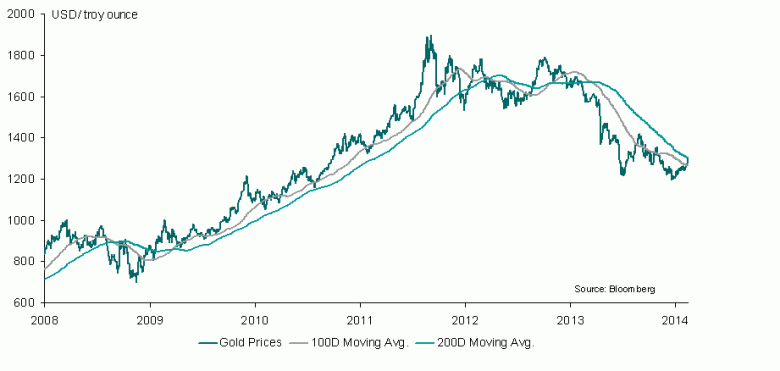
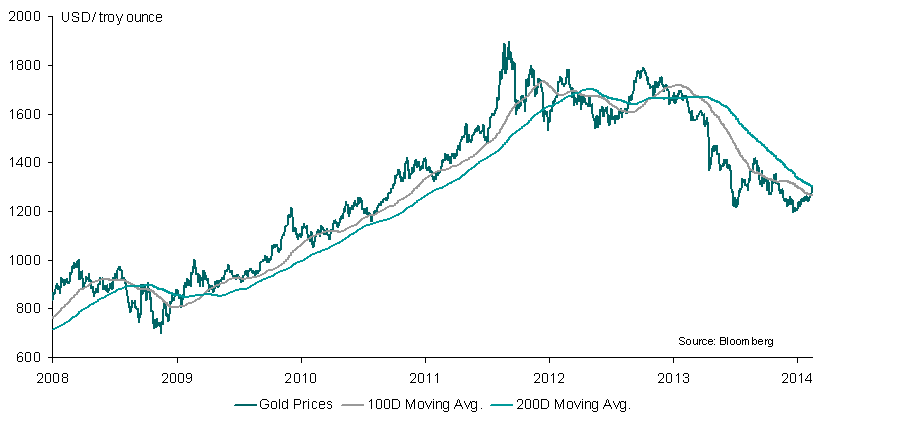
Despite the firmer tone to risk, gold prices have continued their ascent, closing above their 200 day moving average at the end of last week. As I wrote in Gold breaches its 200 day moving average, I don’t expect the rally in gold prices to be sustained. Some market consolidation is likely today with a lack of key data releases and a US holiday (President’s Day) keeping activity subdued.

Posted in US. Tags: , , , . Leave a Comment »

Gold breaches its 200 day moving average

AUDjobsGold prices have risen sharply since the beginning of the year, up over 8% year to date. Higher risk aversion, lower US yields and a weaker USD have boosted gold. Consequently gold prices are trading around their 200 day moving average level around 1303.70. This could prove significant, with a close above the 200 day moving average important to sustain any short term uptrend,

Encouraging signs for gold bulls
ETF investor demand appears to have stabilised over recent weeks while CTFC IMM demand appears to be picking up. This data suggests that Investors are tentatively moving back into gold. The poor performance of equity markets since the start of the year has indeed made gold look more attractive as an investment while lower yields mean that the opportunity cost of holding gold has lessened.

Chinese demand for gold increases sharply
Additionally gold demand from China has picked up strongly. China Gold Association data showed that Chinese demand for gold jumped 41% to 1,176 tonnes last year. Chinese demand likely overtook India’s last year. Oddly Chinese import and production data were even stronger, making it possible that China bolstered its reserves with gold last year.

Indian restrictions hit demand
India restricts demand for gold via import restrictions. However, there is a lot of pressure domestically to remove these restrictions and a review is scheduled to take place at the end of the fiscal year at end March 2014. If these restrictions are removed or at the least weakened, Indian gold imports could increase sharply but it seems unlikely that imports will rise as strongly as previous years.

Moreover, the Indian government will want to avoid an adverse impact on India’s current account deficit, suggesting that a complete removal of gold import restrictions is unlikely. However, in the meantime the restrictions are having a major impact on Indian gold demand which dropped sharply last year.

Gold rally to fade
Risk appetite has already improved sharply over February and while I continue to expect bouts of volatility in the weeks and months ahead I do not expect to see sustained periods of elevated risk aversion. Therefore any boost to gold from rising risk aversion is set to prove temporary in the months ahead.

Secondly global inflation pressures remain well contained. Inflation for the major economies is likely to remain benign. Only in Japan is inflation expected to pick up but this is an aim of policy and is not expected to result in a bout of gold buying to hedge against such inflation risks. Therefore, gold demand as an inflation hedge will not take place.

Two major drivers of the gold price are US bond yields and the US dollar. Both are highly correlated with gold price gyrations, with gold falling as US yields and the USD rise and vice-versa. Both yields and the USD are set to rise over the coming months. Consequently any short term gold price gains are unlikely to hold, with the metal set to resume its decline.

Awaiting Yellen

There was very little activity of note overnight, with markets taking on the appearance of grounding to a halt ahead of the first semi-annual testimony to Congress by new Fed Chairman Yellen later tonight. A Japanese holiday today will act as another dampener on activity.

Weaker data and/or emerging market tensions are highly unlikely to deter Yellen and the Fed from maintaining a tapering path but of interest to markets will be any indication that the unemployment rate is to be deemphasized given its misleading fall over recent months. With little else of note on tap until the release of US retail sales and Eurozone Q4 2013 GDP later in the week Yellen’s speech will set the tone for markets over coming days.

The biggest market movers over recent days have been the VIX index, natural gas and gold prices. The VIX has fallen sharply reflecting a major turnaround in risk appetite from an elevated level, which has been corroborated by our risk barometer moving back into risk ‘neutral’ territory from risk ‘hating’.

Nonetheless, although emerging market fears have calmed down the path ahead is still likely to be a volatile one. Natural gas prices have also dropped reflecting expectations of milder weather ahead in the US. In contrast gold prices have rallied further extending gains this year to around 6%. Lower US yields and a weaker USD have helped to buoy gold prices over recent days while news of record gold demand and supply from China has also helped.

USD momentum fading, EUR and gold supported

Although Syria tensions continue to linger in the background risk assets performed well overnight helped in part by Chinese trade and inflation data released over the weekend. Meanwhile the weaker than forecast US jobs report has eased some of the markets fears about tapering, with the Fed looking less likely to pare back asset purchases too aggressively. Even the situation in Syria looks a little less tense as US President Obama opened the door to holding off any air strikes on Syria if the country handed over its stock of chemical weapons as proposed by Russia. A limited data slated today, with only second tier releases on tap suggests there will be some positive follow through to markets today.

The USD has lost momentum in the wake of last Friday’s US employment report and subsequent drop in US yields. The USD may be helped by a relatively firm US retail sales reading expected at the end of the week but tapering uncertainty will likely act to restrain any topside. Additionally, underperformance of US bonds and equities alongside foreign selling of US portfolio assets (especially by reserve managers) highlights the uphill struggle faced by the USD in the short term. Notably aggregate net USD positioning increased again last week, with net long USD positioning around its three month average, highlighting the lack of USD momentum at present. Further USD gains may need to wait for when the Fed finally begins to taper next week.

EUR has been the most resilient major currency against the USD this year. It has easily quashed expectations that it would face a difficult time in the wake of a weaker growth trajectory and ongoing peripheral worries. Admittedly the Eurozone economy remains weak and will contract this year, but there are already signs of improvement, with positive data surprises being revealed. Moreover, the Eurozone external position has strengthened due to strong portfolio inflows and a healthy current account surplus. Although there a number of risks ahead including Italian political tensions and German elections the near term outlook for the EUR looks constructive, with strong technical support seen around 1.3220.

Gold has moved into consolidation mode, with a range of 1360-1400 being observed over recent days. Lower US bond yields, and a weaker USD in the wake of the softer US August jobs report suggests will offer some support to gold prices while speculative positioning has shown a significant improvement over recent weeks, with positioning well above the three month average. Some resolution towards ending South African strikes and improving risk appetite may dampen the upside but we expect gold prices to be relatively resilient over the coming weeks as seasonal demand kicks in (our analysis shows that historically gold has a positive month in September) with a retest of the recent high around USD 1434 set be breached over the coming week.

Posted in eurozone, US. Tags: , , . Leave a Comment »

Equity outflows from Asia accelerate

A slate of better than expected US data releases including May durable goods orders, new home sales and June consumer confidence data (the latter two releases reaching their highest levels since 2008) helped to boost risk appetite, spurring equity markets higher and the VIX ‘fear gauge’ lower.

Firmer US data came alongside soothing comments from China’s central bank PBoC, about liquidity conditions in the banking sector, with an official noting that it will keep money market rates at “reasonable levels”. The European Central Bank’s Draghi added to the fray by noting that Outright Monetary Transactions (OMT) was even more essential now, highlighting the ongoing backstop provided by potential ECB peripheral bond purchases.

Meanwhile the positive US data releases helped to push Treasury yields higher, with the 10 year yield breaching 2.6%. Commodities remained under pressure, with higher yields in particular weighing on gold prices.

The calendar is rather light today and will provide little market direction, with an Ecofin meeting in Europe, UK spending review and US Q1 GDP revision in tap. Expect some positive follow through from the firmer tone to European and US equities overnight which will support risk assets including EM currencies although concerns about tapering are from over.

The rout in equity markets over recent weeks has had a devastating impact on equity flows to Asia. The outflow of equity portfolio capital from Asia accelerated sharply over June. Month to data Asia has recorded $10.2 billion in outflows, a massive move out of the region given that total inflows year to data have now dropped to $8.7 billion. One more month at this pace of outflows would see Asia registering net outflows for the year.

Indonesia, South Korea and Taiwan have been hit the most over June but no country has recorded net equity inflows. Year to date India has registered the strongest equity inflows of $14.7bn while South Korea has registered the biggest outflows of $7.3bn.