EUR higher but resistance looms

EUR and risk currencies in general were buoyed by the passage of the austerity bill in the Greek parliament. The implementation bill is also likely to be passed later today opening the door for the disbursement of EUR 12 billion from the European Union / IMF from the EUR 110 bailout agreed for the country. Combined with news that German banks are progressing towards agreeing on a mechanism to roll over Greek debt alongside French banks as well as likelihood of an European Central Bank (ECB) rate hike next week, the EUR is set to remain supported over the short term.

Nonetheless, it once again looks as though a lot of good news is priced in and it would be surprising if EUR/USD could extend to above strong resistance around 1.4557 given the many uncertainties ahead, not the least of which includes the stance of ratings agencies on any Greek debt rollover.
USD/JPY is the only major currency pair that is correlated with bond yield differentials at present (2-year yields) and therefore it should not come as a surprise that USD/JPY has moved higher as the yield differential between the US and Japan has widened by around 10bps over the past week. Indeed, yesterday’s move above 81.00 was spurred by the move in yield differentials although once again the currency pair failed to build sufficient momentum to close above this level.
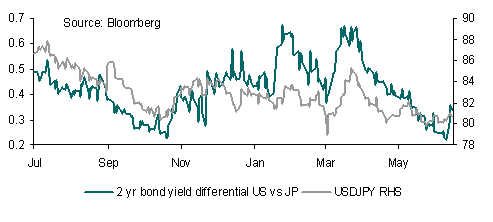
Further gains will require US bond yields to move even higher relative to Japan but perhaps the end of QE2 today may mark a turning point for US bond markets and currencies. The end of QE2 taken together with a jump in bond supply over coming months, will see US Treasury yields will move sharply higher, implying much more upside for USD/JPY.

AUD has bounced back smartly over recent days, with the currency eyeing resistance around 1.0775 versus USD. A general improvement in risk appetite has given the currency some support but markets will be unwilling to push the currency much higher ahead of the Reserve Bank of Australia (RBA) meeting next week. On the plus side, there are no rate hikes priced in for Australia over the remainder of the year, suggesting an asymmetric risk to next week’s meeting.

In other words, unless the RBA openly discusses rate cuts in the statement, the AUD will likely remain supported. Conversely any indication that a rate hike may be in prospect will be AUD supportive. In any case we continue to believe the AUD offers better value especially relative to NZD and maintain our trade idea to buy AUD/NZD.
US Dollar Back On Top As Yields Rise

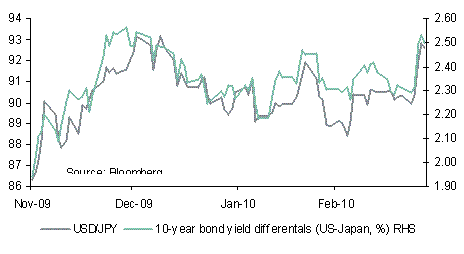
Two issues are driving markets and both are playing negatively for sentiment; the rise in G7 bond yields and the outcome of the EU summit. At a time when G7 bond yields have been pushing higher the poor response to the US $32 billion 7-year note sale contributed to a further increase in yield. The sale resulted in a yield of 3.374%, which was higher than expected, and a bid/cover ratio of 2.61. A combination of large US Treasury supply, medium term funding issues and signs of improving growth suggest no let up for US Treasuries.

The most reactive currency to yield differentials is currently USD/JPY. The 1-month correlation between USD/JPY and US/Japan bond yield differentials is a high 0.85. The spike in US 10-year Treasury yields especially relative to JGB yields (by around 21 basis points this week) is the main contributor to the jump in USD/JPY over recent days. Given the bearish outlook for US bonds in the near term, it suggests more upside for USD/JPY but also increasingly for other currencies against the USD as the importance of yield increases. Immediate USD/JPY technical resistance is seen around 93.21, with support at 91.87.

The other event of note yesterday was developments surrounding Greece in the European Union summit though in truth it was probably the strong comments by ECB President Trichet that had the bigger impact on EUR sentiment. The final EU communiqué noted the readiness for bilateral loans to Greece and substantial International Monetary Fund (IMF) financing in a Greek aid mechanism. Importantly and a likely sop to Germany, any aid will not contain a subsidy for Greece. Aid by the EU and IMF will only be provided in the event of “very serious difficulties”.

The EU agreement means that no money will be forthcoming immediately, but at least there will be a back stop should Greece have financing difficulties over coming weeks, which will act as an important safety net ahead of substantial Greek debt rollovers. This news was supplemented by the fact that ECB will not raise its minimum collateral requirements at the end of the year, which means that Greek debt will not be excluded in the event of a ratings downgrade. This is good news for Greece.

The combination of the fact that Greece will have to borrow money only at market rates, ongoing worries about other EU countries fiscal problems and European Central Bank (ECB) President Trichet putting somewhat of a dampener on sentiment by criticizing IMF involvement in the deal, will keep the EUR under pressure. Although Trichet later reversed his comments, the damage was already done and any relief to EUR/USD will be short-lived. The currency pair is increasingly poised for a further downside move, with the next target at 1.3213 on the path towards an eventual test of 1.3000.