EUR/USD edging towards 1.20

There hasn’t been much of a respite before Eurozone concerns have resurfaced. Spain and Greece are once again in the spotlight, with the formal approval of a bank bailout for the former providing little solace as speculation of a full scale sovereign bailout grows. The fact that two Spanish regions have asked for government help, with more likely in the pipeline, has only acted to reinforce such concerns.

As for Greece, the halting of a bailout tranche due to failure to meet targets, the European Central Bank (ECB) decision not to accept Greek debt as collateral and the visit of the Troika (EC, ECB. IMF) will keep markets nervous as default fears intensify. Unsurprisingly Eurozone peripheral bond yield have come under renewed pressure while core Eurozone yields have turned negative in some cases.

Spanish yields have moved above the critical 7% threshold while the EUR has tanked versus USD and on the crosses as it increasingly takes on a funding currency role and makes its way towards the 1.20 level versus USD that I expect it to test soon.

Hopes of further monetary stimulus, especially in the US and China have provided some support to markets recently but the provision of drugs will not cure the patient this time around. Even relatively decent US corporate earnings, with around 2/3 of S&P earnings released beating admittedly lowered expectations so far, have failed to stop the rout.

Big cap defensive and high dividend companies have fared well, giving a degree of resilience to US equities which are up over 8% (S&P 500) this year, but with around 171 companies set to deliver results this week it is not clear that this will continue.

Weakening US data, with a deceleration in US Q2 GDP set to be revealed this week will provide more evidence that US economic momentum is slowing. Nonetheless, as long as US Fed quantitative easing is not an imminent prospect the USD will likely find plenty of support as risk aversion creeps back into the market psyche.
Sell Euro into rallies

There was limited respite for markets in yesterday’s thin market trading, with any bounce in risk appetite sold into quickly. This is exactly the pattern of trading that is likely to take place over coming weeks as Greece remains in the spotlight while Spanish banking woes garner more attention.

Taken together with rising global growth worries (note the Baltic Dry Index is turning over again) suggests that it will be very difficult for markets to drag themselves out the quagmire. The lack of major data releases today, with only German inflation and US consumer confidence of note, suggests that there will be little for markets to take their minds off the Eurozone debt crisis.

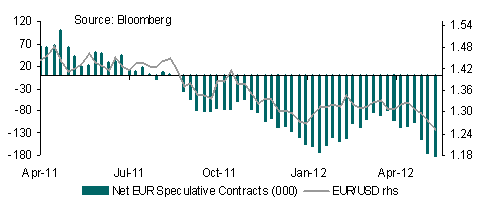
EUR/USD hit a high around 1.2625 helped no doubt by the fact that positioning was at record short levels. However, the bounce was quickly sold into leaving the EUR vulnerable to a drop below 1.2500 today. A renewed sell off in Spanish debt as banking sector concerns intensify dented any positive impact from weekend polls in Greece showing more support for pro bailout parties.

There is little on the data front today aside from German CPI leaving markets to continue to ponder on peripheral country woes. “Grexit’ fears have by no means been quelled as the reduction in bank deposits continues to show. EUR/USD will struggle to make any headway against this background, with further probing below 1.2500 likely in coming days.

The job of the Swiss National Bank has become increasingly tougher. Speculation of a ‘Grexit’ and continued flight of capital from Greece as well as other peripheral countries means that there is more prospect of upside for the CHF than downside versus EUR. The EUR/CHF 1.2000 floor has not deterred investors from parking such capital in CHF much to the chagrin of the SNB which has even warned about implementing capital restrictions.

Elevated risk aversion means that inflows of capital to Switzerland from the Eurozone periphery will persist. As a result EUR/CHF looks set to trade around the 1.2000 floor for some time to come, with the risk that the SNB has to increasingly buy EUR to protect the floor.