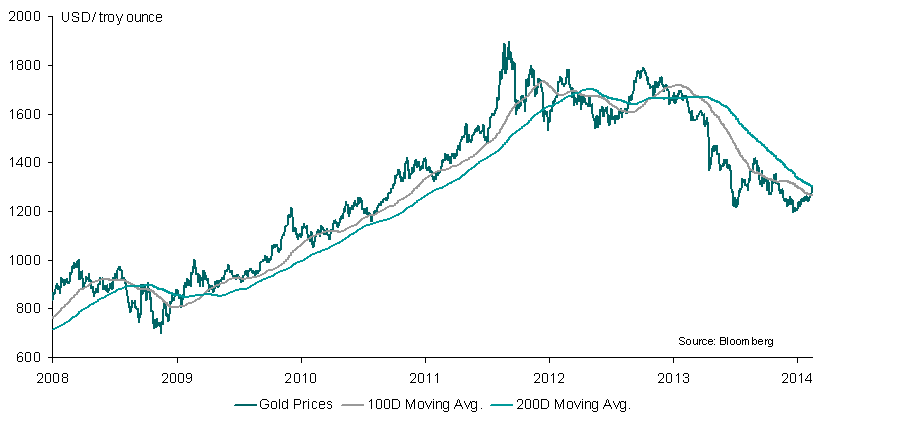
Gold breaches its 200 day moving average

AUDjobsGold prices have risen sharply since the beginning of the year, up over 8% year to date. Higher risk aversion, lower US yields and a weaker USD have boosted gold. Consequently gold prices are trading around their 200 day moving average level around 1303.70. This could prove significant, with a close above the 200 day moving average important to sustain any short term uptrend,

Encouraging signs for gold bulls
ETF investor demand appears to have stabilised over recent weeks while CTFC IMM demand appears to be picking up. This data suggests that Investors are tentatively moving back into gold. The poor performance of equity markets since the start of the year has indeed made gold look more attractive as an investment while lower yields mean that the opportunity cost of holding gold has lessened.

Chinese demand for gold increases sharply
Additionally gold demand from China has picked up strongly. China Gold Association data showed that Chinese demand for gold jumped 41% to 1,176 tonnes last year. Chinese demand likely overtook India’s last year. Oddly Chinese import and production data were even stronger, making it possible that China bolstered its reserves with gold last year.

Indian restrictions hit demand
India restricts demand for gold via import restrictions. However, there is a lot of pressure domestically to remove these restrictions and a review is scheduled to take place at the end of the fiscal year at end March 2014. If these restrictions are removed or at the least weakened, Indian gold imports could increase sharply but it seems unlikely that imports will rise as strongly as previous years.

Moreover, the Indian government will want to avoid an adverse impact on India’s current account deficit, suggesting that a complete removal of gold import restrictions is unlikely. However, in the meantime the restrictions are having a major impact on Indian gold demand which dropped sharply last year.

Gold rally to fade
Risk appetite has already improved sharply over February and while I continue to expect bouts of volatility in the weeks and months ahead I do not expect to see sustained periods of elevated risk aversion. Therefore any boost to gold from rising risk aversion is set to prove temporary in the months ahead.

Secondly global inflation pressures remain well contained. Inflation for the major economies is likely to remain benign. Only in Japan is inflation expected to pick up but this is an aim of policy and is not expected to result in a bout of gold buying to hedge against such inflation risks. Therefore, gold demand as an inflation hedge will not take place.

Two major drivers of the gold price are US bond yields and the US dollar. Both are highly correlated with gold price gyrations, with gold falling as US yields and the USD rise and vice-versa. Both yields and the USD are set to rise over the coming months. Consequently any short term gold price gains are unlikely to hold, with the metal set to resume its decline.
Shaky start to the year for equities

Equity markets and risk assets in general are having a decidedly shaky start to the year. Following a 30% increase in the US S&P 500 last year markets are finally looking at whether earnings expectations and economic growth will justify further gains in equities.

Worries ahead of Q4 earnings releases and perhaps concerns about the economy in the wake of the disappointing US December jobs report weighed on US equities overnight. These concerns also fuelled a further drop in US Treasury yields and undermined the USD. In contrast gold prices were buoyed.

The sharp drop in Treasury yields over recent days highlights both the previous extent of bearishness in bonds but also some hope / expectation that the Fed may slow the pace of tapering in the wake of the jobs data. This seems unlikely however, and as indicated by the Fed’s Lockhart overnight the data is highly unlikely to alter Fed policy.

Q4 earnings releases from JP Morgan and Wells Fargo as well as speeches by Dallas Fed President Fisher and Philly Fed President Plosser will be in focus today to provide further direction to markets. On the data front US December retail sales is the main release of note for which a drop in headline sales will be more than compensated by a gain in sales ex autos.

Overall a cautious tone is likely to continue until further clarity on the earnings outlook is revealed but economic data at least should look more encouraging over coming days. Clearly lower US Treasury yields are weighing on the USD but this is likely to prove to be a correction rather than a sustained USD decline.

It is interesting that the EUR has not managed to capitalize on the weakness in the USD. Lingering expectations that the European Central Bank may need to become more aggressive in terms of policy in the wake of soft inflation could be restraining the EUR. A solid reading for November Eurozone industrial production expected to be revealed today is unlikely to help the currency.

GBP was a major loser overnight although there does not seem to be much of a fundamental reason to sell the currency aside from soft November industrial production data released at the end of last week. Perhaps some profit taking on long GBP positioning may be attributable for the drop in the currency but the CFTC IMM data shows that speculative positioning was not overly long. Inflation data today will provide further direction, with GBP likely to remain under short term pressure.

EUR higher but resistance looms

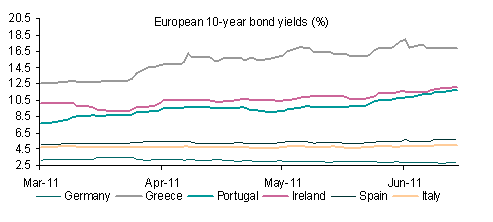
EUR and risk currencies in general were buoyed by the passage of the austerity bill in the Greek parliament. The implementation bill is also likely to be passed later today opening the door for the disbursement of EUR 12 billion from the European Union / IMF from the EUR 110 bailout agreed for the country. Combined with news that German banks are progressing towards agreeing on a mechanism to roll over Greek debt alongside French banks as well as likelihood of an European Central Bank (ECB) rate hike next week, the EUR is set to remain supported over the short term.

Nonetheless, it once again looks as though a lot of good news is priced in and it would be surprising if EUR/USD could extend to above strong resistance around 1.4557 given the many uncertainties ahead, not the least of which includes the stance of ratings agencies on any Greek debt rollover.

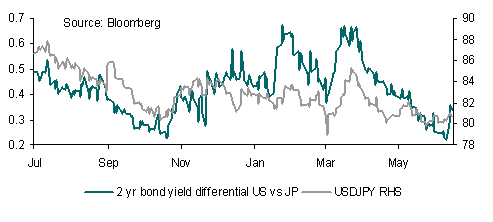
USD/JPY is the only major currency pair that is correlated with bond yield differentials at present (2-year yields) and therefore it should not come as a surprise that USD/JPY has moved higher as the yield differential between the US and Japan has widened by around 10bps over the past week. Indeed, yesterday’s move above 81.00 was spurred by the move in yield differentials although once again the currency pair failed to build sufficient momentum to close above this level.

Further gains will require US bond yields to move even higher relative to Japan but perhaps the end of QE2 today may mark a turning point for US bond markets and currencies. The end of QE2 taken together with a jump in bond supply over coming months, will see US Treasury yields will move sharply higher, implying much more upside for USD/JPY.

AUD has bounced back smartly over recent days, with the currency eyeing resistance around 1.0775 versus USD. A general improvement in risk appetite has given the currency some support but markets will be unwilling to push the currency much higher ahead of the Reserve Bank of Australia (RBA) meeting next week. On the plus side, there are no rate hikes priced in for Australia over the remainder of the year, suggesting an asymmetric risk to next week’s meeting.

In other words, unless the RBA openly discusses rate cuts in the statement, the AUD will likely remain supported. Conversely any indication that a rate hike may be in prospect will be AUD supportive. In any case we continue to believe the AUD offers better value especially relative to NZD and maintain our trade idea to buy AUD/NZD.