
Increased risk aversion overnight in the wake of escalating Middle East tensions gave the USD some support but overall the USD index is gradually drifting towards its early November low around 75.631. The antithesis of USD weakness is strength in most other major currencies.
The USD is being undermined by relatively dovish expectations for US interest rates relative to elsewhere and last night’s semi annual testimony by Fed Chairman Bernanke to the US Senate did nothing to alter this tone, with Bernanke maintaining the emphasis on subdued inflation and elevated unemployment.
The USD index itself has a high (0.82) 3-month correlation with US interest rate futures and over recent weeks as the implied yield has dropped, the USD has lost ground. The prospects of higher US bond yields may eventually provide the USD with support, especially given the prospect of substantial short-covering but in the near term the USD is likely to remain under pressure.
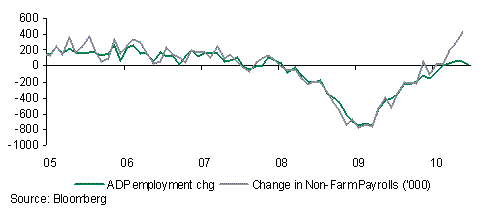
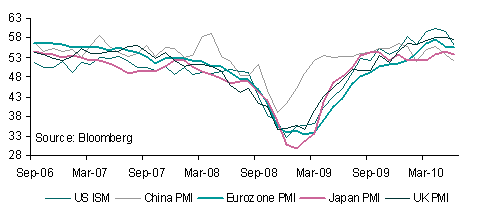
The upbeat run of US data highlights another source of USD support over the medium term, given the likely outperformance of the US economy over coming months. Yesterday’s ISM manufacturing survey and vehicle sales data lend support to this view. Moreover, the rise in employment component of the ISM supports the view of at least a 195k increase in February payrolls.
The Fed’s Beige Book tonight and February ADP jobs report will not alter the USD’s trajectory. The Beige Book is unlikely to reveal anything to worry the Fed in terms of inflation risks although will probably reveal further signs of improved activity. The ADP report will give important clues for Friday’s February non-farm payrolls data although it’s worth noting that last month’s report was way off the mark. In any case neither release is likely to prevent a further drop in the USD.
EUR is a clear beneficiary of expectations of tighter monetary policy by the ECB and the widening interest rate (futures implied yield) differential between the US and eurozone has given the EUR plenty of support recently as reflected in the high correlation with EUR/USD. Further support to the hawkish market stance was given by the upward revision to eurozone 2011 growth and inflation forecasts by the EU. The fact that eurozone inflation increased to 2.4% YoY in February also reinforced expectations of ECB tightening sooner than later.
The ECB press conference following the council meeting tomorrow will likely shape such expectations further, the EUR has already priced in a hawkish ECB stance, limiting the prospects of further appreciation. Notably EUR/USD has failed to break resistance at its year high around 1.3861, which will prove to be a formidable cap in the short-term.
In contrast, the RBA has poured cold water over expectations of further policy rate hikes in Australia. The policy statement following yesterday’s decision to keep the cash rate on hold pointed to an extended pause in the months ahead. Despite this and perhaps because markets have already pared back Australian interest rate expectations AUD rebounded quite smartly from its post meeting low and despite some overnight weakness due to increased risk aversion it will soon verge on a break of resistance at 1.0257.
AUD/NZD has continued to charge ahead having hit a multi-year high above 1.3600. NZD underperformance has been exacerbated by the impact of the recent earthquake, with growth expectations for this year having been sharply revised lower and growing speculation of an interest rate cut. Indeed, such speculation was given further fuel by comments by NZ Prime Minister Key who noted he would welcome a policy rate cut. Nonetheless, my quantitative AUD/NZD model suggests that the cross looks over-extended at current levels, whilst relative speculative positioning supports this view.

 ECONOMETER