USD Pressured As Yields Dip

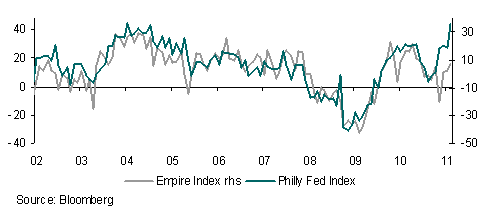
The USD came under pressure despite a higher than forecast reading for January US CPI and a strong jump in the February Philly Fed manufacturing survey. On the flip side, an increase in weekly jobless claims dented sentiment. The overnight rally in US Treasury yields was a factor likely weighing on the USD. The US calendar is light today leaving markets to focus on the G20 meeting and to ponder next week’s releases including durable goods orders, existing and new home sales.
The jump in the European Central Bank (ECB) marginal facility borrowing to EUR 15 billion, its highest since June 2009, provoked some jitters about potential problems in one or more eurozone banks. At a time when there are already plenty of nerves surrounding the fate of WestLB and news that Moody’s is reviewing another German bank for possible downgrade, this adds to an already nervous environment for the EUR.

Nonetheless, EUR/USD appears to be fighting off such concerns, with strong buying interest on dips around 1.3550. The G20 meeting under France’s presidency is unlikely to have any direct impact on the EUR or other currencies for that matter, with a G20 source stating that the usual statement about “excess volatility and disorderly movements in FX” will be omitted.

Although USD/JPY has been a highly sensitive currency pair to differentials between 2-year US and Japanese bonds (JGBs), this sensitivity has all but collapsed over recent weeks. USD/JPY failed to break the 84.00 level, coming close this week. There appears to be little scope to break the current range ahead of next week’s trade data and CPI.
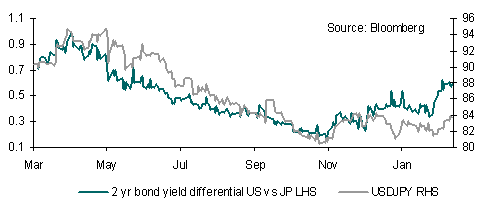
Given the recent loss in momentum of Japan’s exports the data will be instructive on how damaging the strength of the JPY on the economy. In the near term, escalating tensions in the Middle East will likely keep the JPY supported, with support around USD/JPY 83.09 on the cards.

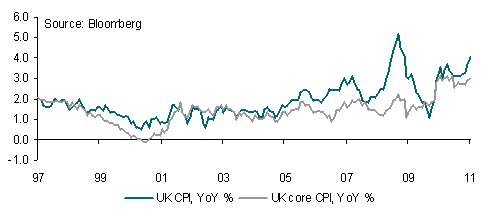
It seems that the jump in UK CPI this week (to 4.0%) provoked even more hawkish comments than usual from the Bank of England BoE’s Sentance, with the MPC member stating that the Quarterly Inflation Report understates the upside risks to inflation indicating that interest rates need to rise more quickly and by more than expected. Specifically on GBP he warned that the Bank should not be relaxed about its value.

Although these comments should not be particularly surprising from a known hawk, they may just help to underpin GBP ahead of the January retail sales report. Expectations for a rebound in sales following a weather related drop in the previous month will likely help prop up GBP, with GBP/USD resistance seen around 1.6279.
FX Winners and Losers

There has been a sense of mean reversion in FX markets so far this year as some of last year’s winners have become losers. Namely NZD, CHF, JPY and AUD have all lost ground whilst EUR and GBP have gained ground. The odd one out is the SEK which has strengthened over 2010 and in 2011 versus USD. I expect this pattern to change and the likely winners over the next 3- months are NZD, AUD and CAD, with CHF and JPY the likely losers.

EUR held up reasonably well in the wake of slightly disappointing growth data, with eurozone GDP rising less than expected in Q4, and a smaller than expected gain in the February German ZEW investor confidence survey (economic sentiment component). My sense is that the net long EUR speculative position has already been pared back somewhat over recent days reducing the potential selling pressure on the currency in the near term.

Given that EUR/USD is one of the only major currency pairs being influenced by interest rate differentials, its direction will hinge more on policy expectations but in the near the announcement by the German Finance Minister this morning of a restructuring plan for WestLB may give the currency some support.

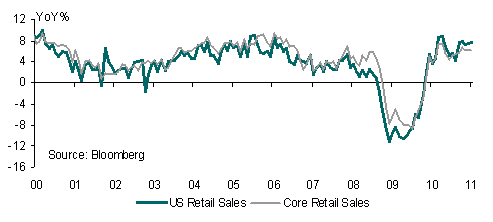
Perhaps one explanation for the stability of EUR/USD around the 1.3500 level is that US data was also disappointing yesterday. January retail sales rose less than forecast whilst revisions to back months suggest less momentum in Q4 consumer spending than previously envisaged. As with the eurozone data weather likely played a role in contributing to the outcome.

The net impact on currencies is that they are largely stuck within tight ranges. Further direction will come from the release of the Fed FOMC minutes for the January 26th meeting. The minutes may undermine the USD if a likely dovish slant continues to be expressed but given that the FOMC decision at that meeting to hold policy setting unchanged had no dissenters this should not come as a surprise.

Whilst the battle between the USD and EUR ended in a stalemate GBP outperformed in the wake of the increase in UK January CPI inflation and in particular the letter from the BoE governor to the Chancellor keeping open the door to a rate hike. The Quarterly Inflation Report (QIR) today will be particularly important to determine whether the bounce in GBP is justified.

I remain hesitant to build on long GBP positions given the net long speculative overhang in the currency. The risks following yesterday’s jump in GBP are asymmetric, with a hawkish QIR likely to have less impact on the currency than the negative impact from a more dovish than expected report.

Econometer.org has been nominated in FXstreet.com’s Forex Best Awards 2011 in the “Best Fundamental Analysis” category. The survey is available at http://www.surveymonkey.com/s/fx_awards_2011