Markets remain skittish as caution prevails

There has been a slight easing in tensions overnight as reflected in the small decline in my risk barometer and the VIX ‘fear gauge’. However, markets remain skittish and the mood is somewhat cautious as the focus remains on emerging market travails.

Additionally a sharp fall in Apple shares in after hours trading may also dampen equity markets today. Although specific country specific factors may have provoked the current bout of pressure contagion has spread quickly, reminiscent of the onset of previous crises.

The current bout of pressure may yet be contained but there is still some way to go before market stress is alleviated. Consequently correlations between asset classes have strengthened, in particular for currencies. Indeed most emerging market currencies have depreciated especially those of the “fragile 5”.

Overnight US yields rose while US and European equities continued to sell off and gold prices dipped following recent gains. The USD index held gained slightly following the rise in US yields.

Aside from emerging markets attention will focus on the US, with President Obama’s State of the Union address, December durable goods orders and January consumer confidence on tap most attention will quickly shift to tomorrow’s Fed FOMC policy decision. UK Q4 GDP will also garner some attention.
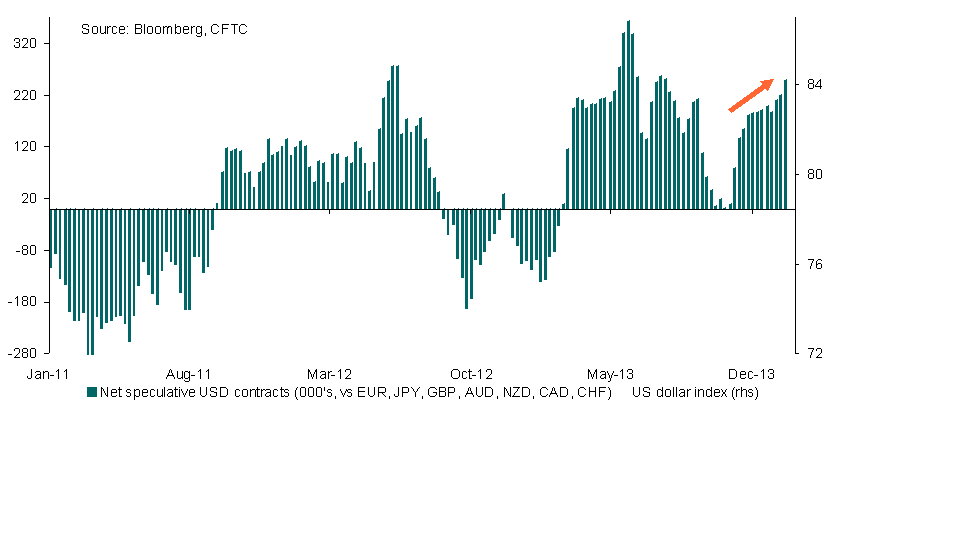
US dollar speculative positioning had increased prior to its sell off

Posted in Currencies. Tags: , , . Leave a Comment »

Asian currencies under pressure

The close to 1% drop in the USD index over recent days is misleading in terms of the USD’s performance against emerging market currencies where it has registered strong gains. For example the ADXY (Asian USD index) has dropped to its lowest level since early September 2013 and looks set to decline further as Asian currencies face more pressure. The best performers in this environment are traditional safe havens, especially JPY and CHF while the EUR and Scandinavian currencies have also capitalised on the weaker USD.

The drop in the USD against many major currencies reflects the fact that positioning had reached extreme levels prior to the sharp moves at the end of last week. For instance, net long USD speculative positions (according to the CFTC IMM data) had risen to the highest level since June 2013 while in contrast EUR positioning had dropped to its lowest since July 2013. The subsequent position adjustment will have proved to be a healthy correction that will set the USD up for an eventual rebound and the EUR for a sell off.

The sharp drop in US Treasury yields will undermine the USD further in the near term, however, and the mixed slate of US data releases will offer the currency little assistance. Nonetheless, the USD is expected to stay firm against Asian currencies. Notably capital flows from Asian equity markets have increased over recent weeks, with Philippines, South Korea, and Thailand on track to register outflows for the first month of the year. Against this background it is unsurprising that both the KRW and PHP are the two worst performing Asian currencies so far this year. While I expect a reversal in both, the near term outlook is for further pressure.

Risk assets under growing pressure

The growing turmoil in emerging markets is inflicting damage on risk assets across the board and no let up is expected in the near term. Even the rally in US Treasuries has failed to provide any relief to risk assets given the weight of negative sentient. Whether triggered by concerns about a slowing in Chinese growth, Argentina’s letting go of its currency support, and/or political tensions elsewhere such as in Thailand and Ukraine or a combination of all of these, the picture looks increasingly volatile.

Additionally, earnings and valuation concerns are acting to restrain equity markets. Finally, lurking in the background as another weight on asset markets is Fed tapering, with a further USD 10 billion reduction in asset purchases expected to be announced by the Fed this week (Wednesday). The combination of the above spells more bad news in the days ahead, with risk assets set to remain under pressure this week.

Amid the growing gloom in global markets there are still some key data releases and events that will garner some attention this week. In the US as noted the Fed FOMC meeting is the main event, but December new home sales today, January consumer confidence tomorrow and Q4 GDP on Thursday will also be important. However, the former two releases are set to record declines implying a mixed slate of US releases this week.

In Europe, coming off the back of some encouraging flash purchasing managers’ indices the January German IFO business climate index will record its third consecutive gain, while Spanish GDP is set to record its second consecutive quarterly gain. A slight rebound in January inflation is unlikely to stand in the way of a further reinforcement of forward guidance by the European Central Bank.

In Japan Trade data reported today revealed an 18th straight month of deficit while inflation data will reveal that the Bank of Japan still has a lot of work to do to reach its 2% inflation target implying that there will be some discomfort with the recent rebound in the JPY. Finally, expect no change from the RBNZ at its policy meeting on Wednesday, which will leave the NZD under further pressure.

Emerging market currencies under pressure

One of the key factors that have provoked the current bout higher risk aversion was the sub-50 Chinese manufacturing confidence gauge (PMI) which has intensified concerns about slowing growth . Additionally reports regulators in China have issued warnings about credit to the coal industry has reinforced debt fears in the country.

Domestic fundamental and political pressures in other currencies have contributed to the malaise in emerging markets, with a major drop in the Argentine peso and pressure on many other high beta emerging market currencies (including the usual suspects Turkish lira, South African rand and Indian rupee).

A deteriorating outlook for many emerging markets currencies based on concerns about the impact of Fed tapering and slowing emerging markets growth appears to be increasingly intensifying. Competition for capital as the Fed tapers will make things worse. The pressure is unlikely to ease quickly leaving many EM currencies vulnerable to a further sell off.