GBP bulls brave or crazy?

The UK Pound’s (GBP) performance over recent months has been dismal. The currency has failed to show any real sign of recovery, having fallen to and below the psychologically important level of 1.50 against the USD. A number of factors including fiscal/debt concerns, political worries, and uncertainties about whether the Bank of England will step up asset purchases, have accumulated to turn even the most ardent GBP bulls into bears.

The outcome of the upcoming UK general election widely expected on May 6, remains a major weight on GBP sentiment. Until the outcome is clear or unless one or other party develops a clear lead in the polls, it is difficult o see GBP sustain any durable recovery. In the near term GBP/USD is vulnerable to a test of its 2010 low around 1.4780 and then towards 1.44. The risk to this is that the market is very short GBP which could result in a sharp bounce in GBP in the wake of any good news. However, a rally in GBP will only result in fresh sellers.

Ahead of the elections will be the budget and this will be closely scrutinized for steps to reduce the size of the burgeoning fiscal deficit. Whichever party comes into power will need to convince markets that a credible and timely plan exists to reduce the size of the deficit and prevent a sovereign ratings downgrade. If not, GBP could see itself under much more pressure. In this respect it’s worth noting the Fitch ratings warning that the UK sovereign credit profile has deteriorated.

It’s not all bad for GBP, however. By some measures it’s now the most undervalued major currency, opening up the possibility of a sharper bounce back over the medium term. Moreover, UK debt markets are already trading as if a ratings downgrade has taken place, whilst arguably GBP has also priced in a lot of negative news already, as reflected in the very negative speculative positioning in the currency.

The economic news is also not as bad as the headlines might suggest and although recent housing data has been a bit mixed, both consumer spending and the housing market have held up reasonably well. Bearing all this in mind GBP is set to recover over the medium term, but it would be very brave to buy the currency any time soon, at least until UK elections are out of the way.
Tarnishing The Euro (Part 2)

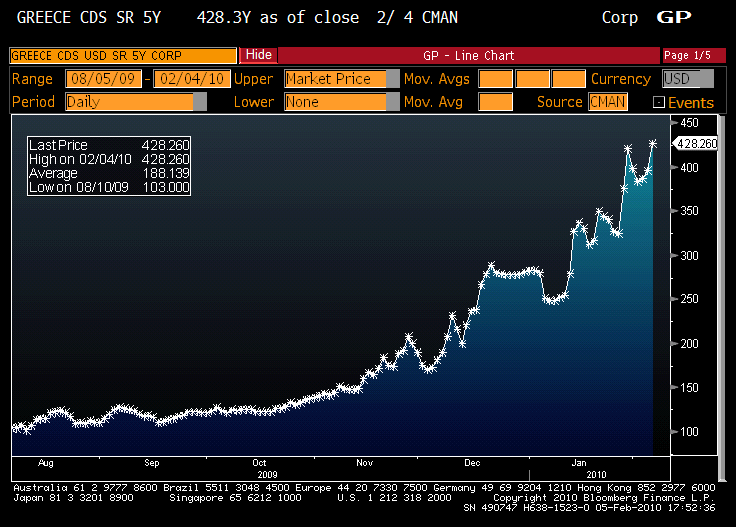
Will Europe come to the rescue of one its own?  The markets are still not entirely convinced.  Although EU officials spurred on by France and Germany agreed that some form of support was needed the lack of detail came as a disappointment.   Differences in opinion on how help should be provided meant that markets had nothing concrete to digest aside from a general agreement to provide assistance if needed. 

The EU validated Greece’s plans to cut its budget deficit by 4% this year but clearly backed away from committing taxpayers’ money to the country given the potential public backlash that supporting a country widely believed to have fudged its way into the EMU, would involve.   The end result was a further sell-off in the EUR although equity markets showed a bit more resilience which prevented a sharper fall in EUR/USD. 

Risk currencies generally are putting in firmer performances, with the AUD helped in part by the shockingly strong employment report and higher commodity prices.  The AUD and to a lesser extent the NZD are likely to continue to bask in the warm glow of these factors, with AUD/USD setting its sights on technical resistance around 0.8944.  EUR/USD is the weakest link and continues to trend lower, with strong technical support seen around 1.3583.

Tarnishing The Euro

I am just finishing up a client trip in Japan and waiting to take a flight back to Hong Kong. The time ahead of the flight has allowed some reflection on my meetings here. One thing that has been particularly evident is the strong interest in all events European. Some I have spoken to have wondered out loud whether this the beginning of the end of the European project.  At the least it is evident that fiscal/debt problems in Greece and elsewhere in Europe have tarnished the image of the EUR.

Markets continue to gyrate on any news about Greece and the potential for support from the Europe Union and/or IMF. The divergent views between European countries about how to deal with the problem has intensified, suggesting that reaching an agreement will not be easy. Some countries including the UK and Sweden have suggested enrolling the help of the IMF but this has been resisted by other European countries. Germany and France are trying to rally support ahead of today’s crucial meeting of European officials.

The EUR reacted positively to news that some form of support package is being considered but nothing concrete has appeared yet, leaving markets on edge. The EUR has been heavily sold over recent weeks; speculative market positioning reached a record low in the latest week’s CFTC Commitment of Traders’ IMM report. The fact that EUR positioning has become so negative suggests that the EUR could rebound sharply in the event that some support package for Greece is announced.

Any package will not come without strings attached, however, as European officials will want to avoid any moral hazard. A couple of options hinted at by German officials include fresh loans or some form of plan to purchase Greek debt. Either way, any solution to Greece’s problems will not be quick and will likely result in a sharp contraction in economic activity as the government cuts spending especially as Greece does not have the option of the old remedy of devaluing its currency. Meanwhile, strikes and social tensions in the country could escalate further. A solution for Greece will only constitutes around 2.5% of eurozone GDP will also not prevent focus from continuing to shift to Portugal, Spain and other countries with fiscal problems despite comments by Moody’s ratings agency to differentiate between the countries.

Even if the EUR rebounds on any positive news about support for Greece any relief is likely to prove temporary and will provide better levels to sell into to play for a medium term decline in the currency. Ongoing fiscal concerns, a likely slower pace of economic recovery, divergencies in views of European officials, and the fact that the EUR is still overvalued suggests that the currency will depreciate over much of 2010, with a move to around EUR/USD 1.30 or below in prospect over coming months.

What To Watch This Week

As usual the G7 meeting will leave markets with little to chew on. G7 officials maintained their commitment to stimulus measures and timely exit strategies but there was little of note for FX markets aside from the usual comments about wanting to avoid excess FX volatility. There was certainly know step up in pressure on China to strengthen though a report prepared for the meeting did push for countries with inflexible currencies to make adjustments. Meanwhile US officials mouthed the usual “strong dollar” mantra.

Where does this leave markets this week? Well I must admit my bullish view on risk currencies is clearly suffering after a positive start to the year. The pullback in high beta currencies (those with the highest sensitivity to risk aversion) has been dramatic. I have highlighted many of the factors weighing on sentiment in previous posts and whilst I still think the US dollar will find itself under renewed pressure over coming months the current environment remains conducive to more USD and JPY buying and selling of currencies such as the AUD, NZD, CAD, GBP, NOK, SEK, ZAR etc.

Ironically the US and Japan have arguably more severe deficit/debt concerns than some of the European countries under pressure but as most of Japan’s debt is held domestically there is little worry of a collapse in JGBs. Unlike Japan foreign investors hold over half of US debt but are not yet losing confidence with US Treasuries though this may not last unless there is some tangible sign that the burgeoning US budget deficit is being reduced. For now, attention remains firmly focussed on Greece, Spain, Portugal and to a lesser extent Italy.

Like the G7 meeting the US January jobs report released at the end of last week will give little direction for markets. Although the 20k drop in payrolls and revisions to past months were slightly disappointing the surprise drop in the unemployment rate was better news. This week’s data highlights include the January US retail sales report and December trade balance. The sales data is likely to help allay some concerns about faltering economic recovery, with retail sales forecast to rise over the month despite a likely pull back in autos spending.

How will this play out for currencies this week? Overall, the risk off tone is set to continue though the moves are looking increasingly stretched. The USD, JPY and CHF will remain on the front foot whilst risk currencies will remain under pressure. The EUR is set to continue to struggle against the background of eurozone deficit concerns and after its dive through 1.40 last week 1.35 now looms large. Meanwhile, the AUD may also struggle following the recent reassessment of interest rate expectations after the recent Reserve Bank of Australia (RBA) meeting in which interest rates were left unchanged.

UK markets will focus on the Quarterly Inflation Report from the Bank of England though the political situation may hold some interesting implications for GBP if polls continue to show that the gap between the governing Labour party and Conservative opposition continues to narrow. Prospects of a hung parliament will hardly hold any positive implications for GBP, a prospect which could limit any potential for GBP to recover ahead of May elections. The drop below 1.60 for Cable (GBP/USD) could extend further, especially as the BoE has kept the door open to further asset purchases if needed.

Currency Tensions Intensify Ahead of G7

Portugal, Greece and Spain remain firmly in the spotlight but it may not be long before the light broadens to include UK, US and many other countries facing similar difficulties on the fiscal front. Portuguese, Greek and Spanish equities were smashed in the wake of growing concerns and sentiment looks like it will get worse before it gets any better.

Events in each of these countries are not helping matters. In Portugal, parliament began to vote on a bill on financial transfers to the regions, which could damage the ability of the government to reduce the deficit whilst speculation that the Prime Minister is about to resign has intensified. In Greece tax collectors have started a 48-hour strike as social unrest worsens in the wake of the implementation of deficit cutting measures.

Although European officials pour cold water on the idea that the whole EMU Project could unravel bond markets are not taking any chances whilst the EUR looks destined to languish at ever weaker levels until there is a semblance of calm. Meanwhile. the European Central Bank (ECB) has clearly stated that does not want to get involved.

The G7 meeting in Canada will move rapidly into focus this weekend, with a joint press conference expected on Saturday. Sovereign debt concerns and restrictions and banks will likely be addressed whilst the not insignificant matter of China’s currency will also likely be discussed.

US pressure on China to strengthen the CNY has increased as has tensions between the two countries following US arms sales to Taiwan and a scheduled meeting between President Obama and the Dalai Lama.

There is growing speculation that the upcoming US Treasury report in April will label China as a currency manipulator which could result in tensions ratcheting up to a higher level. China holds the cards given the US reliance on Chinese money but with mid-term elections looming in the US and Obama’s promise to double US exports within five years, US pressure on China will intensify as will likely resistance from China.