Dollar, euro and yen view

Pressure on the US dollar was maintained last week but there were definite signs that selling momentum is slowing. The lack of major US data releases meant that the key focus for the USD was events in Europe. This week there will be some return of attention back to the domestic front, with heavyweight releases such January retail sales, manufacturing surveys, industrial production and inflation data.

On balance the data will provide more evidence of US recovery but as we have noted previously this is not necessarily positive for the USD. Firmer US data helps to boost risk appetite, which in turn plays negatively for the USD. This could be counterbalanced if US interest rate expectations turn more hawkish but the Fed has effectively ruled out such a prospect, with its commitment to maintain easy policy.

Europe has some important data releases over coming days including the German February ZEW survey and GDP data across the Eurozone. The data will be less encouraging, especially the Eurozone GDP data, compared to the US and is unlikely to give any support to the EUR. Instead events surrounding Greece will be crucial for EUR sentiment. EUR/USD appeared to lose some traction at the end of the week but the EUR remained firm against other currencies.

Greece’s approval of austerity measures overnight will bode well for markets but the tough stance of EU officials towards Greek austerity implementation means that focus will turn to yet another extraordinary meeting of European officials on Wednesday. Even assuming that some form debt deal and second bailout package is ironed out it is questionable how much the EUR will rally as so much good news is already in the price.

The JPY for a change managed to register relatively big moves, with USD/JPY pushing higher over the past week. The revelation that ‘stealth’ FX intervention was carried out by the authorities in Japan taken together with verbal warnings threatening more intervention helped to exacerbate JPY moves.

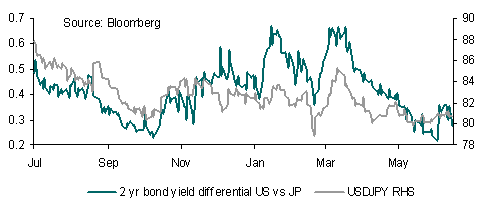
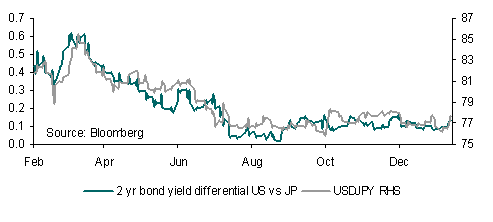
Speculation that the Bank of Japan is pondering further easing steps at its policy meeting on Tuesday may also be contributing to the softer tone in the JPY. Such hopes may be disappointed however, as we expect the BoJ to retain its current policy settings. The biggest factor explaining the move in USD/JPY is the fact that US bond yields moved higher relative to Japan, with the yield differential ending the week at its highest so far this year.
Contagion spreading like wildfire

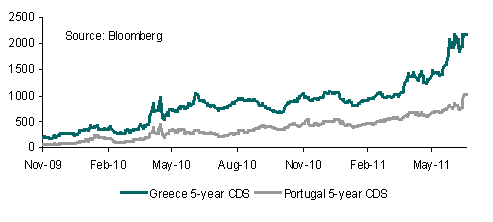
EUR continues to head lower and is is destined to test support around 1.3484 versus USD where it came close overnight. Contagion in eurozone debt markets is spreading quickly, with various countries’ sovereign spreads widening to record levels against German bunds including Italy, Spain, France, Belgium and Austria. Poor T-bill auctions in Spain and Belgium, speculation of downgrades to French, Italian and Austrian debt, and a weak reading for the November German ZEW investor confidence index added to the pressure.

A bill auction in Portugal today will provide further direction but the precedent so far this week is not good. The fact that markets have settled back into the now usual scepticism over the ability of authorities in Europe to get their act together highlights the continued downside risks to EUR/USD. Although there is likely to be significant buying around the 1.3500 level, one has to question how long the EUR will continue to skate on thin ice.

The Bank of Japan is widely expected to leave policy unchanged today but the bigger focus is on the Japanese authorities’ stance on the JPY. Finance Minister Azumi noted yesterday that there was no change in his stance on fighting JPY speculators. To some extent the fight against speculators is being won given that IMM speculative positions and TFX margin positioning in JPY has dropped back sharply since the last FX intervention to weaken the JPY.

However, this has done little to prevent further JPY appreciation, with USD/JPY continuing to drift lower over recent days having already covered around half the ground lost in the wake of the October 31 intervention. Markets are likely therefore to take Azumi’s threats with a pinch of salt and will only balk at driving the JPY higher if further intervention takes place. Meanwhile, USD/JPY looks set to grind lower.

GBP will take its direction from the Bank of England Quarterly Inflation Report and October jobs data today. There will be particular attention on the willingness of the BoE to implement further quantitative easing. A likely dovish report should by rights play negatively for GBP but the reaction is not so obvious. Since the announcement of GBP 75 billion in asset purchases a month ago GBP has fared well especially against the EUR, with the currency perhaps being rewarded for the proactive stance of the BoE.

Moreover, the simple fact that GBP is not the EUR has given it a quasi safe haven quality, which has helped it to remain relatively resilient. Nonetheless, GBP will find it difficult to avoid detaching from the coat tails of a weaker EUR and in this respect looks set to test strong support around GBP/USD 1.5630 over the short term.

European agreement at last

Following a drawn out period of discussions European officials have finally agreed on a haircut or debt write off of around 50% of Greek debt versus 21% agreed in July. In addition the EFSF bailout fund will be leveraged up to about EUR 1.4 trillion, with the new EFSF scheduled to be in place next month. The haircut for Greek debt is aimed at ensuring that Greece’s debt to GDP ratio drops to 120% by 2012.

The reaction of markets was initially favourable with EUR/USD breaching 1.40 and risk / high beta currencies bouncing. I doubt that the upward momentum in EUR can be sustained, however, with plenty of questions on the mechanics of the deal, especially about leveraging the EFSF fund, remaining. I suspect that the EUR may have already priced in some of the good news.

Data releases, especially in the US are offering markets more positive news. Following on from firm readings for US durable goods orders and new home sales, today’s US Q3 GDP expected to reveal an acceleration in growth to a 2.5% annual rate, will help to alleviate recession fears to some extent. The USD may benefit if the data reduces expectations of further Fed quantitative easing especially given the recent comments from some Fed officials indicating that the door is open to more QE.

In Japan attention was firmly fixed on the Bank of Japan policy meeting and the prospects for FX intervention to weaken the JPY. In the event the BoJ kept its overnight rate unchanged at 0.1% as expected and expanded its credit program by JPY 5 trillion and asset purchase fund to JPY 20 trillion.

The measures are aimed to easing deflation pressure but the real focus in the FX market is whether there is any attempt to the weaken the JPY. I am currently in Tokyo and here there is plenty of nervousness about possible FX intervention being imminent. Speculation of such intervention will likely help to prevent USD/JPY sustaining a drop below the 75.00 over coming days.

Euro still looks uglier than the dollar

Currency markets continue to vacillate between US debt ceiling concerns and eurozone peripheral debt worries. Despite a lack of agreement to raise the debt ceiling, with House Republicans failing to back a proposal by House speak Boehner, the USD actually strengthened towards the end of the week as eurozone peripheral issues shifted back into focus.

The resilience of the USD to the lack of progress in raising the debt ceiling is impressive and reveals that the EUR looks even uglier than the USD, in many investors’ eyes.

Much in terms of direction for the week ahead will depend on the magnitude of any increase in the debt ceiling and accompanying budget deficit reduction measures. Assuming that a deal is reached ahead of the August 2 deadline it is not obvious that the USD and risk currencies will enjoy a rally unless the debt ceiling deal is a solid and significant one.

Given the limited market follow through following the recent deal to provide Greece with a second bailout, the EUR remains wholly unable to capitalise on the USD’s woes.

A reminder that all is not rosy was the fact that Moody’s ratings agency placed Spain’s credit ratings on review for possible downgrade while reports that the Spanish parliament will be dissolved on September 26 for early elections on November 20 will hardly help sentiment for the EUR. Compounding the Spanish news doubts that the EFSF bailout fund will be ready to lend to Greece by the next tranche deadline in mid-September and whether Spain and Italy will participate, have grown.

Some key data releases and events will also likely to garner FX market attention, with attention likely to revert to central bank decisions including the Bank of Japan, European Central Bank, Bank of England, Reserve Bank of Australia and US July jobs report. None of the central banks are likely to shift policy rates, however.

The risk for the USD this week is not only that there is disappointing result to the debt ceiling discussions, but also that there is a weak outcome to the US July jobs report. An increase of around 100k in payrolls, with the unemployment rate remaining at 9.2%, will fixate market attention on weak growth and if this increases expectations for a fresh round of Fed asset purchases the USD could be left rather vulnerable.

The RBA is highly unlikely to raise interest rates but the tone of the accompanying statement is unlikely to be dovish. The RBA noted the strong emphasis on the Q2 CPI inflation data and in the event it came in higher than expected, a fact that supports my expectation that the Bank will hike policy rates at least once more by the end of this year.

Markets have largely priced out expectations of a rate cut but there is still scope for a more hawkish shift in Australian interest rate markets, which will give the AUD a boost. However, AUD remains vulnerable to developments in the US and Europe as well as overall risk aversion, and a preferable way to play a positive AUD view in the current environment is via the NZD.

Which is the ugliest currency?

The contest of the uglies has once again been set in motion in FX markets as last Friday’s weak US jobs report, which revealed a paltry 18k increase in June payrolls, downward revisions to past months and a rise in the unemployment rate, actually left the USD unperturbed. Europe’s problems outweighed the negative impact of more signs of a weak US economy, leaving the EUR as a bigger loser.

The USD’s resilience was even more impressive considering the drop in US bond yields in the wake of the data. However, news over the weekend that talks over the US budget deficit and debt ceiling broke down as Republicans pulled out of discussions, will leave USD bulls with a sour taste in their mouth.

Should weak jobs recovery dent enthusiasm for the USD? To the extent that it may raise expectations of the need for more Fed asset purchases, it may prove to be an obstacle for the USD. However, there is sufficient reason to look for a rebound in growth in H2 2011 while in any case the Fed has set the hurdle at a high level for more quantitative easing (QE).

Fed Chairman Bernanke’s reaction and outlook will be gleaned from his semi-annual testimony before the House (Wed) although he will likely stick to the script in terms of US recovery hopes for H2. This ought to leave the USD with little to worry about. There will be plenty of other data releases this week to chew on including trade data, retail sales, CPI and PPI inflation and consumer confidence as well as the kick off to the Q2 earnings season.

Fresh concerns in Europe, this time with contagion spreading to Italy left the EUR in bad shape and unable to capitalise on the soft US jobs report. In Italy high debt levels, weak growth, political friction and banking concerns are acting in unison. The fact that there is unlikely to be a final agreement on second Greek bailout package at today’s Eurogroup meeting will act as a further weight on the EUR.

Discussions over debt roll over plans, the role of the private sector and the stance of ratings agencies will likely drag on, suggesting that the EUR will not find any support over coming days and will more likely lose more ground as the week progresses. If these issues were not sufficiently worrisome, the release of EU wide bank stress tests on Friday will fuel more nervousness. Against this background EUR/USD looks vulnerable to a drop to technical support around 1.4102.

The Bank of Japan is the only major central bank to decide on interest rates this week but an expected unchanged policy decision tomorrow is unlikely to lead to any JPY reaction. In fact there appears to be little to move the JPY out of its current tight range at present. USD/JPY continues to be the most correlated currency pair with 2-year bond yield differentials and the fact that the US yield advantage has dropped relative to Japan has led to USD/JPY once again losing the 81.0 handle.

However, as reflected in the CFTC IMM data the speculative market is still holding a sizeable long position in JPY, which could result in a sharp drop in the currency should US yields shift relatively higher, as we expect over coming months. In the short-term USD/JPY is likely to be well supported around 80.01.