Quantitative easing and the USD

US earnings are coming in ahead of expectations, with Q2 income at the 42 S&P 500 companies reporting so far beating estimates by 11% whilst revenues are 3.3% ahead of forecasts, according to Bloomberg. The overall tone to equities looks positive helped by expectations of an agreement by BP to sell some of its assets and strong earnings reported by Apple after the close of US trade.

Market sentiment was also boosted by speculation that the Fed will embark on fresh monetary stimulus measures. Although there has been no indication that Fed Chairman Bernanke will announce such measures at his semi-annual testimony to the Senate today and to the House tomorrow, speculation of Fed action is rife and there is likely to be some questioning of Bernanke on the issue in the Q&A. If in any way quantitative easing is hinted at by Bernanke, it will act to undermine the USD.
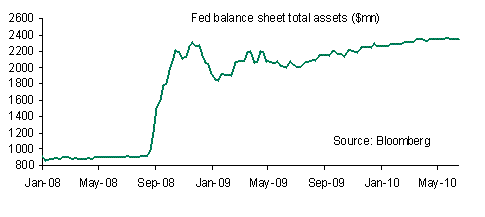
US economic data is helping to compound expectations of further quantitative easing, with yet another weaker than forecast release in the form of a 5.0% drop in June housing starts as hinted at by the bigger than expected drop in homebuilders confidence on the previous day. Separately ABC consumer confidence declined more than expected in the week to July 18, its third consecutive weekly decline, supporting the evidence that consumer confidence is deteriorating once again.

In the absence of major data releases Bernanke’s testimony will be the main driver for markets but earnings from Coca-Cola and Morgan Stanley will also be of interest. Elsewhere the minutes of the Bank of England’s July MPC meeting will be under scrutiny. MPC member Sentance is expected to have voted for a rate hike at the meeting, but any sign that other members joined him, will give GBP a lift. Sentiment for European assets continues to improve, with Greece concluding a well received T-bill auction and Ireland auctioning EUR 1.5bn in 6 and 10-year bonds. Both were heavily oversubscribed although concerns over Hungary continue to linger.

There continue to be various leaks about the European bank stress tests. Banks are expected to detail three scenarios in the results including estimated Tier 1 capital ratios under a benchmark for 2011, an adverse scenario and finally, a “sovereign shock”, according to a document from the Committee of European banking Supervisors. Importantly and perhaps a factor that could hit the credibility of the tests, the sovereign shock scenario is said to not include a scenario of default on sovereign debt.

I continue to see downside risk for the EUR in the wake of the test results, with a “buy on rumour, sell on fact” reaction likely. EUR/USD is vulnerable to a short-term drop to technical support around 1.2763 but much depends on Bernanke’s speech today. Leaks, suggest that around 10-20 banks could fail the bank stress tests, with a total funding requirement in the region of EUR 70-90 billion. Confirmation will have to wait for the official release on Friday ahead of which most currencies are likely to remain range-bound.
Unloved US Dollar

The USD index is now at its lowest level since May 3 and is showing little sign of turning around. The bulk of USD index weakness overnight came via the EUR and GBP, both of which rose sharply against the USD, with EUR/USD breaching its 90 day moving, hitting a high of 1.2955 and GBP/USD on its way to testing its 200 day moving average, reaching a high of 1.5472. Commodity currencies fared far less positively, perhaps feeling the after effects of the weaker Chinese data this week, with the NZD also dented by weaker than expected inflation data in Q2.

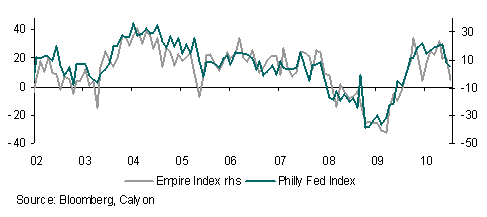
The USD was once again hit by US growth worries. To recap, the US data slate revealed a soft reading for PPI, whilst the July Empire manufacturing index dropped 14.5 points, a far bigger drop than forecast. The Philly Fed index also dropped further in July despite expectations of a small gain. In contrast, June industrial production edged higher, but manufacturing output actually fell. There was a bit of good news in the fact that weekly jobless claims fell more than forecast.

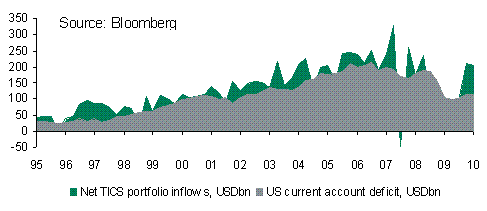
The releases extended the run of weak US data, keeping double-dip fears very much alive. The data have acted to validate the Fed’s cautious growth outlook expressed in the latest FOMC minutes but a double-dip is unlikely. Today’s releases include June CPI, May TIC securities flows, and July Michigan confidence. Another benign inflation report is expected. Consumer confidence is set to slip further against the background of soft data and volatility in equity markets whilst TICS data is forecast to reveal that long term securities flows declined in May compared to the $83 billion inflows registered in April.

The move in the EUR is a making a mockery out of forecasts including my own that had expected renewed downside. The relatively successful Spanish bond auction yesterday helped to ease eurozone sovereign debt concerns further, with a likely strong element of Asian participation. I have still not given up on my EUR negative view given the likelihood of a deteriorating economic outlook in the eurozone and outperfomance of the US economy, but over the short-term the EUR short squeeze may have further to go, with EUR/USD resistance seen at 1.3077.

Equity markets were saved from too much of a beating following the release of better than expected earnings from JP Morgan, a $550mn agreement between Goldman Sachs and the SEC to settle a regulatory case, and news from BP that it has temporarily stemmed the flow of oil from the leak from its Gulf well. Agreement on the US financial reform bill, passed by the Senate yesterday and likely to be signed into law by US President Obama next week, likely helped too.

The tone of the market is likely to be mixed today, with US growth concerns casting a shadow on risk trades. Earnings remain in focus and the big name releases today include BoA, GE and Citigroup but early direction could be negative following news after the US close that Google Inc. profits came in below analysts’ expectations. Data in the US today is unlikely to help sentiment given expectations of more weak outcomes, leaving the USD vulnerable to further selling pressure.