
Equity markets and risk trades have generally performed well over the last couple of weeks, with for example the S&P 500 around 7.5% higher since its late August low, whilst equity and currency volatility have been generally low, the latter despite some hefty FX intervention by the Japanese authorities which did provoke a spike in USD/JPY volatility last week.
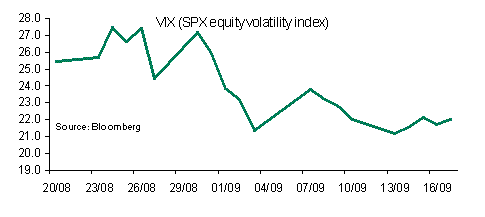
Risk appetite took a knock at the end of last week in the wake of worries that Ireland may seek EU / IMF assistance although this was denied by Irish officials. A similar worry inflicted Portugal, and as a result peripheral bond spreads were hit. Sovereign worries in Europe have not faded quickly and bond auctions in Greece, Spain and Portugal will garner plenty of attention this week. Renewed worries ahead of the auctions suggest that the market reception could be difficult.
Attention will swiftly turn to the outcome of the Fed FOMC meeting tomorrow and in particular at any shift in Fed stance towards additional quantitative easing following the decision at the August FOMC meeting to maintain the size of the Fed’s balance sheet. Given the recent improvement in US economic data the Fed is set to assess incoming data before deciding if further measures are needed.
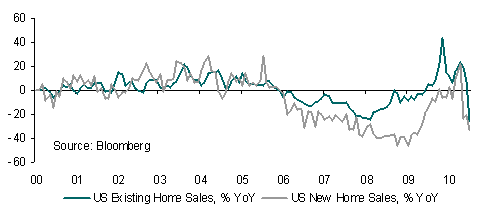
Housing data in the US will also garner plenty of attention, with several releases scheduled this week. Increases in August housing starts, building permits, existing and new home sales are also expected. Whilst this may give the impression of housing market improvement, for the most part the gains will follow sharp declines previously, with overall housing market activity remaining weak following the expiry of the government tax credit.
Weakness in house prices taken together with a drop in equity markets over the quarter contributed to a $1.5 trillion drop in US household net wealth in Q2. Wealth had been recovering after its decline from Q2 2007 but renewed weakness over the last quarter will not bode well for consumer spending. Household wealth is around $12.4 trillion lower than its peak at the end of Q2 2007.
Aside from the impact of renewed sovereign concerns, European data will not give the EUR much assistance this week either, with Eurozone September flash PMIs and the German IFO survey of business confidence set to weaken as business and manufacturing confidence comes off the boil. If the Fed maintains its policy stance whilst risk aversion increases over coming days the USD may find itself in a firmer position to recoup some of its losses both against the EUR and other currencies.
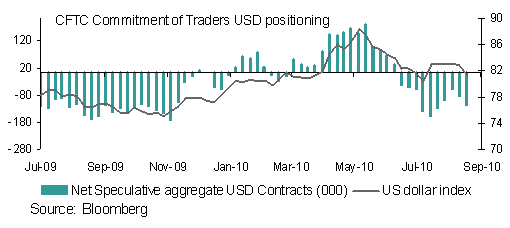
This will leave EUR/USD vulnerable to drop back down to around support in 1.2955 in the very short-term. As indicated by the CTFC IMM data there has been further short EUR position covering last week whilst sentiment for the USD deteriorated, suggesting increased room for short-USD covering in the event of higher risk aversion.
The impact of Sweden’s election outcome over the weekend is unlikely to do much damage to the SEK despite the fact that the coalition government failed to gain an outright majority. EUR/SEK has edged higher over recent days from its low around 9.1528 but SEK selling pressure is unlikely to intensify following the election, with EUR/SEK 9.3070 providing tough technical resistance.

 ECONOMETER