Euro Sentiment Jumps, USD Sentiment Dives

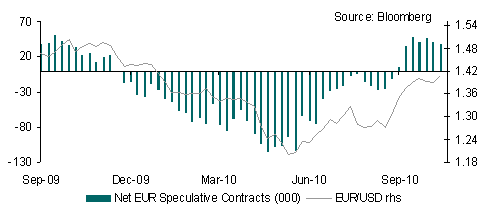
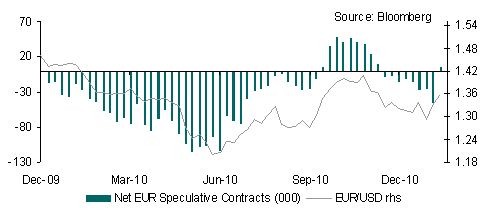
The bounce in the EUR against a broad range of currencies as well as a shift in speculative positioning highlights a sharp improvement in eurozone sentiment. Indeed, the CFTC IMM data reveals that net speculative positioning has turned positive for the first time since mid-November. A rise in the German IFO business confidence survey last week, reasonable success in peripheral bond auctions (albeit at unsustainable yields), hawkish ECB comments and talk of more German support for eurozone peripheral countries, have helped.
A big driver for EUR at present appears to be interest rate differentials. In the wake of recent commentary from Eurozone Central Bank (ECB) President Trichet following the last ECB meeting there has been a sharp move in interest rate differentials between the US and eurozone. This week’s European data releases are unlikely to reverse this move, with firm readings from the flash eurozone country purchasing managers indices (PMI) today and January eurozone economic sentiment gauges expected.

Two big events will dictate US market activity alongside more Q4 earnings reports. President Obama’s State of The Union address is likely to pay particular attention on the US budget outlook. Although the recent fiscal agreement to extend the Bush era tax cuts is positive for the path of the economy this year the lack of a medium to long term solution to an expanding budget deficit could come back to haunt the USD and US bonds.

The Fed FOMC meeting on Wednesday will likely keep markets treading water over the early part of the week. The Fed will maintain its commitment to its $600 billion asset purchase program. Although there is plenty of debate about the effectiveness of QE2 the program is set to be fully implemented by the end of Q2 2011. The FOMC statement will likely note some improvement in the economy whilst retaining a cautious tone. Markets will also be able to gauge the effects of the rotation of FOMC members, with new member Plosser possibly another dissenter.

These events will likely overshadow US data releases including Q4 real GDP, Jan consumer confidence, new home sales, and durable goods orders. GDP is likely to have accelerated in Q4, confidence is set to have improved, but at a low level, housing market activity will remain burdened by high inventories and durable goods orders will be boosted by transport orders. Overall, the encouraging tone of US data will likely continue but markets will also keep one eye on earnings. Unfortunately for the USD, firm US data are being overshadowed by rising inflation concerns elsewhere.

Against the background of intensifying inflation tensions several rate decisions this week will be of interest including the RBNZ in New Zealand, Norges Bank in Norway and the Bank of Japan. All three are likely to keep policy rates on hold. There will also be plenty of attention on the Bank of England (BoE) MPC minutes to determine their reaction to rising inflation pressures, with a slightly more hawkish voting pattern likely as MPC member Posen could have dropped his call for more quantitative easing (QE). There will also be more clues to RBA policy, with the release of Q4 inflation data tomorrow.

Both the EUR and GBP have benefitted from a widening in interest rate futures differentials. In contrast USD sentiment has clearly deteriorated over recent weeks as highlighted in the shift in IMM positioning, with net short positions increasing sharply. It is difficult to see this trend reversing over the short-term, especially as the Fed will likely maintain its dovish stance at its FOMC meeting this week. This suggests that the USD will remain on the back foot.
Positive Data Run Continues

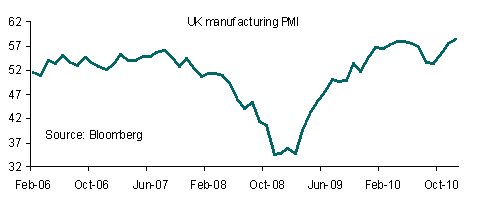
The batch of data releases in Tuesday’s trading session was generally positive. Leading the way was a stronger than expected increase in the UK manufacturing purchasing managers index (PMI) for December at 58.3 which coming in at a 16-year high. The data gave a boost to GBP though GBP/USD is unlikely to gain much of a foothold above 1.5600.

In the US, factory orders surprisingly jumped 0.7% in November and whilst the data is second tier it does maintain the run of generally upbeat US data. Meanwhile eurozone inflation came in higher than forecast at 2.2% YoY, above the European Central Bank (ECB) target level for the first time in two years. The outcome is unlikely to trigger a response from the ECB especially given that core inflation remains well behaved. After hitting a post CPI release high of 1.3433 EUR/USD is likely to drift lower in the short term.

Separately the Fed FOMC minutes of the December 14 meeting revealed little to surprise. Of note, FOMC members highlighted that the improvement in economic conditions was insufficient to warrant any change to the asset purchase program. The bottom line for the Fed is that the dual mandate of maximum employment and price stability is still not in reach and therefore they will keep the pedal to the floor in terms of policy stimulus. Although a further round of quantitative easing seems unlikely the Fed is likely to stick it out in terms of the $600 billion in planned asset purchases whilst an actual rate hike is unlikely until well into 2012.

Commodity prices dropped sharply overnight with soft commodities and energy prices in particular leading the declines. Commodity currencies fell as a result, with the AUD also impacted by growing worries about the impact of the Queensland floods. Initial estimates suggest that total damage from the flooding could reach AUD 6 billion and as Queensland represents around 19% of Australian GDP, the impact on growth could be significant. Growth could drop by a sharp -0.8% YoY in Q1 GDP. This is based on the assumptions that 40% of all exports will experience a 30% reduction

Today’s data slate in the US will be crucial to provide the final clues to Friday’s December payrolls report. The ADP jobs report, ISM non-manufacturing survey and Challenger job cuts data are all scheduled for release. The run of positive US data will help the USD to trade on a firm footing over the short term but clearer direction will await the outcome of the December jobs report whilst the beginning of the Q4 earnings season next week will also be influential. The exception to USD strength will continue to be Asian currencies where more upside is likely, but I prefer to play this via short EUR/Asian FX than the USD.

FX sensitivity to yield

It’s all about yield. The back up in US bond yields in reaction to the US tax compromise from the Obama administration has been particularly sharp. US 10 year bond yields jumped around 35bps this week prior to a small correction in yields overnight whilst 2s were up 21bps. US bond yields are now back where they were in June, a fact that makes a mockery out of the Fed’s attempts to drive bond yields lower via quantitative easing (QE). Yields elsewhere increased too but by a smaller degree whilst equity market sentiment has been dampened by the rise in global yields although US stocks still ended higher overnight.

There is plenty of commentary discussing the impact on currencies of the move in bond yields so it’s worth looking in more detail how sensitive FX markets have been to yield. The most sensitive currencies i.e. those with the highest 3-month correlations with relative bond yield differentials (2 year) are the AUD/USD, EUR/USD, and of course USD/JPY. However, there is less sensitivity to gyrations in 10 year yields with no currency pair registering a statistically significant correlation with 10-year bond yield differentials over the past 3-months.

Assuming that US bond yields continue to push higher into 2011, with much lager increases in both nominal and yields expected, this means that AUD, EUR and JPY will face the most pressure relative to the USD. Moreover, the stimulus measures agreed by the US administration will likely lead to many analysts penciling in higher growth forecasts over 2011 whilst reducing the prospects of QE3 from taking place, all of which is USD positive. I still retain a degree of caution in Q1 2011, especially with regard to a potential bounce in EUR, especially if the ECB becomes more aggressive in its bond buying, but even so, any EUR rally is likely to prove termporary.

The impact of higher US yields on the AUD may be more limited however, despite the high correlation with relative bond yields, as Australian bond yields are also likely to rise somewhat given the resilience of its economy. This was clearly demonstrated by Australian November employment data released overnight revealing yet another consensus beating outcome of +54.6k, with all the gains coming from full time employment. Against the background of a generally firm USD, the best way to play AUD resilience is via the NZD, with the currency pair likely break through resistance around 1.3220 (21 October high).

Irish bailout leaves EUR unimpressed

As has been the case since the beginning of the global financial crisis policy makers have found themselves under pressure to deliver a solution to a potentially destabilising or even systemic risk before the markets open for a new week in order to prevent wider contagion. Last night was no different and following urgent discussions a EUR 85 billion bailout for Ireland to be drawn down over a period of 7 ½ years was agreed whilst moves towards a permanent crisis mechanism were brought forward. As was evident over a week ago a bailout was inevitable but the terms were the main imponderable.

Importantly the financing rate for the package is lower than feared (speculation centered on a rate of 6.7%) but still relatively high at 5.8%. Moreover, no haircuts are required for holders of senior debt of Irish banks and Germany’s call for bondholders to bear the brunt of losses in future crises was watered down. The package will be composed of EUR 45 bn from European governments, EUR 22.5 bn from the IMF and EUR 17.5 bn from Ireland’s cash reserve and national pension fund.

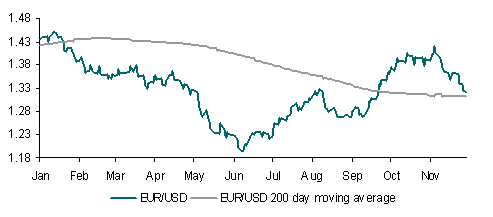
The impact on the EUR was stark, with the currency swinging in a 120 point range and failing to hold its initial rally following the announcement. A break below the 200-day moving average for EUR/USD around 1.3131 will trigger a drop to around 1.3020 technical support. Officials will hope that the bailout offers the currency some deeper support but this already seems to be wishful thinking. The EUR reaction following the Greek bailout in early May does not offer an encouraging comparison; after an initial rally the EUR lost close to 10% of its value over the following few weeks.

Although it should be noted that the bailout appears more generous than initially expected clearly the lack of follow through in terms of EUR upside will come as a blow. The aid package has bought Ireland some breathing space but this could be short lived if Ireland’s budget on December 7 is not passed. Moreover, the bailout will not quell expectations that Portugal and perhaps even Spain will require assistance. Indeed, Portugal is the next focus and the reaction to an auction of 12-month bills on 1 December will be of particular interest.

Taken together with continued tensions on the Korean peninsular, position closing towards year end ongoing Eurozone concerns will likely see a further withdrawal from risk trades over coming weeks. For Asian currencies this spells more weakness and similarly commodity currencies such as AUD and NZD also are likely to face more pressure. The USD remains a net beneficiary even as the Fed continues to print more USDs in the form of QE2.

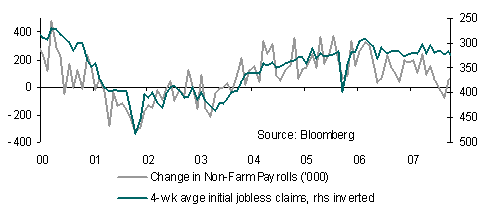
Data and events this week have the potential to change the markets perspective, especially the US November jobs report at the end of the week. There is no doubt that payrolls are on an improving trend (145k consensus) in line with the declining trend in jobless claims but unfortunately the unemployment rate is set to remain stubbornly high at 9.6% and this will be the bigger focus for the Fed and markets as it implies not let up in QE. As usual further clues to the payrolls will be garnered from the ADP jobs report and ISM data on Wednesday.

All eyes on G20

Although we move from feast to famine this week in terms of data there are still a few events that are noteworthy. In the US the September trade balance (Wed) will be of interest with a narrowing expected. Net exports negatively impacted GDP in Q3 but this is likely to reverse in Q4. Michigan confidence at the end of week is also likely to reveal better news with a rebound expected in October in the wake of firming equities, whilst the October budget statement is likely to reveal a sharp narrowing compared to October last year. Several Fed speakers over the week will be also be in focus as markets try to gauge the level of support within the FOMC for the QE2 announced last week.

There are a few data releases of interest in the eurozone including the preliminary estimate of Q3 GDP. Worryingly the divergence across the eurozone between healthier northern Europe and weaker performing in Southern Europe is becoming increasingly stark, a big headache for the Eurozone Central Bank with its one size fits all policy. Elsewhere, in the UK the Bank of England Quarterly Inflation Report will be scrutinized to determine whether recently firmer data and sticky inflation has pushed the BoE away from following the Fed into QE2. Japan’s volatile machinery orders data marks the highlight of its calendar, with a sharp drop expected in September following two strong months.

The main event of the week is the G20 leaders meeting in Seoul at the tail end of the week. Rhetoric going into the meeting suggests little support for the US plan to limit current account surpluses to 4% of GDP and even US officials appear to have cooled on the idea. Moreover the G20 meeting will probably elicit further reaction to the Fed’s QE2 announcement. Reaction was highly critical initially but seems to have softened lately. Currencies will nonetheless, remain the major topic of discussion although expectations of a global agreement are likely to be disappointed.

The Fed’s QE2 announcement helped provide a prop to risk assets and weighed on the USD last week despite the amount of asset purchases being within expectations. The USD will remain a sell on rallies this week and once again the best way to play USD weakness is likely via the higher yielding commodity currencies, especially AUD and NZD. Scandinavian currencies also offer a good way to capitalize on USD weakness.

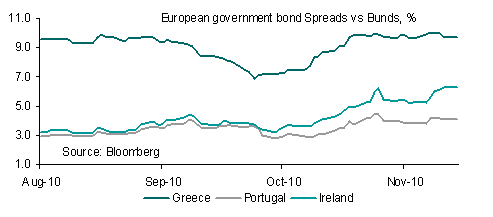
The EUR may also struggle this week given worries about peripheral Europe and widening in peripheral bond spreads. Ireland’s budget cuts announced last week have so far failed to shore up confidence whilst political uncertainties are also rising. Greece’s regional elections revealed that the ruling socialist party narrowly retained control allowing the government to continue with reforms suggesting a modicum of support for its debt. Nonetheless, with Irish and Portuguese sovereign worries continuing, the EUR will continue to lag. Notably the CFTC IMM data revealed that speculative EUR sentiment deteriorated in the latest week to its lowest in over a month. EUR/USD is likely to target 1.3864 after dropping swiftly below the 1.4000 level.

Perhaps best way to play EUR vulnerability is versus the AUD, with a further decline through 1.3800 likely to pave the way for a drop below the 13 September low around 1.3660. AUD/JPY may also be another cross worth exploring especially as Japan’s new fund begins buying JGBs today, which could limit JPY upside. A test of AUD/JPY 83.65 is on the cards shortly. If Australia’s October employment report on Thursday reveals another strong reading it will likely give the currency further support into the end of the week.