Data and earnings focus

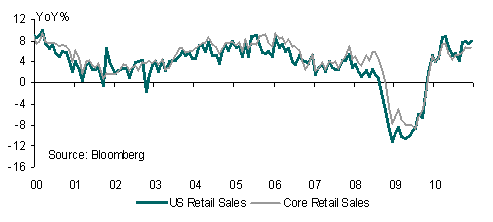
Friday’s round of US data were generally upbeat, highlighting that consumer spending is coming back to life. Inflation pressures however, remain benign at least on the core reading highlighting the Fed’s concern that inflation is running below the level consistent with its mandate. In other words it will be a long time, probably late into 2012 before policy rates increase.
While the Fed is no hurry to raise rates despite a few hawkish rumblings within the FOMC the European Central Bank (ECB) in contrast appears to have become more eager to pull the trigger for higher rates. ECB President Trichet’s hawkish press conference last week set the cat amongst the pigeons and marked a clear shift in ECB rhetoric towards a more hawkish stance.

A very big problem for the ECB is that the eurozone economy is not performing along the lines that its hawkish rhetoric would suggest, especially in the periphery. Growth momentum in the core in contrast, as likely reflected in the January ZEW investor confidence and IFO business confidence survey data this week in Germany, remains positive. Both surveys are likely to stabilize at healthy levels but how long can the likes of Germany drag along the eurozone periphery?

There will be relatively more attention on the meeting of Eurogroup/Ecofin officials, with focus on issues such as enlarging the size of the European Financial Stability Facility (EFSF) bailout fund and development of a “comprehensive plan” to contain the eurozone crisis. Don’t look for any conclusive agreements as this may have to wait until the European Union (EU) Council meeting on 4 February assuming (optimistically given ongoing German resistance) some agreement can even be reached.

Following the success (albeit at relatively high yields) of the eurozone debt auctions last week, sentiment for peripheral debt will face further tests this week in the form of debt sales in Spain, Belgium and Portugal.

The US Martin Luther King Jr. holiday will result in a quiet start to the week for markets but there will be plenty to chew on. This week’s key earnings reports include several banks scheduled to release Q4 earnings. Financials are a leading sector in the rally in equities at present and these earnings will be critical to determine whether the rally has legs.

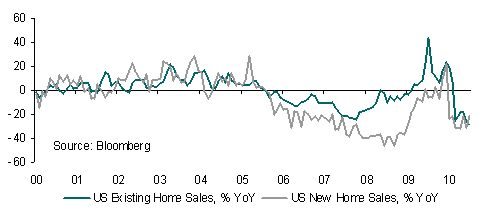
The US data slate includes January manufacturing surveys in the form of the Empire and Philly Fed, both of which are likely to post healthy gains whilst existing home sales are also likely to rise. This will not change the generally weak picture of the US housing market, with high inventories and elevated foreclosures characterizing conditions. As if to prove this, housing starts are set to drop in December. On the rates front, the Bank of Canada is likely to keep its policy rates on hold this week.
After coming under pressure last week much for the USD will depend on the eurozone’s travails to determine further direction. Concrete evidence of progress at the Ecofin may bolster the EUR further, with resistance seen around 1.3500 but don’t bank on it. The ability of eurozone officials to let down often lofty expectations should not be ignored. In any case following sharp gains last week progress over coming days for the EUR will be harder to achieve.
US payrolls clues

Most investors will be glad to see the back of August, a month that marked the biggest monthly decline in US stocks in nine years. The main imponderable is whether September will be any better. A series of manufacturing surveys globally today will do little to restore confidence although there was some good news in a slight increase in China’s official August purchasing managers index (PMI) as well a stronger than forecast increase in Australian Q2 GDP, which will likely provide some short-term relief for risk trades.

There was also some slight solace for markets in terms of US data at least from the point of view that the data was not as disappointing as many recent releases. Although the August Chicago PMI slipped (to 56.7) consumer confidence increased (to 53.5) though admittedly confidence remains at a relatively low level. The job market situation detailed within the consumer confidence report was more pessimistic in August than the previous month, however, with those reporting jobs hard to get moving higher. This sends a negative signal for Friday’s payrolls data.

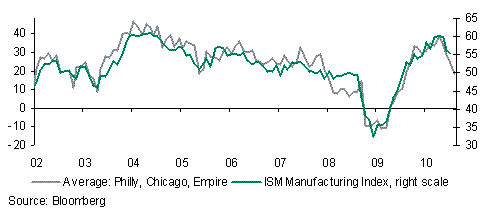
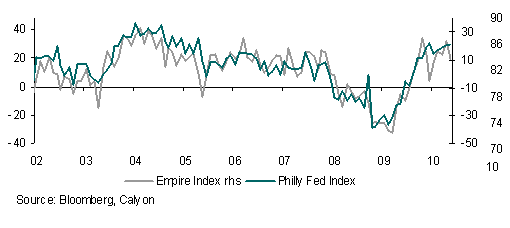
There will be more clues to Friday’s US jobs report today which will enable any fine tuning of forecasts to take place in the wake of the August ADP employment report and ISM manufacturing survey. Consensus forecasts centre on a 15k increase in private jobs. Despite the slight increase in the Empire manufacturing survey in August, the falls in other manufacturing surveys point to some downside risks to the ISM today, with a simple average of the three pointing to the ISM closer to the 50 mark, which will highlight a loss in US manufacturing momentum.

Manufacturing surveys elsewhere will also be in focus, with the final PMI readings scheduled to be released for the eurozone and UK. There is likely to be confirmation of the slight drop in the eurozone PMI to 55.0 in August while the UK PMI is likely to drop to around 57.0 over the month. Both surveys remain at a relatively high level but it is clear that activity is moderating in H2 2010 from a healthy level in H2. The data will give little support to the EUR but the currency has found a degree of stability over the last couple of days. Nonetheless, a further downward move is in prospect.

The Fed FOMC minutes provided little for markets to get excited about. The minutes noted concerns about large scale asset purchases from some Fed officials, indicating resilience to increasing quantitative easing despite acknowledging increased downside risks to the growth and inflation outlook. It is unclear exactly what will be the trigger for further QE as acknowledged by Fed Chairman Bernanke last week.

The minutes will do little to help market confidence given the hesitancy to pursue further QE and provide further stimulus to the economy but the USD is likely to benefit from the fact that the Fed may not be as eager to expand its balance sheet further. Other currencies that remain beneficiaries in the current risk averse environment are the JPY and CHF. The JPY may find further upside more difficult given ongoing intervention fears but the trend remains for a lower USD/JPY in the coming weeks.

World Cup FX Positioning/Data Highlights

The market tone felt decidedly better over the course of the last week although it was difficult to tell if this was due to position squaring ahead of the World Cup football or a genuine improvement in sentiment. There was no particular event or data release that acted as a catalyst either, with the European Central Bank (ECB) and Bank of England (BoE) meetings passing with little fanfare.

US data ended the week mixed, with retail sales disappointing in May but in contrast June consumer confidence beating expectations. Although questions about the pace of recovery remain, other data such as the Fed’s Beige Book suggest that recovery remains on track, sentiment echoed, albeit cautiously by Fed Chairman Bernanke last week.

Attention this week will centre on inflation data. Expected benign CPI readings will support the view that the Fed will take its time to raise interest rates. Speeches by the Fed’s Bullard, Plosser and Bernanke this week will be eyed for further clues on Fed thinking.

Central banks in Brazil and New Zealand hiked rates last week but this is not likely to be echoed this week. No change is likely from both the Bank of Japan and Swiss National Bank although there will be plenty of attention on the SNB’s comments on the CHF following recent data showing a surge in FX reserves due to currency intervention. The BoJ is unlikely to announce anything new but perhaps some further detail on the loan support plan could be forthcoming.

Manufacturing data will also garner some attention, with the US June Empire and Philly Fed surveys and May industrial production on tap. All three reports will confirm the improving trend in manufacturing activity in the US. Housing data will look weaker, with starts set to pull back in starts in May following the expiry of government tax incentive programmes though permits are set to rise.

In Europe, the June German ZEW (econ sentiment) investor sentiment survey will likely slip slightly due to ongoing fiscal/debt worries but this will be countered by stronger domestic data. In any case the index remains at a high level and a slight drop is unlikely to derail markets.

GBP may find some support form upgrade of UK growth forecasts by the CBI to 1.3% for 2010 and relatively hawkish comments from the BoE’s Sentance in the weekend press warning that inflation is higher than expected, indicating that the Bank may need to hike rates sooner than expected.

Further GBP/USD direction will come from CPI and retail sales data this week as well as public borrowing figures and a report by the new Office of Budget Responsibility on the UK’s fiscal position ahead of the June 22 budget. A break above GBP/USD resistance around 1.4760 is unlikely to materialise.

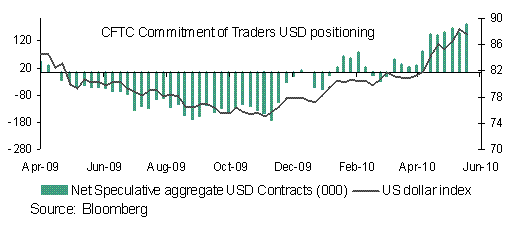
Despite the many data releases this week, the overall tone is likely to be one of consolidation and reduced volatility in the days ahead. This may allow EUR/USD to gain some ground due to short covering, with the CFTC commitment of traders (IMM) report revealing a further increase in net short speculative positions last week, close to the record set a few weeks back, though we suspect that there will be strong resistance around 1.2227.

The fact that the IMM data revealed that net aggregate net USD long positions reached an all time high last week, highlights the potential for profit taking this week. USD/JPY will look to take out resistance around 92.55 but this looks unlikely unless the BoJ dishes up anything particularly dovish from its meeting.