Exhausted

No the title is not meant to describe how I felt this morning when I woke up but how I feel the market is looking at present in terms of risk trades. Firmer than feared economic data in the US and China and the agreement in Basel on new bank capital ratios boosted risk appetite but the moves are already beginning to fade. It would be easy to jump on the bandwagon but after the sharp gains registered over recent days I would suggest taking a cautious stance on jumping into risk trades at present.

The EUR has played a degree of catch up to risk currencies, rallying sharply against the USD, helped in part by the European Commission which raised its forecasts for the eurozone economy from 0.9% for 2010 to 1.7%. Although the change in forecasts should come as little surprise give that it is now in line with the European Central Bank’s (ECB) expectations the news bolstered the view of economic resilience in the eurozone. Unfortunately as the ECB noted following its last meeting there are plenty of downside risks to growth next year and upcoming data releases will be viewed to determine how sharply growth momentum will slow into next year.

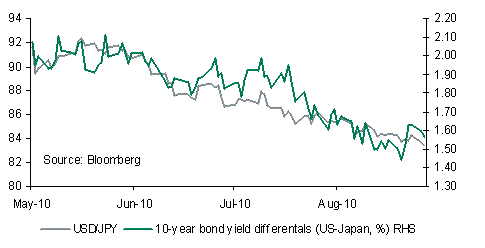
One currency that strengthened was the JPY and this was mainly due the view that Prime Minister Kan will win the contest for leadership of the governing DPJ party in Japan. The race remains very close, with Prime Minister Kan having a slight lead according to Japanese press. The FX market will pay particular attention to the result given that the other contender Ichiro Ozawa has stated his willingness to drive the JPY lower as well as increase fiscal spending. The results of the election will be known shortly and should Ozawa win USD/JPY will likely find support although the bigger influence is likely to be a shift in relative US/Japan bond yields which due to the sell off in US Treasuries over recent days has become more supportive of a higher USD/JPY.
GBP has lagged the move in many risk currencies, failing to take advantage of the weaker USD. There was some relief overnight from an increase in consumer confidence in August according to the Nationwide index, which rose 5 points to 61, from a 14-month low in July. However, any boost to GBP sentiment will have been outweighed by a fall in UK house prices according to RICS, which revealed the sharpest one-month fall in August since June 2004. The data supports the view that the rally in UK house prices could soon be over. Weaker housing activity will also likely limit any further improvement in consumer confidence. Some of this is already priced into GBP however, and over the short-term EUR/GBP may struggle to breach the 0.8400 level.

Another underperformer overnight was the NZD which was hit by disappointing retail sales data for July, which fell 0.4%. Although the drop followed a strong gain in the previous month the data supports the view that the consumer remains cautious in New Zealand, a factor that will likely play into the view that New Zealand’s central bank, the RBNZ will keep policy on hold when they meet tomorrow. NZD slipped off its highs around 0.7347 overnight and also managed to dampen the upside momentum for AUD/USD which will likely struggle to sustain a break through resistance around 0.9350.

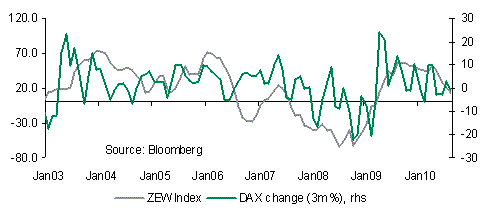
Today’s data will provide further direction for the days ahead, with the September German ZEW survey of investor confidence likely to be closely scrutinized. A drop in the economic sentiment gauge to around 10 is expected from 14 in August, highlighting that eurozone growth momentum is beginning to wane. Hard data in the form of eurozone industrial production will also record a weaker performance, likely to drop 0.3% in July. The data will likely cap the EUR today.
In the US the main release is the August retail sales report for which a 0.3% gain in both headline and ex-autos sales is expected. Sales will have been helped by back to school spending although major discounting will have weighed on retailers’ profits. Nonetheless, any gain even if modest will be a welcome development for Q3 growth in the US.
Unloved US Dollar

The USD index is now at its lowest level since May 3 and is showing little sign of turning around. The bulk of USD index weakness overnight came via the EUR and GBP, both of which rose sharply against the USD, with EUR/USD breaching its 90 day moving, hitting a high of 1.2955 and GBP/USD on its way to testing its 200 day moving average, reaching a high of 1.5472. Commodity currencies fared far less positively, perhaps feeling the after effects of the weaker Chinese data this week, with the NZD also dented by weaker than expected inflation data in Q2.

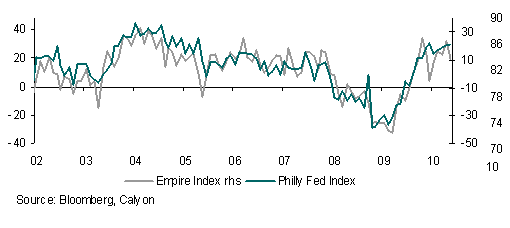
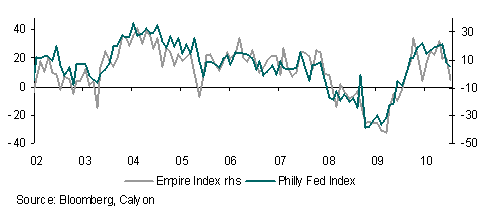
The USD was once again hit by US growth worries. To recap, the US data slate revealed a soft reading for PPI, whilst the July Empire manufacturing index dropped 14.5 points, a far bigger drop than forecast. The Philly Fed index also dropped further in July despite expectations of a small gain. In contrast, June industrial production edged higher, but manufacturing output actually fell. There was a bit of good news in the fact that weekly jobless claims fell more than forecast.

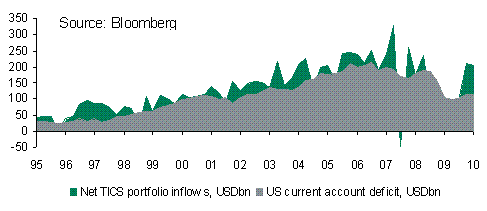
The releases extended the run of weak US data, keeping double-dip fears very much alive. The data have acted to validate the Fed’s cautious growth outlook expressed in the latest FOMC minutes but a double-dip is unlikely. Today’s releases include June CPI, May TIC securities flows, and July Michigan confidence. Another benign inflation report is expected. Consumer confidence is set to slip further against the background of soft data and volatility in equity markets whilst TICS data is forecast to reveal that long term securities flows declined in May compared to the $83 billion inflows registered in April.

The move in the EUR is a making a mockery out of forecasts including my own that had expected renewed downside. The relatively successful Spanish bond auction yesterday helped to ease eurozone sovereign debt concerns further, with a likely strong element of Asian participation. I have still not given up on my EUR negative view given the likelihood of a deteriorating economic outlook in the eurozone and outperfomance of the US economy, but over the short-term the EUR short squeeze may have further to go, with EUR/USD resistance seen at 1.3077.

Equity markets were saved from too much of a beating following the release of better than expected earnings from JP Morgan, a $550mn agreement between Goldman Sachs and the SEC to settle a regulatory case, and news from BP that it has temporarily stemmed the flow of oil from the leak from its Gulf well. Agreement on the US financial reform bill, passed by the Senate yesterday and likely to be signed into law by US President Obama next week, likely helped too.

The tone of the market is likely to be mixed today, with US growth concerns casting a shadow on risk trades. Earnings remain in focus and the big name releases today include BoA, GE and Citigroup but early direction could be negative following news after the US close that Google Inc. profits came in below analysts’ expectations. Data in the US today is unlikely to help sentiment given expectations of more weak outcomes, leaving the USD vulnerable to further selling pressure.

World Cup FX Positioning/Data Highlights

The market tone felt decidedly better over the course of the last week although it was difficult to tell if this was due to position squaring ahead of the World Cup football or a genuine improvement in sentiment. There was no particular event or data release that acted as a catalyst either, with the European Central Bank (ECB) and Bank of England (BoE) meetings passing with little fanfare.

US data ended the week mixed, with retail sales disappointing in May but in contrast June consumer confidence beating expectations. Although questions about the pace of recovery remain, other data such as the Fed’s Beige Book suggest that recovery remains on track, sentiment echoed, albeit cautiously by Fed Chairman Bernanke last week.

Attention this week will centre on inflation data. Expected benign CPI readings will support the view that the Fed will take its time to raise interest rates. Speeches by the Fed’s Bullard, Plosser and Bernanke this week will be eyed for further clues on Fed thinking.

Central banks in Brazil and New Zealand hiked rates last week but this is not likely to be echoed this week. No change is likely from both the Bank of Japan and Swiss National Bank although there will be plenty of attention on the SNB’s comments on the CHF following recent data showing a surge in FX reserves due to currency intervention. The BoJ is unlikely to announce anything new but perhaps some further detail on the loan support plan could be forthcoming.

Manufacturing data will also garner some attention, with the US June Empire and Philly Fed surveys and May industrial production on tap. All three reports will confirm the improving trend in manufacturing activity in the US. Housing data will look weaker, with starts set to pull back in starts in May following the expiry of government tax incentive programmes though permits are set to rise.

In Europe, the June German ZEW (econ sentiment) investor sentiment survey will likely slip slightly due to ongoing fiscal/debt worries but this will be countered by stronger domestic data. In any case the index remains at a high level and a slight drop is unlikely to derail markets.

GBP may find some support form upgrade of UK growth forecasts by the CBI to 1.3% for 2010 and relatively hawkish comments from the BoE’s Sentance in the weekend press warning that inflation is higher than expected, indicating that the Bank may need to hike rates sooner than expected.

Further GBP/USD direction will come from CPI and retail sales data this week as well as public borrowing figures and a report by the new Office of Budget Responsibility on the UK’s fiscal position ahead of the June 22 budget. A break above GBP/USD resistance around 1.4760 is unlikely to materialise.

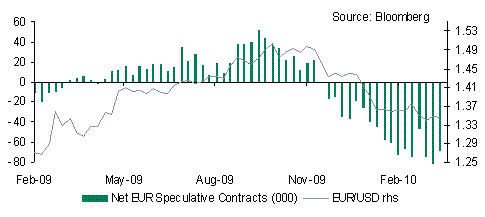
Despite the many data releases this week, the overall tone is likely to be one of consolidation and reduced volatility in the days ahead. This may allow EUR/USD to gain some ground due to short covering, with the CFTC commitment of traders (IMM) report revealing a further increase in net short speculative positions last week, close to the record set a few weeks back, though we suspect that there will be strong resistance around 1.2227.

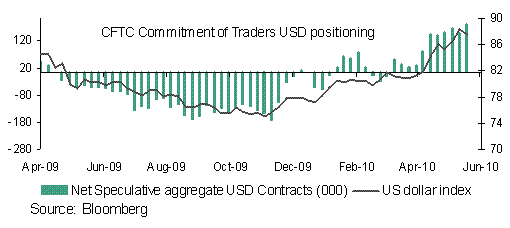
The fact that the IMM data revealed that net aggregate net USD long positions reached an all time high last week, highlights the potential for profit taking this week. USD/JPY will look to take out resistance around 92.55 but this looks unlikely unless the BoJ dishes up anything particularly dovish from its meeting.

Shaping up to be a “risk on” week

It’s most definitely turning into a “risk on” week. On the earnings front both JP Morgan Chase and Intel beat forecasts whilst data releases did not disappoint either. In particular, US retail sales came in much stronger than expected. The Fed’s Beige Book also gave markets some good news to chew on. The reports from the twelve Federal Reserve Districts noted that economic activity “increased somewhat” since the March 3rd report.

The positive tone will continue today with the release of the March industrial production data, expected to show a strong gain over the month (consensus 0.7%), whilst both the Empire State and Philly Fed manufacturing surveys are set to post small gains in April, consistent with strengthening manufacturing activity in the months ahead.

Fed speakers have also been helpful for market sentiment. Fed Chairman Bernanke sounded a little more upbeat on the economy but highlighted the “significant restraints” remaining in the US economy. Bernanke maintained the “extended period” of low rates statement despite some speculation that the Fed was verging on removing this. The net impact of the testimony, improved data and earnings and firmer risk appetite is to keep the USD on pressure. In contrast, commodity currencies including AUD, NZD and CAD, will benefit, both from firmer risk appetite and an upturn in commodity prices.

Despite the positive reception to Greece’s debt auction there is not a lot of faith in the ability of Greece to weather the storm. Reports that Greece will need far more funding than has been initially promised by the EU/IMF – potentially as high as EUR 90 billion over coming years – together with worries about selling the loan package to the public in Germany and other eurozone countries, as well EU comments that Portugal will need further fiscal consolidation, have not done much good for confidence. Technically EUR/USD will see plenty of resistance around 1.3692.

After Singapore’s move to tighten monetary policy via the SGD revaluation, and following close on the heels of India, Malaysia and Vietnam, attention has turned to who’s next in line. South Korea must be a prime candidate, especially following data yesterday revealing a drop in the unemployment rate. Of course, China is very much in the spotlight and is set to embark on monetary tightening measures as well as CNY revaluation soon.

India is set to move again as early as next week, with inflation data today likely to seal the case for another hike (consensus 10.37% in March). The risk remains however, that many Asian central banks are moving too slowly to curb building inflation pressures and may find that they ultimately need to tighten more than they otherwise would have done.

China’s heavy slate of data released will if anything fuel greater expectations of an imminent CNY revaluation as well as monetary tightening. China’s economy grew a very strong 11.9% in Q1, above already strong consensus expectations, whilst CPI rose 2.4% YoY in March.

The growth data alongside further evidence of accelerating real estate prices highlight the risks of overheating in the economy and the need to act quickly to curb inflation threats. Given this expectation, firm risk appetite, and more follow through from Singapore’s FX move, the outlook for other Asian currencies remains positive.

Greek Aid Boosts Euro

Greece is never far from the headlines and the big news over the weekend was once again centred on this small (in terms of economy size) eurozone Country, with the agreement by Eurozone members to provide up to EUR 30 billion in loans to Greece. This will be supplemented by additional contributions from the IMF to the tune of around EUR 15 billion. The rate of around 5% for the three-year fixed loan is well below that yielding on Greek debt but above the International Monetary Fund (IMF) standard lending rate. In other words, the terms of the loan are far more favourable than they would currently face in the market.

After weeks of haggling the decision to detail the amount and terms of a loan for Greece will help reassure markets and likely result in a narrowing in Greek spreads over the near term. Further details will be finalised early in the week including conditions imposed on Greece as well as the exact amount of the IMF contribution but the real test of confidence will be the reception to Greece’s EUR 1.2 billion sale of 3 and 6-month paper at the beginning of the week.

Markets were already embarking on a short covering exercise in EUR/USD early last week according to the latest CFTC IMM report which showed a reduction in net EUR short speculative positions. As a result of the weekend’s agreement the EUR looks set to consolidate its gains into the beginning of this week. Further out, there are still plenty of risks ahead and sellers are likely to emerge around EUR/USD resistance at 1.3696.


Data releases this week will be conducive to maintaining further support for risk appetite whilst shoring up recovery expectations. In particular US March retail sales are set to jump on the back of strong autos spending (consensus 1.2% monthly gain). March industrial production is also likely to record a healthy reading (consensus 0.7% month-on-month), whilst gains in both manufacturing (Empire manufacturing and Philadelphia Fed) and consumer confidence (Michigan confidence) for April are likely.

There will also be plenty of attention on Chinese data this week with a plethora of releases over coming days including FX reserves, GDP, loans data, inflation, retail sales and industrial production. In short, the data will continue to reveal a robust economic performance, which will be good for risk appetite and Asian currencies, but will also add to the pressure to revalue the Chinese currency, CNY, soon.

The USD impact will depend on whether the market reacts to firmer risk appetite or signs of stronger US growth. I suspect the former will apply for now, likely keeping the USD on the back foot early in the week. The main beneficiaries include risk currencies such as AUD, NZD and CAD as well as most Asian currencies. AUD/USD is set to target technical resistance around 0.9407 whilst NZD/USD will set its sights on resistance around 0.7252 over the next few days.