Peripheral debt concerns intensify

European peripheral debt concerns have allowed the USD a semblance of support as the EUR/USD pullback appears to have gathered momentum following its post FOMC meeting peak of around 1.4282. The blow out in peripheral bond spreads has intensified, with Greek, Portuguese and Irish 10 year debt spreads against bonds widening by around 290bps, 136bps and 200bps, respectively from around mid October.

The EUR appears to have taken over from the USD, at least for now, as the weakest link in terms of currencies. EUR/USD looks vulnerable to a break below technical support around 1.3732. Aside from peripheral debt concerns US bonds yields have increased over recent days, with the spread between 10-year US and German bonds widening by around 17 basis points in favour of the USD since the beginning of the month.

The correlation between the bond spread and EUR/USD is significant at around 0.76 over the past 3-months, highlighting the importance of yield spreads in the recent move in the USD against some currencies. Similarly high correlations exist for AUD/USD, USD/JPY and USD/CHF.

Data today will offer little direction for markets suggesting that the risk off mood may continue. US data includes the September trade deficit. The data will be scrutinized for the balance with China, especially following the ongoing widening in the bilateral deficit over recent months, hitting a new record of $28 billion in August. Similarly an expected increase in China’s trade surplus will add to the currency tensions between the two countries. FX tensions will be highlighted at the Seoul G20 meeting beginning tomorrow, with criticism of US QE2 gathering steam.

Commodity and Asian currencies are looking somewhat precariously perched in the near term, with AUD/USD verging on a renewed decline through parity despite robust September home loan approvals data released this morning, which revealed a 1.3% gain, the third straight monthly increase.

However, the NZD looks even more vulnerable following comments by RBNZ governor Bollard that the strength of the Kiwi may reduce the need for higher interest rates. As a result, AUD/NZD has spiked and could see a renewed break above 1.3000 today. Asian currencies are also likely to remain on the backfoot today due both to a firmer USD in general but also nervousness ahead of the G20 meeting.
All eyes on G20

Although we move from feast to famine this week in terms of data there are still a few events that are noteworthy. In the US the September trade balance (Wed) will be of interest with a narrowing expected. Net exports negatively impacted GDP in Q3 but this is likely to reverse in Q4. Michigan confidence at the end of week is also likely to reveal better news with a rebound expected in October in the wake of firming equities, whilst the October budget statement is likely to reveal a sharp narrowing compared to October last year. Several Fed speakers over the week will be also be in focus as markets try to gauge the level of support within the FOMC for the QE2 announced last week.

There are a few data releases of interest in the eurozone including the preliminary estimate of Q3 GDP. Worryingly the divergence across the eurozone between healthier northern Europe and weaker performing in Southern Europe is becoming increasingly stark, a big headache for the Eurozone Central Bank with its one size fits all policy. Elsewhere, in the UK the Bank of England Quarterly Inflation Report will be scrutinized to determine whether recently firmer data and sticky inflation has pushed the BoE away from following the Fed into QE2. Japan’s volatile machinery orders data marks the highlight of its calendar, with a sharp drop expected in September following two strong months.

The main event of the week is the G20 leaders meeting in Seoul at the tail end of the week. Rhetoric going into the meeting suggests little support for the US plan to limit current account surpluses to 4% of GDP and even US officials appear to have cooled on the idea. Moreover the G20 meeting will probably elicit further reaction to the Fed’s QE2 announcement. Reaction was highly critical initially but seems to have softened lately. Currencies will nonetheless, remain the major topic of discussion although expectations of a global agreement are likely to be disappointed.

The Fed’s QE2 announcement helped provide a prop to risk assets and weighed on the USD last week despite the amount of asset purchases being within expectations. The USD will remain a sell on rallies this week and once again the best way to play USD weakness is likely via the higher yielding commodity currencies, especially AUD and NZD. Scandinavian currencies also offer a good way to capitalize on USD weakness.

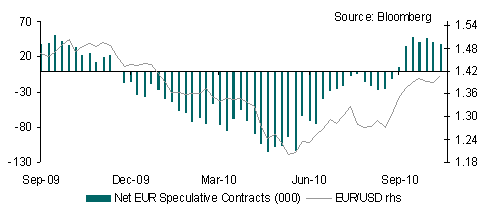
The EUR may also struggle this week given worries about peripheral Europe and widening in peripheral bond spreads. Ireland’s budget cuts announced last week have so far failed to shore up confidence whilst political uncertainties are also rising. Greece’s regional elections revealed that the ruling socialist party narrowly retained control allowing the government to continue with reforms suggesting a modicum of support for its debt. Nonetheless, with Irish and Portuguese sovereign worries continuing, the EUR will continue to lag. Notably the CFTC IMM data revealed that speculative EUR sentiment deteriorated in the latest week to its lowest in over a month. EUR/USD is likely to target 1.3864 after dropping swiftly below the 1.4000 level.

Perhaps best way to play EUR vulnerability is versus the AUD, with a further decline through 1.3800 likely to pave the way for a drop below the 13 September low around 1.3660. AUD/JPY may also be another cross worth exploring especially as Japan’s new fund begins buying JGBs today, which could limit JPY upside. A test of AUD/JPY 83.65 is on the cards shortly. If Australia’s October employment report on Thursday reveals another strong reading it will likely give the currency further support into the end of the week.