EUR boosted, USD under pressure

Market attention remains fully focussed on events in Japan especially related to the country’s nuclear facilities. Risk aversion has spiked higher as a result, with ongoing Middle East tensions adding to the risk off tone. CHF is a key beneficiary of safe haven demand but the picture for JPY is obscured by repatriation expectations on one hand and FX intervention risks/Bank of Japan liquidity injections on the other, keeping USD/JPY clsoe to the 82.00 level. In contrast the AUD is vulnerable to a drop below parity with the USD on Japan worries, especially as Australia is a key destination for Japanese investment and therefore potential for reversal of such flows if Japanese institutions repatriate funds.

The EUR recovered over recent days as worries about the eurozone periphery ease and peripheral bonds spreads narrow. It is only a matter of time before overly long market positioning catches up with the EUR especially as the prospects of further interest rate support to the currency looked limited; markets have already priced in 75bps of policy rate hikes in the eurozone this year, which looks appropriate. It is difficult to see markets pricing in any more tightening than this over coming weeks. Despite its bounce back EUR/USD will struggle to break resistance around 1.4036.

Markets will digest the fallout from the informal EU leaders meeting last Friday which prepared the groundwork for the official meeting on 24/25 March. The initial reaction of the EUR appears to be positive but there is a significant risk of disappointment if the outcome of the meeting on 24/25 March does not live up to expectations. Indeed although Friday’s meeting resulted in an agreement in principle of a new “pact for the Euro” much will depend on the eventual details later this month.

Leaders also agreed on lowering interest rates to Greece by 100bps, and in principle enlarging the scope of the European Financial Stability Facility (EFSF) bailout fund to EUR 440 billion. The main positive surprise was opening the door for the fund to purchase eurozone debt. Data releases will offer little support to the EUR this week, with limited gains in the March German ZEW investor confidence survey today likely to leave markets unperturbed.

The USD’s gains last week proved short-lived and the currency will be tested by another relatively dovish Fed FOMC statement today and a benign reading for core CPI inflation in February. The Fed FOMC meeting is unlikely to deliver any changes to the Fed’s stance and whilst there has recently been some speculation that the Fed will soon remove its “extended period” comment, this is unlikely to happen any time soon. The statement will remind markets that the Fed is in no rush to alter its policy settings, an outcome that may limit the ability of the USD to strengthen this week even if data releases continue to remain on the positive side, including manufacturing survey and industrial production over coming days.
Japan’s Earthquake Aftermath

The aftermath of the devastating earthquake and Tsunami in Japan will largely drive markets this week outweighing the ongoing tensions in the Middle East. Having been in Tokyo as the earthquake struck I can testify to the severity and shock impact of the earthquake. Aside from the terrible human cost the economic cost will be severe at least for the next few months before reconstruction efforts boost growth. An early estimate suggests around a 1% negative impact on GDP this year.

The government is expected to announce a spending package over coming weeks to help fund relief efforts but this will likely put additional strain on Japan’s precarious debt situation at a time when worries about the country’s fiscal health were already high. Nonetheless, there is around JPY 550 billion available from the Fiscal Year 2010 and FY 2011 budgets even before a supplementary budget is needed.

The initial negative JPY impact of the natural disaster gave way to strength in anticipation of expected repatriation flows by Japanese life insurance companies and other institutions as they liquidate assets abroad in order to pay for insurance payments in Japan. The bias to the JPY will likely continue to be upwards but trading will be choppy.

Many of the margin traders holding extreme long USD/JPY positions will likely reduce these positions in the weeks following the earthquake in order to fulfil JPY demand. This may be countered by some foreign selling of Japanese assets especially given that foreigners have accelerated Japanese asset purchases over recent weeks. Therefore, it’s not a straight forward bet to look for JPY strength.

If however, the JPY strengthens rapidly and threatens to drop well below the psychologically important level of 80 the spectre of FX intervention will loom large. Indeed, following the Kobe earthquake in 1995 the JPY strengthened sharply by around 18% but the USD was already in decline prior to the earthquake and USD/JPY was also being pressured lower by Barings Bank related liquidation.

Therefore, comparisons to 1995 should be taken with a pinch of salt. Nonetheless, Japanese authorities will be on guard for further upward JPY pressure. The immediate market focus will be on the Bank of Japan (BoJ) meeting today, with the BoJ announcing the addition of JPY 7 trillion in emergency liquidity support to help stabilise markets.

The Week Ahead

Housing and durable goods orders data will form the highlights of the US calendar this week. Speeches from several Fed speakers will also give some further guidance to the appetite for completing the Fed’s $600 billion in asset purchases. Overall it will be a slow start for FX markets with liquidity thinned by the Presidents Day holiday and as a result currencies are likely to remain in relatively tight ranges. The heavy tone of the USD seen last week is likely to persist over coming days given the absence of driving factors. Even the unrest in the Middle East has been unable to derail the improving trend in risk appetite, another factor dampening USD sentiment.

The EUR held up well last week recouping its early week losses to end on a firm note. The ability of the EUR to shake off various bits of bad news was impressive but whether it can continue to do so is debatable. Data releases are unlikely to provide much of a boost. Whilst eurozone business surveys set to remain at high levels, consistent with a rebound in Q1 GDP growth, further improvements are unlikely. The week kicks off with the February German IFO business confidence survey but at best this will reveal stable reading. The EUR may find some support from signs of higher and in Germany and an above consensus reading for M3 money supply growth though this is not usually a market mover. The data will likely feed nervousness about European Central Bank (ECB) tightening. Ireland could rock the boat however, with general elections likely to keep markets nervous about potential renegotiations of Ireland’s bailout terms.

Although deflationary pressures are easing in Japan there is a long way before the spectre of inflation will emerge. Nonetheless, the Bank of Japan (BoJ) revised up its growth outlook last week, suggesting that the likelihood of more aggressive measures to combat deflation is narrowing. A reminder of ongoing deflation will come with the release of January CPI data this week whilst trade data will be watched to determine what impact the strength of the JPY is having on exports. Both EUR/JPY and USD/JPY are close to the top of their recent ranges and the data are unlikely to provoke a break higher. USD/JPY will likely remain capped around 84.51 whilst EUR/JPY will find tough resistance around 114.02.

GBP performed even better than the EUR last week helped by an even more hawkish sounding than usual BoE Monetary Policy Committee (MPC) member Sentance and a letter from the BoE governor hinting at rate hikes. Even a relatively more slightly dovish Quarterly Inflation Report failed to halt GBP’s ascent. Further direction will come from the February MPC minutes in which we expect to see two dissenters, namely Sentence and Weale who likely voted for a rate hike. However, there is a risk that they may have been joined by at least one other, with speculation that MPC member Bean may have joined the dissenters. Such speculation alongside the jump in January UK retail sales at the end of last week will likely add to more upside potential for GBP, setting it up for another gain this week. Its upward momentum may however, be hampered by the large net long GBP positioning overhang.

Egypt Unrest Hits Risk Trades

Recent weeks have seen a real contrast in policy and growth across various economies. A case in point was the surprise drop in UK GDP in Q4 contrasting sharply with the solid (albeit less than forecast) rise in US Q4 2010 GDP. The resilience of the US consumer was particularly evident in the data. The European Central Bank’s (ECB) hawkish slant as reflected in comments from President Trichet compared to the dovish pitch of the Fed FOMC is another clear contrast for markets to ponder.

The ECB’s hawkish tone gave the EUR a lift but expectations of an early Eurozone rate hike looks premature. Although Eurozone inflation data (Monday) will reveal a further rise in CPI above the ECB’s target, to around 2.4% in January, this will not equate to a policy rate hike anytime soon. This message is likely to be echoed at this week’s ECB meeting where policy will be characterised as “appropriate”.

Whilst monetary tightening expectations look overdone in the Eurozone the same can be said for hopes of an expansion in the EU bailout fund (EFSF). Indeed, the fact that EU Commissioner Rehn appeared to pour cold water over an expansion in the size of the fund could hit the EUR and the currency may find itself struggling to extend gains over coming weeks especially if interest rate expectations return to reality too, with a move to EUR/USD 1.4000 looking far harder to achieve than it did only a few days ago.

It’s worth noting that a renewed widening in peripheral debt spreads will also send an ominous signal for the EUR. Against this background the EU Council meeting on February 4 will be in focus but any expectation of a unified policy resolution will be disappointed.

However, markets perhaps should not solely focus on peripheral Europe as the downgrading of Japan’s credit ratings last week highlights. Warnings about US credit ratings also demonstrate that the US authorities will need to get their act together to find a solution to reversing the unsustainable path of the US fiscal deficit, something that was not particularly apparent in last week’s State of the Union Address.

Last week ended with a risk off tone filtering through markets as unrest in Egypt provoked a sell-off in risk assets whilst worries about oil supplies saw oil prices spike. Gold surged on safe haven demand too. This week, markets will focus on events in the Middle East but there will be thinner trading conditions as Chinese New Year holidays result in a shortened trading week in various countries in Asia.

The main release of the week is the US January jobs report at the end of the week. Regional job market indicators and the trend in jobless claims point to a 160k gain in January although the unemployment rate will likely edge higher. Final clues to the payrolls outcome will be deemed from the ISM manufacturing confidence survey and ADP private sector jobs report this week. Whilst the January jobs report is unlikely to alter expectations for Fed policy (given the elevated unemployment rate) the USD may continue to benefit from rising risk aversion.

Temporary Euro Relief

Eurozone peripheral country travails continue to garner most market attention. There was at least a semblance of improvement on this front as peripheral bond spreads with German bunds narrowed on Tuesday but this was largely due to European Central Bank (ECB) bond buying than any improvement in sentiment. The fact that German bund yields also rose helped to narrow bund-peripheral spreads further.

A clearer test of sentiment will be today’s debt sales by Portugal followed by actions by Spain and Italy tomorrow. ECB buying of Portuguese bonds has given some relief to other debt, with Spanish and Italian debt spreads narrowing too. Even Greece managed to sell short term debt (EUR 1.95 bn of 26 week T-bills) but at a higher cost than the previous sale.

Perhaps a stronger boost to sentiment will come from the news that European Union (EU) governments are discussing an increase in the EUR 440 billion bailout fund in recognition of the fact that the fund may prove too small to cope if the crisis spreads to Spain. However, don’t expect a decision anytime soon, with next week’s meeting of EU finance ministers unlikely to agree to such a move. Support (or lack) of from Germany may prove to be a sticking point against the background of domestic political pressure.

Other options being considered include the possibility of the EFSF (European Financial Stability Facility) purchasing bonds in the secondary market and lowering interest rates on EFSF bailout loans. News that Japan will buy 20% of EFSF bonds this month as well as recent supportive comments from China suggest that an increase in the size of the EFSF may be easily funded by such investors. The EUR will gain some support against the background of such speculation but its upside may be restrained around its 200-day moving average at EUR/USD 1.3071.

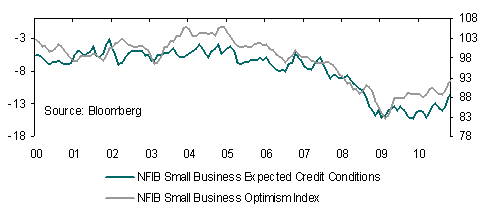
In the US the economic news was not so positive for a change as the National Federation of Independent Business (NFIB) small business optimism survey came in weaker than expected in December, an outcome that will come as a blow given that it suggests some stuttering in the recovery process as well as hiring.

There is only secondary data scheduled today, with most attention on the Fed’s Beige Book later tonight. The survey of Federal Reserve districts will likely reveal a broad based but moderate improvement in economic conditions with the exception of housing activity. A speech by the Fed’s Fisher on Monetary policy will also be in focus. Like the Fed’s Plosser overnight he may highlight some caution about the impact of Fed quantitative easing (QE).

The AUD is increasingly feeling the impact of the flooding in Queensland Australia as the extent of economic damage is revealed. Reserve Bank of Australia (RBA) board member McKibbin estimated that it could knock off at least 1% from economic growth. This may prove too negative and although the flooding will result in a significantly negative impact on growth in Q1 rebuilding and reconstruction will mean that overall growth for 2011 will not be as significantly impacted. Nonetheless, a paring back in RBA policy tightening expectations will see the AUD come under further pressure, with a move down to around AUD/USD 0.9634 on the cards over the short-term.