
Happy New Year!
2010 ended on a sour note especially for eurozone equity markets (and the Australian cricket team) where there has yet to be a resolution to ongoing growth/fiscal/debt tensions. The EUR strengthened into year end but this looked more like position adjustment than a shift in sentiment and EUR/USD is likely to face stiff resistance around the 1.3500 level this week, with a drop back towards 1.3000 more likely. In the US there was some disappointment in the form of a surprise drop in December consumer confidence data but pending home sales and the Chicago PMI beat expectations, with the overall tone of US data remaining positive.
There will be plenty to chew on this week in terms of data and events which will provide some much needed direction at the beginning of the year. The main event is the December US jobs report at the end of the week. Ahead of this there will be clues from various other job market indicators including the Challenger jobs survey, ADP employment report, and the ISM manufacturing and non-manufacturing surveys. The data will reflect a modest improvement in job market conditions and the preliminary forecast for December payrolls is for a 135k increase, with private payrolls set to rise by 145k and the unemployment rate likely to fall slightly to 9.7%.
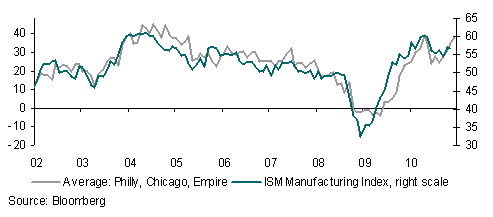
The minutes of the 14 December Fed FOMC meeting (Tue) will also come under scrutiny against the background of rising US bond yields. In addition, Fed Chairman Bernanke will speak on the monetary and fiscal outlook as well as the US economy to the Senate Budget Panel. Bernanke will once again defend the use of quantitative easing whilst keeping his options open to extend it if needed. However, the changing composition of the FOMC with four new members added in 2011 suggests a more hawkish tinge, which will likely make it more difficult to agree on further QE. In any case, the tax/payroll holiday package agreed by the US administration means that more QE will not be necessary.
It’s probably not the most auspicious time for new member Estonia to be joining the eurozone especially as much of the speculation last year focussed on a potential break up. The beginning of the year will likely see ongoing attention on the tribulations of Ireland after its bailout, with looming elections in the country. Portugal and Spain will also remain in focus as the “two-speed” recovery in 2011 takes shape. Data releases this week include monetary data in the form of the eurozone December CPI estimate and M3 money supply. Inflation will tick up to 2% but this ought to be of little concern for the ECB. Final PMI data and confidence indices will likely paint a picture of slight moderation.
The USD ended the year on a soft note, with year lows against the CHF and multi year lows vs. AUD registered, but its weakness is unlikely to extend much further. The key driver will remain relative bond yields and on this front given the prospects for relative US yields to move higher, the USD will likely gain support. There maybe a soft spot for the USD in Q1 2011 but for most of the rest of the year the USD is set to strengthen especially against the EUR which will increasingly comer under pressure as peripheral tensions and growth divergence weigh on the currency.

 ECONOMETER