US Dollar Upside, Euro tensions

Following the famine that was last week this week will see a feast of data releases, which hopefully will give some clearer direction to currency markets. The key eurozone data focus for FX markets will be the German February ZEW survey and it should highlight that investor confidence is bouncing back smartly. This will be accompanied by data showing a slight acceleration in GDP in the eurozone in Q4 2010. Good news, but the reality is that the EUR is being driven more by peripheral bond tensions and relative yields.

Although the EUR may get a brief lift from the news of the resignation of Egypt’s President Mubarak this will likely prove temporary. Given that tensions are beginning to creep higher EUR/USD may struggle to make any headway this week and will more likely slip below 1.3500 for a test of 1.3440 as sentiment sours. Even the usual sovereign interest may look a little more reluctant to provide support this week. The net long positioning overhang as reflected in the CFTC IMM data suggests some scope for a squaring in long positions, likely accelerating any downside pressure.

As usual data releases are failing to have a major impact on the JPY whilst interest rate / yield differentials suggest the JPY should be much weaker. One explanation for the stubbornly strong JPY is the strength of recent portfolio inflows to Japan, especially into its bond markets. This could reverse quickly and IMM positioning suggests that the potential for a shakeout of long positioning looms large, something that many Japanese margin traders are well positioned for according to TFX data. USD/JPY 84.51 will provide firm resistance to a move higher in the short-term.

GBP will be guided by the Bank of England Quarterly Inflation Report on Wednesday as well as the January CPI and retail sales data. The Report will reveal that inflation moderates over the medium term, even if short-term projections are shifted higher. Consequently, interest rate markets may even pare back overly hawkish expectations for UK rates, leaving GBP vulnerable. Nonetheless, markets maybe somewhat more sceptical or at least nervous in light of a likely increase in UK CPI, albeit mostly due to the increase in value added tax (VAT) at the turn of the year. Moreover, GBP may find some solace from a rebound in retail sales in January.
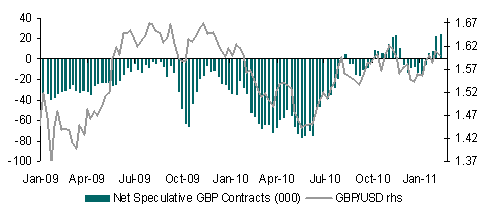
Overall, GBP/USD will take its cue from EUR/USD and the currency is vulnerable to a sustained drop below 1.6000 this week. The fact that GBP/USD IMM positioning is at its highest since September 2008 suggests a lot of scope for a sell-off. EUR/GBP looks like its consolidating in an even narrower range between 0.8400-0.8500.

Another positive slate of US data releases and likely more pressure on US bond markets this week suggest that the USD will find further support, with the USD index likely to take a shot at the 79.00 level. Indeed a further improvement in both the Philly Fed and Empire manufacturing surveys is expected, providing more evidence of strengthening manufacturing momentum, will be borne out in the hard data, with a healthy gain in industrial output expected. Similarly a healthy reading for US retail sales will support the evidence that the US consumer is in full recovery mode.

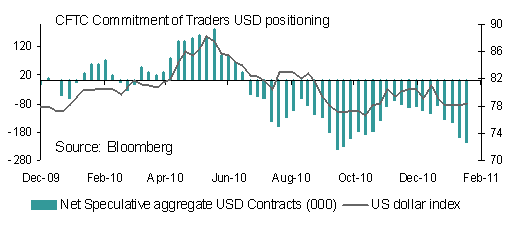
The positive impact on the USD may be dampened however, by benign inflation readings this week, supporting the view that US policy rates will not be raised for a long time yet. This is likely to be echoed in the Fed FOMC minutes this week. Nonetheless, speculative positioning suggests plenty of scope for short USD covering, with the latest CFTC IMM report revealing the biggest net short position since October 2010.
Econometer.org has been nominated in FXstreet.com’s Forex Best Awards 2011 in the “Best Fundamental Analysis” category. The survey is available at http://www.surveymonkey.com/s/fx_awards_2011
Euro Problems Intensify

Following the bullish build up and increasingly lofty expectations for the US December jobs report the actual outcome was disappointing, at least on the headline reading. Non farm payrolls rose 103k which in reality was not that much less than initial forecasts but the real consensus was somewhat higher following the robust ADP private sector jobs report earlier in the week. There was some mitigation in the 70k upward revisions to October and November and surprisingly large decline in the unemployment rate to 9.4%. Consequently the market impact was less severe than it could have been and even the USD ended higher on the day.

Nonetheless, the data provided a dose of reality to markets’ optimistic expectations and this was reinforced by Fed Chairman Bernanke in testimony on Friday. He highlighted that it will take “considerable time” before the unemployment rate drops to a normal level, which could threaten recovery. Even the drop in the unemployment rate revealed in the December is report is vulnerable to a reversal given it was in part due to a drop in the labour force. This reality provided support to bond markets which may undermine the USD given the drop in bond yields. However, the USD’s anti-EUR credentials suggest that it will remain resilient.

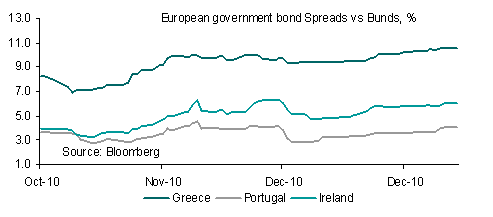
Eurozone’s woes continued to heat up last week as the holiday season relief proved temporary. Stress in peripheral debt markets increased despite buying from the ECB last week and faced with debt sales in Italy, Portugal and Spain this week the pressure is likely to continue over coming days. Whether its worries about a resolution to funding issues and investor haircuts and/or the growing divergence in growth across the eurozone, the EUR continues to look vulnerable in the absence of any resolution to these issues. Having easily slipped below its 200-day moving average EUR/USD will eye support around 1.2767.

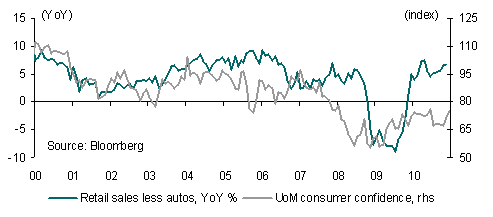
US data this week will look upbeat and provide more support for the USD, with December retail sales likely to record a healthy increase both on the headline and ex-autos readings as indicated by strong holiday sales. Similarly industrial production will reveal a solid gain whilst the Beige Book will highlight that economic conditions across the Federal Reserve districts, have continued to improve. The weak spot will remain housing but despite this consumer spending and sentiment are likely to be reported as resilient. The Beige Book is unlikely to reveal much of an inflation threat despite higher commodity prices. This will be echoed in the core CPI reading this week.

Although headline inflation in the eurozone breached the 2.0% threshold in December the ECB is unlikely to use it as an excuse to move towards tighter monetary conditions any time soon. The ECB meeting this week will nonetheless likely note the increase in various inflation gauges in President Trichet’s press statement. Most attention will be focused on any comments that Trichet makes regarding peripheral bond strains. In reality there is little that he can say that will alter market sentiment. Whilst an ongoing commitment to buy debt will help on the margin it will do little to stem the growing tide of negative sentiment towards eurozone assets.

Euro support unwinding

The USD is set to end the year in firm form aided by rising US bond yields. Yesterday’s data supported this trend. The Empire manufacturing survey beat expectations rebounding nearly 22 points in December and industrial production rose 0.4% in November although there was a downward revision to the previous month. This was against the background of soft inflation, with headline and core CPI rising 0.1%, indicating that the Fed will remain committed to its $600 billion program of asset purchases.

EUR/USD dropped below support around 1.3280, weighed down by various pieces of negative news. Moodys downgrade of Spain’s credit ratings outlook dented sentiment but the bigger sell off in EUR followed the move in US bond yields. The prospect of EUR recovery over the short term looks limited. The issue of finding agreement on a permanent debt resolution fund continues to fuel uncertainty and will likely come to a head at the EU summit starting today.

Added to this Ireland’s main opposition party which will likely play a part in forming a new government early next year wants some of the debt burden shared with senior bank debt holders. The good news in Europe was few and far between but at least Ireland’s parliament backed the EU/IMF bailout for the country. Of course the backing could be derailed following elections in January. Perhaps the most surprising aspect of the move in EUR is that it’s not weaker. The next support level for EUR/USD is around 1.3160.

The divergence between the US and Europe on policy is stark, with loose fiscal and monetary policy in the US providing a significant prop to the US economy, whilst the much tighter fiscal stance and less loose monetary policy threatens to result in more pressure on eurozone growth especially against the background of an overvalued EUR. This divergence will manifest itself next year in the form of US growth outperformance and stronger USD vs. EUR.

The resilience of the UK consumer continues to surprise, with the CBI distributive trades survey coming in strong and rising further to +56 in December. The only problem with the survey data is that is has not tracked official data. November retail sales data today will give further clues to the strength of spending heading into Christmas. More worryingly from the Bank of England’s perspective is the fact that inflation continues to rise despite assurances that the increase in inflation is temporary. At the least the likelihood of more quantitative easing QE from the BoE has evaporated though it is still a long way off before interest rates are hiked. In the meantime GBP continues to underperform both EUR and USD though GBP/USD will find strong support around 1.5512.

Upward pressure on US yields and the USD us unlikely be derailed US data releases today. Housing starts are set to bounce back in November, with a 6% gain expected, whilst the trend in jobless claims will likely continue to move lower. The Philly Fed manufacturing survey is set to lose a little momentum reversing some of November’s sharp gain but will still remain at a healthy level.

The Week Ahead

As markets make the last strides towards year end it appears that currencies at least are becoming increasingly resigned to trading in ranges. Even the beleaguered EUR has not traded far from the 1.3200 level despite significant bond market gyrations. Even news that inflation in China came in well above expectations in November (5.1% YoY) and increased prospects of a rate hike is likely to prompt a limited reaction from a lethargic market.

At the tail end of last week US data provided further support to the growing pool of evidence indicating strengthening US economic conditions, with the trade deficit surprisingly narrowing in October, a fact that will add to Q4 GDP growth, whilst the Michigan measure of consumer confidence registered a bigger than expected increase in November to its highest level since June.

The jump in consumer confidence bodes well for retail spending and highlights the prospects that US November retail sales tomorrow are set to reveal solid gains both headline and ex-autos sales driven by sales and promotions over the holiday season. Other data too, will paint an encouraging picture, with November industrial production (Wed) set to reveal a healthy gain helped by a bounce in utility output. Manufacturing surveys will be mixed with a rebound in the Empire manufacturing survey in December likely but in contrast a drop in the Philly Fed expected.

The main event this week is the FOMC decision tomorrow the Fed is expected to deliver few surprises. The Fed funds rate is expected to remain “exceptionally low for an extended period”. Despite some recent encouraging data recovery remains slow and the fact that core inflation continues to decelerate (CPI inflation data on Wednesday is set to reveal a benign outcome with core CPI at 0.6%) whilst the unemployment rate has moved higher means that the Fed is no rush to alter policy including its commitment to buy $600 billion in Treasuries including $105 billion between now and January 11.

In Europe there are also some key releases that will garner plenty of attention including the December German ZEW and IFO investor and manufacturing confidence surveys and flash purchasing managers indices (PMI) readings. The data are set to remain reasonably healthy and may keep market attention from straying to ongoing problems in the eurozone periphery but this will prove temporary at least until the markets are convinced that European Union leaders are shifting away from “piecemeal” solutions to ending the crisis. The EU leaders’ summit at the end of the week will be important in this respect. A Spanish debt auction on Thursday will also be in focus.

Assuming the forecasts for US data prove correct it is likely that US bond markets will remain under pressure unless the Fed says something that fuels a further decline in yield such as highlighting prospects for more quantitative easing (QE). However, following the tax compromise agreement last week this seems unlikely. Higher relative US bond yields will keep the USD supported, and as I have previously noted, the most sensitive currencies will be the AUD, EUR and JPY, all of which are likely to remain under varying degrees of downward pressure in the short term. The AUD will also be particularly sensitive to prospects of further Chinese monetary tightening.

Temporary relief for US Dollar

Downbeat US economic news in the form of a widening US trade deficit, increase in jobless claims and bigger than expected increase in top line PPI inflation contrasted with upbeat earnings from Google. Google shares surged over 9% in after hours trading but US data tarnished the risk on mood of markets, leaving commodity prices and equities lower and the USD firmer. Higher US Treasury yields, especially in the longer end following a poor 30 year auction, helped the USD to push higher.

The USD’s trend is undoubtedly lower but profit taking may be the order of the day ahead of a speech by Fed Chairman Bernanke on monetary policy later today and the release of the highly anticipated US Treasury Report in which China may be named as a currency manipulator. A speech by the Minneapolis Fed’s Kocherlatoka (non voter) this morning sounded downbeat, even suggesting that “Fed asset purchases may have a muted effect”. Despite such comments the Fed appears likely to embark on QE2 at its 3 November meeting.

Today is also a key data for US data releases with September data on US retail sales, and CPI and October data on Michigan confidence and Empire manufacturing scheduled for release. Retail sales are likely to look reasonable, with headline sales expected to rise 0.5% and ex-autos sales expected up 0.4%. The gauges of both manufacturing and consumer confidence are also likely to show some recovery whilst inflation pressures will remain benign. Given the uncertainty about the magnitude of QE the Fed will undertake in November, the CPI data will have added importance.

The US trade will likely have resulted in an intensification of expectations that China will be labelled as a currency manipulator in the US Treasury report later today. The August trade deficit with China widened $28.04 billion, the largest on record. At the least it will give further ammunition to the US Congress who are spoiling for a fight ahead of mid-term congressional elections, whilst heightening tensions ahead of the November G20 meeting.

Indeed currency frictions continue to increase although “currency war” seems to be an extreme label for it. Nonetheless, Singapore’s move yesterday to widen the SGD band highlighted the pressure that many central banks in the region are coming under to combat local currency strength. Singapore’s move may be a monetary tightening but it is also a tacit recognition of the costs of intervening to weaken or at least limit the strength of currencies in the region. To have maintained the previous band would have required ongoing and aggressive FX intervention which has its own costs in terms of sterilization.

This problem will remain as long as the USD remains weak and this in turn will depend on US QE policy and bond yields. A lot of negativity is priced into the USD and market positioning has become quite extreme suggesting that it will not all be a downhill bet for the currency. Many currencies breached or came close to testing key psychological and technical levels yesterday, with EUR/USD breaching 1.4000, GBP/USD breaking 1.6000, USD/CAD breaking below parity and AUD/USD coming close to testing parity. Some reversal is likely today, but any relief for the USD is likely to prove temporary.