
On September 22 1985 the governments of France, West Germany, Japan, US and UK signed the Plaza Accord which agreed to sharply weaken the USD. At this time it was widely agreed that the USD was overly strong and needed to fall sharply and consequently these countries engineered a significant depreciation of the USD.
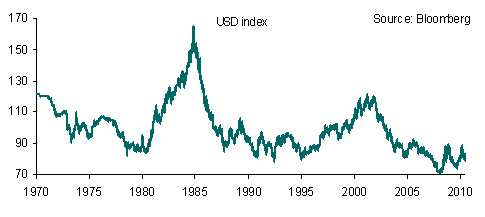
It is ironic that 25 years later governments are once again intervening in various ways and that the USD is once again facing a precipitous decline as the Fed moves towards implementing further quantitative easing. This time central banks are acting unilaterally, however, and there is little agreement between countries. For instance Japan’s authorities found no help from the Fed or any other central bank in its recent actions to buy USD/JPY.
So far Japan’s FX interventions have been discreet after the initial USD/JPY buying on 15 September. The fact that Japan is less inclined to advertise its FX intervention comes as little surprise given the intensifying pressure from the US Congress on China for not allowing its currency, the CNY to strengthen. Tensions have deepened over recent weeks and the backing of a bill last week by an important Congressional committee to allow US companies to seek tariffs on Chinese imports suggests that the situation has taken a turn for the worse.
The softly softly approach to Japan’s FX intervention and US/China friction reflects the fact that unlike in 1985 we may be entering a period in which currency and in turn trade tensions are on the verge of intensifying sharply against the background of subdued global economic recovery.
The Fed’s revelation that it is moving closer to implementing further quantitative easing has shifted the debate to when QE2 occurs rather than if, with a November move moving into focus. Clearly the USD took the news negatively and will likely remain under pressure for a prolonged period as the simple fact of more USD supply weighs heavily on the currency. Markets will be able to garner more clues to the timing of QE2, with a plethora of Fed speakers on tap over coming days.
This week the US economic news will be downbeat, with September consumer and manufacturing confidence surveys likely to register declines, with consumer sentiment weighed down by the weakness in job market conditions. Personal income and spending will also be of interest and gains are expected for both. There will be plenty of attention on the core PCE deflator given that further declines could give clues to the timing of QE2.
Attention in Europe will centre on Wednesday’s recommendations for legislation on “economic governance” from the European Commission. Proposed penalties for fiscal indiscipline may include withholding of funding and/or voting restrictions but such measures would be politically contentious. Measures to enforce fiscal discipline ought to be positive for markets given the renewed tensions in peripheral bond markets in the eurozone.
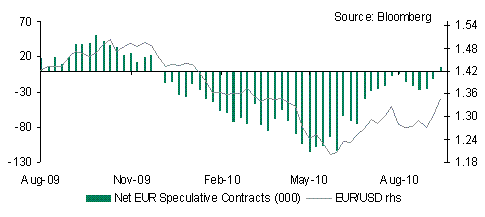
The EUR was a major outperformer last week benefiting from intensifying US QE speculation and will set its sights on technical resistance (20 April high) around 1.3523 in the short-term. Notably EUR speculative positioning has turned positive for the first time this year according to the CFTC IMM data, reflecting the sharp shift in speculative appetite for the currency over recent weeks. The EUR has been surprisingly resilient to renewed sovereign debt concerns and similarly softer data will not inflict much damage to the currency this week.

 ECONOMETER