USD Pressured As Yields Dip

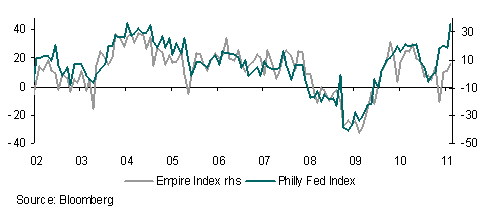
The USD came under pressure despite a higher than forecast reading for January US CPI and a strong jump in the February Philly Fed manufacturing survey. On the flip side, an increase in weekly jobless claims dented sentiment. The overnight rally in US Treasury yields was a factor likely weighing on the USD. The US calendar is light today leaving markets to focus on the G20 meeting and to ponder next week’s releases including durable goods orders, existing and new home sales.
The jump in the European Central Bank (ECB) marginal facility borrowing to EUR 15 billion, its highest since June 2009, provoked some jitters about potential problems in one or more eurozone banks. At a time when there are already plenty of nerves surrounding the fate of WestLB and news that Moody’s is reviewing another German bank for possible downgrade, this adds to an already nervous environment for the EUR.

Nonetheless, EUR/USD appears to be fighting off such concerns, with strong buying interest on dips around 1.3550. The G20 meeting under France’s presidency is unlikely to have any direct impact on the EUR or other currencies for that matter, with a G20 source stating that the usual statement about “excess volatility and disorderly movements in FX” will be omitted.

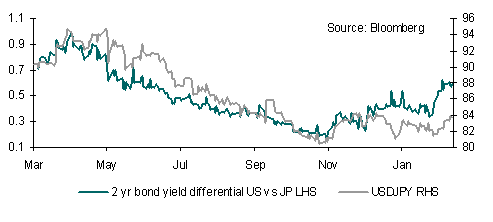
Although USD/JPY has been a highly sensitive currency pair to differentials between 2-year US and Japanese bonds (JGBs), this sensitivity has all but collapsed over recent weeks. USD/JPY failed to break the 84.00 level, coming close this week. There appears to be little scope to break the current range ahead of next week’s trade data and CPI.
Given the recent loss in momentum of Japan’s exports the data will be instructive on how damaging the strength of the JPY on the economy. In the near term, escalating tensions in the Middle East will likely keep the JPY supported, with support around USD/JPY 83.09 on the cards.

It seems that the jump in UK CPI this week (to 4.0%) provoked even more hawkish comments than usual from the Bank of England BoE’s Sentance, with the MPC member stating that the Quarterly Inflation Report understates the upside risks to inflation indicating that interest rates need to rise more quickly and by more than expected. Specifically on GBP he warned that the Bank should not be relaxed about its value.

Although these comments should not be particularly surprising from a known hawk, they may just help to underpin GBP ahead of the January retail sales report. Expectations for a rebound in sales following a weather related drop in the previous month will likely help prop up GBP, with GBP/USD resistance seen around 1.6279.
FX sensitivity to yield

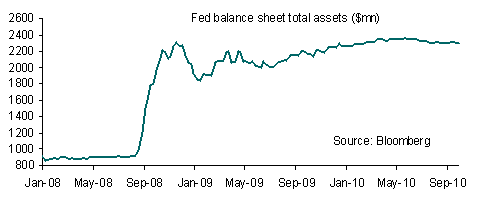
It’s all about yield. The back up in US bond yields in reaction to the US tax compromise from the Obama administration has been particularly sharp. US 10 year bond yields jumped around 35bps this week prior to a small correction in yields overnight whilst 2s were up 21bps. US bond yields are now back where they were in June, a fact that makes a mockery out of the Fed’s attempts to drive bond yields lower via quantitative easing (QE). Yields elsewhere increased too but by a smaller degree whilst equity market sentiment has been dampened by the rise in global yields although US stocks still ended higher overnight.

There is plenty of commentary discussing the impact on currencies of the move in bond yields so it’s worth looking in more detail how sensitive FX markets have been to yield. The most sensitive currencies i.e. those with the highest 3-month correlations with relative bond yield differentials (2 year) are the AUD/USD, EUR/USD, and of course USD/JPY. However, there is less sensitivity to gyrations in 10 year yields with no currency pair registering a statistically significant correlation with 10-year bond yield differentials over the past 3-months.

Assuming that US bond yields continue to push higher into 2011, with much lager increases in both nominal and yields expected, this means that AUD, EUR and JPY will face the most pressure relative to the USD. Moreover, the stimulus measures agreed by the US administration will likely lead to many analysts penciling in higher growth forecasts over 2011 whilst reducing the prospects of QE3 from taking place, all of which is USD positive. I still retain a degree of caution in Q1 2011, especially with regard to a potential bounce in EUR, especially if the ECB becomes more aggressive in its bond buying, but even so, any EUR rally is likely to prove termporary.

The impact of higher US yields on the AUD may be more limited however, despite the high correlation with relative bond yields, as Australian bond yields are also likely to rise somewhat given the resilience of its economy. This was clearly demonstrated by Australian November employment data released overnight revealing yet another consensus beating outcome of +54.6k, with all the gains coming from full time employment. Against the background of a generally firm USD, the best way to play AUD resilience is via the NZD, with the currency pair likely break through resistance around 1.3220 (21 October high).

US bonds sell off, USD rallies

US Treasuries didn’t like it but the compromise agreement to extend Bush era tax cuts, as well as a 13-month unfunded extension of long term unemployment benefits and a $120 billion payroll tax holiday will provide the US economy with further support and likely to lead to some upgrading of US growth forecasts. The agreement changes the dynamic of fiscal support for the US economy and means that the US is the only major country not tightening fiscal policy. It also implies less heavy lifting needed from the Federal Reserve.

Whilst some US taxpayers will not now face tax increases following the end of the year, the longer term question of fiscal adjustment and reform appears to have been postponed. US bond yields jumped on the news as the agreement effectively adds $1 trillion to US debt over the next couple of years. The contrasting fiscal stance with Europe could eventually haunt US markets as focus eventually return to US fiscal issues, with negative implications for the country’s credit ratings. However, at present, attention remains firmly fixed on European sovereign risk rather than US deficit fears.

There has been some relief to European debt markets, albeit temporarily, with debt markets ignoring the news that European Finance Ministers have not agreed to extend the size of the support fund (EFSF) and have also failed to agree on the introduction of recently touted “E-bonds”. ECB buying of peripheral bonds has given some support whilst the passage of the first votes of the Irish budget has eased tensions in its bond markets. Nonetheless as highlighted by the IMF, Europe’s ”piecemeal” response to the debt crisis in the region is insufficient to stem the crisis, suggesting that the current easing in pressure could prove short-lived.

The jump in US bond yields has given the USD some support but I wouldn’t overplay the impact on the USD of bond yields at present. Correlations reflecting the sensitivity of bond yields to various currencies remain relatively low suggesting that the influence of yield on FX is still limited. That said, the correlation is likely to increase over coming months as US yields move higher. The impact on USD/JPY is likely to be particularly sharp, with the currency pair likely to move higher over coming months. The USD has likely rallied due to the likelihood that the tax cut extensions will mean prospects of less quantitative easing by the Fed and prospects of relatively firmer US growth.

An ongoing concern for markets is the prospects of higher interest rates in China. As regular readers of Econometer many note, my blog posts have been a bit sporadic lately. This is not down to laziness but the fact that I have been on the road quite a bit travelling in Asia (and UK) visiting clients. One of the clear concerns that I have heard often repeated is the potential for China’s measures to curb real estate speculation, rising inflation, and lending, to slow China’s growth sharply and cause problems for the rest of the world. This is the topic of another post for another day, but against the background of such concerns the AUD and other high beta currencies are likely to fail to make much headway.

Peripheral debt concerns intensify

European peripheral debt concerns have allowed the USD a semblance of support as the EUR/USD pullback appears to have gathered momentum following its post FOMC meeting peak of around 1.4282. The blow out in peripheral bond spreads has intensified, with Greek, Portuguese and Irish 10 year debt spreads against bonds widening by around 290bps, 136bps and 200bps, respectively from around mid October.

The EUR appears to have taken over from the USD, at least for now, as the weakest link in terms of currencies. EUR/USD looks vulnerable to a break below technical support around 1.3732. Aside from peripheral debt concerns US bonds yields have increased over recent days, with the spread between 10-year US and German bonds widening by around 17 basis points in favour of the USD since the beginning of the month.

The correlation between the bond spread and EUR/USD is significant at around 0.76 over the past 3-months, highlighting the importance of yield spreads in the recent move in the USD against some currencies. Similarly high correlations exist for AUD/USD, USD/JPY and USD/CHF.

Data today will offer little direction for markets suggesting that the risk off mood may continue. US data includes the September trade deficit. The data will be scrutinized for the balance with China, especially following the ongoing widening in the bilateral deficit over recent months, hitting a new record of $28 billion in August. Similarly an expected increase in China’s trade surplus will add to the currency tensions between the two countries. FX tensions will be highlighted at the Seoul G20 meeting beginning tomorrow, with criticism of US QE2 gathering steam.

Commodity and Asian currencies are looking somewhat precariously perched in the near term, with AUD/USD verging on a renewed decline through parity despite robust September home loan approvals data released this morning, which revealed a 1.3% gain, the third straight monthly increase.

However, the NZD looks even more vulnerable following comments by RBNZ governor Bollard that the strength of the Kiwi may reduce the need for higher interest rates. As a result, AUD/NZD has spiked and could see a renewed break above 1.3000 today. Asian currencies are also likely to remain on the backfoot today due both to a firmer USD in general but also nervousness ahead of the G20 meeting.

Currencies At Pivotal Levels

Ahead of today’s highly anticipated Fed FOMC meeting markets are holding their breath to determine exactly what the Fed will deliver. The consensus view is for the Fed to announce a programme of $500 billion in asset purchases spread over a period of 6-months. The reaction in currency markets will depend on the risks around this figure. Should the Fed deliver a bigger outcome, say in the region of $1 trillion or above, the US dollar will likely come under renewed pressure. However, a more cautious amount of asset purchases will be US dollar positive.

It has to be noted that the Fed will likely keep its options open and keep the program open ended depending on the evolution of economic data which it will use to calibrate its asset purchases. The USD will likely trade with a soft tone ahead of the Fed outcome, but with so much in the price, it may be wise to be wary of a sell on rumour, buy on fact outcome.

Whatever the outcome many currencies are at pivotal levels against the USD at present, with AUD/USD flirting around parity following yesterday’s surprise Australian rate hike, EUR/USD holding above 1.4000, GBP/USD resuming gains above 1.600 despite a knock back from weaker than forecast construction data, whilst USD/JPY continues to edge towards 80.00. Also, both AUD and CAD are trading close to parity with the USD. The Fed decision will be instrumental in determining whether the USD continues to remain on the weaker side of these important levels.

Going into the FOMC meeting the USD has remained under pressure especially against Asian currencies as noted by the renewed appreciation in the ADXY (a weighted index of Asian currencies) against the USD this week. Although it appears that the central banks in Asia have the green light to intervene at will following the recent G20 meeting the strength of capital inflows into the region is proving to be a growing headache for policy makers. One option is implementing measures to restrict “hot money” inflows but so far no central bank in the region has shown a willingness to implement measures that are deemed as particularly aggressive.

There has been some concern that Asia’s export momentum was beginning to fade as revealed in September exports and purchasing managers index (PMI) data in the region and this in turn could have acted as a disincentive to inflows of capital, resulting in renewed Asian currency weakness. The jury is still out on this front but its worth noting that Korean exports in October reversed a large part of the decline seen over previous months. Moreover, the export orders component of Korea’s PMI remained firm suggesting that exports will resume their recovery.

Nonetheless, manufacturing PMIs have registered some decline in October in much of Asia suggesting some loss of momentum, with weaker US and European growth likely to impact negatively. However, China’s robust PMI, suggests that this source of support for Asian trade will remain solid. Similarly a rise in India’s manufacturing PMI in October driven largely by domestic demand, highlights the resilience of its economy although with inflation peaking its unlikely that the Reserve Bank of India (RBI) will follow its rate hike on Tuesday with further tightening too quickly.