SNB shakes up FX markets – Pressure now on Japan?

The action by the Swiss National Bank yesterday rippled through FX markets fuelling sharp moves across major currencies. In case you missed it the SNB introduced a currency floor in EUR/CHF at 1.20 and committed itself to buy FX in unlimited amounts. The last time the SNB did something similar was in 1978 when a ceiling was set against the Deutsche Mark. The sharp initial reaction to the news saw EUR/CHF jump by around 8.5% largely as a result of the shock from the announcement.

The SNB will not need to worry about the inflationary implications of pumping CHF into the market while it is clear that the currency is highly overvalued, supporting their cause. However, the real test will be evident over coming days and weeks in the commitment to hold the 1.20 level at a time when the situation in the eurozone periphery continues to deteriorate and demand for CHF remains strong. The risk is that the SNB may have simply set up a target for markets to attack. One other implication of the SNB’s move is that it could be a trigger for an intensification of ‘currency wars’.

The onus is now on the Japanese authorities to act more aggressively especially if safe haven flows focus increasingly on the JPY and less on the CHF given the new EUR/CHF floor. So far FX interventions have clearly not worked as was the case in Switzerland and Japan’s new Prime Minister is likely to want to prove his credentials. Japan has had a tendency to underwhelm with regard to JPY measures in the past and unless there is a major announcement today USD/JPY is likely to move lower again below 77.00.

Scandinavian currencies are also set to be beneficiaries of the SNB’s decision. EUR/SEK has come under increasing downside pressure over recent weeks even as risk aversion has intensified and it appears that safe haven flows out of Europe are now targeting Scandinavian currencies. As the CHF is now less attractive in this respect, the SEK as well as NOK will find themselves under further upside pressure over coming days and weeks. Both NOK and SEK versus EUR and USD have had insignificant correlations with risk over recent months, highlighting their appeal as anti-EUR currencies.
Greece’s trials and tribulations

Two main influences on markets continue to weigh on sentiment. Firstly the trials and tribulations of the eurozone periphery remain centre of attention. The failure of Greek Prime Minister Papandreou to win cross party support for austerity measures at the end of last week highlights the problems Greece is facing both domestically and externally.

Reports that European officials are negotiating tough bailout conditions including major external intervention in terms of tax collection and privatisation suggest that gaining further aid will not be easy. The second weight on market sentiment is global growth concerns, with a string of disappointing data releases over recent weeks leading to an intensification of concerns about the pace of recovery.

Markets will likely remain nervous in this environment and it is difficult to see risk appetite improving to any major degree. This has proven bullish for bond markets, with the tone set to continue this week. Currencies remain in ranges and holidays today in the US and UK will likely result in thin trading. The resilience of the EUR to peripheral concerns has been impressive but at the same time Greek concerns will limit any gains. Meanwhile, gold and precious metals look to remain well supported, with gold’s safe haven bid remaining solid.

USD sentiment has improved sharply according to the latest CFTC IMM report which reveals that net USD short positions have been cut in half over the last two weeks with positioning well above the 3-month average. Conversely net EUR longs continue to shrink as speculative investors off load the currency. The fact that the EUR is not weaker than it is points to the influence of official demand for the currency, especially from Asia.

This week will likely be dominated by ongoing discussions about Greece and given the opposition to austerity measures and potentially strict bailout terms, forging an agreement will not be easy. Reports suggest that around half of Greece’s financing needs until the end of 2013 could be accounted for without new loans via privatisation and changes in terms for private bondholders, with Europe and the IMF needed to lend an additional EUR 30-35 billion on top of the EUR 110 already slated.

Data releases are likely to take a back seat but there will still be plenty of attention on the key release of the week, namely the May US jobs report. The market looks for a 185k increase in payrolls, with the unemployment rate edging lower to 8.9%. This would mark the lowest payrolls reading in 4 months. Clues to the jobs data will be garnered from the May ADP jobs report, ISM manufacturing survey and consumer confidence data earlier in the week.

Eurozone peripheral tensions

The USD index remains under pressure but will likely continue to consolidate. The USD continues to be undermined by adverse interest rate differentials and is gaining little support from rising risk aversion. One factor that will help dictate USD direction over coming months is the prospects for further quantitative easing once QE2 ends.

Fed officials offered varied views on the subject. Dallas Fed President Fisher hinted he would support cutting short asset purchases before the end of June, whilst Atlanta Fed President Lockhart noted he was “very cautious” about further asset purchases. Meanwhile Chicago Fed President Evans noted that he believes the hurdle for altering the asset purchase plan is “pretty high”.

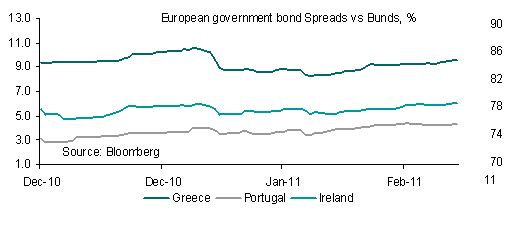
Although there is a lack of first tier data releases in the eurozone this week there is certainly plenty for markets to chew on in terms of peripheral country issues, which may just prevent the EUR from extending its gains. Eurozone peripheral debt spreads have undergone a renewed widening over recent weeks as debt fears have increased and worries that Portugal may follow Ireland and Greece in needing a bailout have risen.

Meanwhile news that Ireland’s incoming government will introduce legislation allowing the restructuring of some senior bank bonds, will add to tensions. Meanwhile, the downgrading of Greece’s government bond ratings to B1 from Ba1 dealt another blow sentiment following hot on the heels of Fitch’s downgrade of Spain’s outlook to negative although the EUR proved resilient to the news. EUR/USD continues to look as though it will consolidate around the 1.4000 level, but worsening sentiment towards the periphery may open up downside as the EUR’s resilience fades.

Upward revisions to eurozone growth and inflation forecasts and of course a hawkish shift in eurozone interest rate expectations may have justified the EUR move higher over recent weeks. However, there does not seem to be much that will provide the stimulus for further gains from current levels.

The market has already priced in an interest hike as early as next month’s European Central Bank (ECB) meeting and further tightening thereafter. The risk now appears asymmetric skewed to the downside especially if tensions between the eurozone core and peripheral countries deepen. How long the EUR can ignore such tensions?

It’s not only the eurozone periphery that should worry about ratings. Japan’s ratings agency R&I has warned that it may be forced to cut Japan’s sovereign ratings before April’s local elections due to current political problems. R&I’s concern revolve around the potential for political problems to delay fiscal reforms. As usual the JPY remains unmoved by political issues and is moving to the stronger side of its recent range against the background of elevated risk aversion.

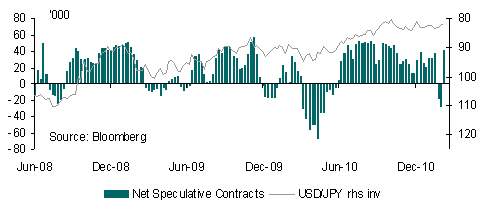
Although the JPY has not been particularly sensitive to risk over recent months shorter-term correlations shows that its sensitivity has increased. Given that Middle-East tensions do not appear to be easing the JPY will remain well supported. Indeed, speculative positioning data reveals the highest JPY net long position since November 2010. As risk appetite improves JPY positioning will be pared back but this is unlikely to be imminent, with USD/JPY set to remain close to support around 81.10.

Data and earnings focus

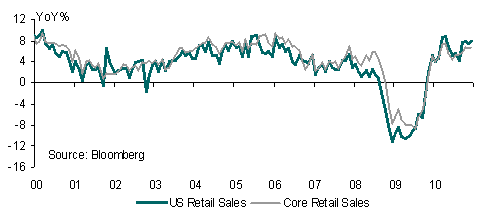
Friday’s round of US data were generally upbeat, highlighting that consumer spending is coming back to life. Inflation pressures however, remain benign at least on the core reading highlighting the Fed’s concern that inflation is running below the level consistent with its mandate. In other words it will be a long time, probably late into 2012 before policy rates increase.

While the Fed is no hurry to raise rates despite a few hawkish rumblings within the FOMC the European Central Bank (ECB) in contrast appears to have become more eager to pull the trigger for higher rates. ECB President Trichet’s hawkish press conference last week set the cat amongst the pigeons and marked a clear shift in ECB rhetoric towards a more hawkish stance.

A very big problem for the ECB is that the eurozone economy is not performing along the lines that its hawkish rhetoric would suggest, especially in the periphery. Growth momentum in the core in contrast, as likely reflected in the January ZEW investor confidence and IFO business confidence survey data this week in Germany, remains positive. Both surveys are likely to stabilize at healthy levels but how long can the likes of Germany drag along the eurozone periphery?

There will be relatively more attention on the meeting of Eurogroup/Ecofin officials, with focus on issues such as enlarging the size of the European Financial Stability Facility (EFSF) bailout fund and development of a “comprehensive plan” to contain the eurozone crisis. Don’t look for any conclusive agreements as this may have to wait until the European Union (EU) Council meeting on 4 February assuming (optimistically given ongoing German resistance) some agreement can even be reached.

Following the success (albeit at relatively high yields) of the eurozone debt auctions last week, sentiment for peripheral debt will face further tests this week in the form of debt sales in Spain, Belgium and Portugal.

The US Martin Luther King Jr. holiday will result in a quiet start to the week for markets but there will be plenty to chew on. This week’s key earnings reports include several banks scheduled to release Q4 earnings. Financials are a leading sector in the rally in equities at present and these earnings will be critical to determine whether the rally has legs.

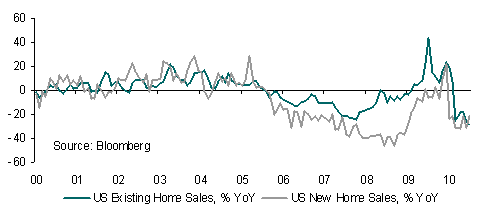
The US data slate includes January manufacturing surveys in the form of the Empire and Philly Fed, both of which are likely to post healthy gains whilst existing home sales are also likely to rise. This will not change the generally weak picture of the US housing market, with high inventories and elevated foreclosures characterizing conditions. As if to prove this, housing starts are set to drop in December. On the rates front, the Bank of Canada is likely to keep its policy rates on hold this week.

After coming under pressure last week much for the USD will depend on the eurozone’s travails to determine further direction. Concrete evidence of progress at the Ecofin may bolster the EUR further, with resistance seen around 1.3500 but don’t bank on it. The ability of eurozone officials to let down often lofty expectations should not be ignored. In any case following sharp gains last week progress over coming days for the EUR will be harder to achieve.