Peripheral debt concerns intensify

European peripheral debt concerns have allowed the USD a semblance of support as the EUR/USD pullback appears to have gathered momentum following its post FOMC meeting peak of around 1.4282. The blow out in peripheral bond spreads has intensified, with Greek, Portuguese and Irish 10 year debt spreads against bonds widening by around 290bps, 136bps and 200bps, respectively from around mid October.

The EUR appears to have taken over from the USD, at least for now, as the weakest link in terms of currencies. EUR/USD looks vulnerable to a break below technical support around 1.3732. Aside from peripheral debt concerns US bonds yields have increased over recent days, with the spread between 10-year US and German bonds widening by around 17 basis points in favour of the USD since the beginning of the month.

The correlation between the bond spread and EUR/USD is significant at around 0.76 over the past 3-months, highlighting the importance of yield spreads in the recent move in the USD against some currencies. Similarly high correlations exist for AUD/USD, USD/JPY and USD/CHF.

Data today will offer little direction for markets suggesting that the risk off mood may continue. US data includes the September trade deficit. The data will be scrutinized for the balance with China, especially following the ongoing widening in the bilateral deficit over recent months, hitting a new record of $28 billion in August. Similarly an expected increase in China’s trade surplus will add to the currency tensions between the two countries. FX tensions will be highlighted at the Seoul G20 meeting beginning tomorrow, with criticism of US QE2 gathering steam.

Commodity and Asian currencies are looking somewhat precariously perched in the near term, with AUD/USD verging on a renewed decline through parity despite robust September home loan approvals data released this morning, which revealed a 1.3% gain, the third straight monthly increase.

However, the NZD looks even more vulnerable following comments by RBNZ governor Bollard that the strength of the Kiwi may reduce the need for higher interest rates. As a result, AUD/NZD has spiked and could see a renewed break above 1.3000 today. Asian currencies are also likely to remain on the backfoot today due both to a firmer USD in general but also nervousness ahead of the G20 meeting.
Exhausted

No the title is not meant to describe how I felt this morning when I woke up but how I feel the market is looking at present in terms of risk trades. Firmer than feared economic data in the US and China and the agreement in Basel on new bank capital ratios boosted risk appetite but the moves are already beginning to fade. It would be easy to jump on the bandwagon but after the sharp gains registered over recent days I would suggest taking a cautious stance on jumping into risk trades at present.

The EUR has played a degree of catch up to risk currencies, rallying sharply against the USD, helped in part by the European Commission which raised its forecasts for the eurozone economy from 0.9% for 2010 to 1.7%. Although the change in forecasts should come as little surprise give that it is now in line with the European Central Bank’s (ECB) expectations the news bolstered the view of economic resilience in the eurozone. Unfortunately as the ECB noted following its last meeting there are plenty of downside risks to growth next year and upcoming data releases will be viewed to determine how sharply growth momentum will slow into next year.

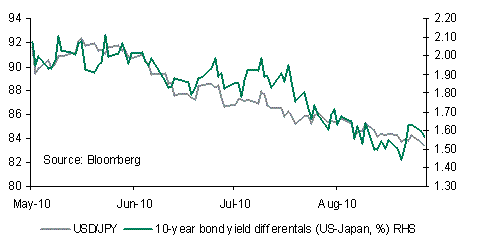
One currency that strengthened was the JPY and this was mainly due the view that Prime Minister Kan will win the contest for leadership of the governing DPJ party in Japan. The race remains very close, with Prime Minister Kan having a slight lead according to Japanese press. The FX market will pay particular attention to the result given that the other contender Ichiro Ozawa has stated his willingness to drive the JPY lower as well as increase fiscal spending. The results of the election will be known shortly and should Ozawa win USD/JPY will likely find support although the bigger influence is likely to be a shift in relative US/Japan bond yields which due to the sell off in US Treasuries over recent days has become more supportive of a higher USD/JPY.

GBP has lagged the move in many risk currencies, failing to take advantage of the weaker USD. There was some relief overnight from an increase in consumer confidence in August according to the Nationwide index, which rose 5 points to 61, from a 14-month low in July. However, any boost to GBP sentiment will have been outweighed by a fall in UK house prices according to RICS, which revealed the sharpest one-month fall in August since June 2004. The data supports the view that the rally in UK house prices could soon be over. Weaker housing activity will also likely limit any further improvement in consumer confidence. Some of this is already priced into GBP however, and over the short-term EUR/GBP may struggle to breach the 0.8400 level.

Another underperformer overnight was the NZD which was hit by disappointing retail sales data for July, which fell 0.4%. Although the drop followed a strong gain in the previous month the data supports the view that the consumer remains cautious in New Zealand, a factor that will likely play into the view that New Zealand’s central bank, the RBNZ will keep policy on hold when they meet tomorrow. NZD slipped off its highs around 0.7347 overnight and also managed to dampen the upside momentum for AUD/USD which will likely struggle to sustain a break through resistance around 0.9350.

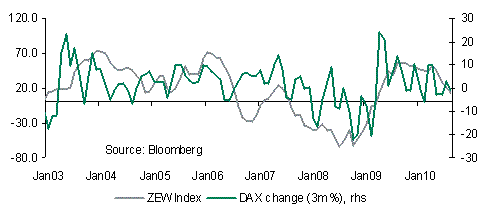
Today’s data will provide further direction for the days ahead, with the September German ZEW survey of investor confidence likely to be closely scrutinized. A drop in the economic sentiment gauge to around 10 is expected from 14 in August, highlighting that eurozone growth momentum is beginning to wane. Hard data in the form of eurozone industrial production will also record a weaker performance, likely to drop 0.3% in July. The data will likely cap the EUR today.

In the US the main release is the August retail sales report for which a 0.3% gain in both headline and ex-autos sales is expected. Sales will have been helped by back to school spending although major discounting will have weighed on retailers’ profits. Nonetheless, any gain even if modest will be a welcome development for Q3 growth in the US.

Euro Has That Sinking Feeling

The reaction to the US May jobs report shows that markets are particularly susceptible to negative US news at a time when growth fragilities in Europe are becoming increasingly apparent. Coupled with worries about Hungary, risk aversion has jumped.

Unsurprisingly the EUR took the brunt of pressure. Rhetoric over the weekend may help to assuage some fears but I suspect it is too late now that the cat is out of the bag. Hungary’s government maintained that it will meet this year’s budget deficit target of 3.8% of GDP. European Union officials also attempted to calm market concerns, downplaying any comparison of Hungary to Greece.

The overall EUR/USD downtrend remains intact. Renewed doubts about German participation in the EU/IMF rescue package, with the German constitutional court potentially blocking its contribution, will add to pressure as well as a UK press report titled EUR ‘will be dead in five years’ . The January 1999 EUR/USD introduction level around 1.1830 has now moved squarely into sight.

It is unlikely that data and events this week will do much to reverse the market’s bearish tone. Highlights include the ECB, BoE and RBNZ meetings in Europe, UK and New Zealand, respectively. The ECB (Thursday) is highly unlikely to shift its monetary policy stance. Given some opposition to bond purchases from within the ECB council the comments in the accompanying statement will be closely monitored. The BoE will also leave policy unchanged on the same day but the RBNZ is set to begin its hiking cycle with a 25bps move.

On the data front the US slate includes the Fed’s Beige Book, April trade data, May retail sales and June Michigan confidence. The Beige Book is likely to reveal some improvement in activity with little sign of inflation, whilst the trade deficit is set to widen further due to a higher oil import bill. Retail sales will reveal an autos led increase in the headline reading but more subdued core sales, whilst consumer confidence is set to rise for a second straight month.

There will be more attention on rhetoric from EU officials rather than eurozone data, with the Eurogroup of Finance Minister’s and Ecofin meetings garnering more interest. In Japan, politics will take centre stage, with the new cabinet line up in focus following the confirmation of Naoto Kan as Prime Minister. Comments by the new PM himself will be of interest, especially with regard to combating deflation and in particular any elaboration on his penchant for a weaker JPY.

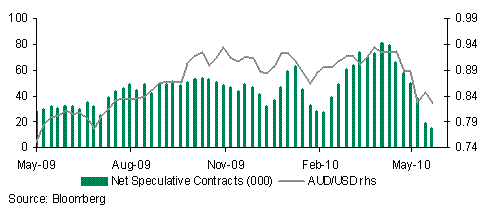
All-in-all, the week is unlikely to see a let up in pressure on risk trades and will start much as the last week ended. Although the market’s attention is on the EUR, it should be noted that the AUD has lost even more ground so far this month although the EUR remains the biggest loser in terms of major currencies so far this year (vs USD). In the case of the AUD the move reflects a massive unwinding of long positioning (as reflected in the latest CFTC IMM data which shows that speculative AUD positioning has dropped to its lowest since March 2009).

In contrast in the case of the EUR where positioning is already very negative, the move simply reflects deteriorating fundamentals. The fact that European officials are showing little concern about the decline in the EUR (why should they given that the currency is now trading around fair value) and in some cases encouraging it, suggests that there is little to stop EUR/USD from dropping much further and parity is looming a lot closer.

What To Watch This Week

A “crisis over” mode is being adopted across markets as worries about Greece wane and economic data provides support to recovery hopes, whilst importantly allaying fears of a “double-dip”. Equities, bonds and currencies are reacting accordingly; equities are close to year highs, bond yields have risen and spreads have narrowed, whilst the USD and JPY are weaker, and conversely risk currencies are stronger. Even EUR/USD pushed higher on its way to 1.3800 as a number of stops were cleared and shorts were squeezed.

The coming weeks will be important to determine whether there is any staying power in the upward move in risk assets. A lot of the February data in the US will likely be obscured by bad weather however, including industrial production figures this week, leaving markets with little to go on. In Europe, the key release is the March German ZEW investor confidence survey, and better news in Greece, will likely prevent a sharper decline in confidence.

After both the Swish National Bank (SNB) and Reserve Bank of New Zealand (RBNZ) unsurprisingly left policy unchanged last week this week sees the turn of the US Federal Reserve and Bank of Japan (BoJ). Neither central bank is likely to shift policy but the Fed statement will be looked upon for guidance on the timing of rate hikes. The comment in the FOMC statement that the Fed Funds rate is expected to remain low for an “extended period” is set to be retained, even if some FOMC members are itching to remove it soon.

The BoJ meeting will be particularly interesting. I have just returned from a week long trip in Japan and on the ground there is plenty of speculation that the BoJ will take extra action to combat deflation and weaken the JPY. Additionally comments by Japan’s Prime Minister and Deputy PM have highlighted the potential for action to weaken the JPY although the usual market hesitation to sell JPY into fiscal year end and repatriation talk may mean a weaker JPY path is not straightforward.

Greece will not move too far from the spotlight, with EU officials likely to give the official stamp of approval on Greece’s deficit cutting measures and plenty of discussion at the Eurogroup Finance Minister’s meeting and Ecofin meeting early in the week. Moreover, weekend press reports suggest that a bailout up to EUR 25 billion is close to being agreed. Other topics of conversation will include the possible formation of a European Monetary Fund, though this looks like it will be a non-starter given the many objections to it.

Overall, risk appetite is set to continue its upward trajectory, likely keeping the USD on the back foot. Some deterioration in USD sentiment was reflected in the fact that net long aggregate USD speculation positioning has turned negative again according to the latest CFTC Commitment of Traders (IMM) report. Much in terms of FX direction will depend on what the FOMC says rather than does tomorrow.

EUR/USD may take a crack at resistance around 1.3840 on improving Greek news but it is difficult to see much upside from current levels. The one to watch will be the JPY, especially if the BoJ embarks on aggressive actions at this week’s meeting, leaving USD/JPY plenty of scope to test resistance around 92.16.

What to watch

US February non-farm payrolls released at the end of last week put the finishing touches to a week that saw risk appetite continue to improve each day. There were no big surprises from the various central bank decisions including the RBA, BoE and ECB last week though Malaysia’s central bank did surprise by hiking 25bps. The RBA’s 25bps hike was a close call but in the event the Bank delivered a 25bps hike too.

Sentiment towards Greece has improved in the wake of the announcement of fresh austerity measures by the Greek government, which provoked a short covering EUR/USD rally from around 1.3435 lows though the EUR never really showed signs of embarking on the sort of rebound the massive short EUR speculative position had suggested.

US jobs report revealed that non-farm payrolls dropped by 36k and was all the more remarkable given the potentially very negative impact of severe weather distortions to the data. The data provides the setting for a firm start to the week in terms of risk appetite which will likely put the USD under a bit of pressure into the week.

This week’s events include central bank decisions in New Zealand and Switzerland. The RBNZ has already indicated that it sees no reason to raise interest rates in H1 and an unchanged decision will come as no surprise to the market. The NZD offers better potential for appreciation than the AUD in the short term and I suspect that a “risk on” tone at least early in the week will keep the Kiwi supported.

The SNB in Switzerland is also unlikely to offer any surprises in its rate decision with an unchanged outcome likely. It appears that the Bank has take a somewhat more relaxed tone to the strength of the CHF and any comments on the currency will be scrtunised for hints of intervention.

It probably isn’t much of a shock to expect Greece to remain in the spotlight this week as markets continue to deliberate whether Greece needs financial aid and if so, whether it will be provided by EU countries such as Germany and/or France, at least in terms of some form of debt guarantee.

Further tensions within Greece, with more strikes in the pipeline will test the resolve of the government to carry through austerity measures while likely acting as a cap on any EUR upside over coming days. I still think EUR/USD 1.3789 is a tough nut to crack.

Meanwhile, GBP/USD looks like it will find it tough going to gain much traction above 1.50 with political uncertainties in the form of a likely hung parliament as well as what looks like various efforts by the BoE officials to talk GBP down, likely to prevent an real recovery.