
The USD is close to giving back the full extent of the gains it made during May. The USD index hit a low of around 72.696 on 4th May and looks on track to re-test this level.
It would be easy to say that the USD is being undermined by low US bond yields but whilst this is partly true only USD/JPY has had a significant correlation with bond yield differentials over the past 3-months.
The reality is that the EUR has become the anti USD at present. Whilst the EUR composes 57.6% of the USD index which would imply a high correlation between the USD index and EUR, it does not explain the fact that the correlation over the past 3-months is at an extremely high 0.98.
It is probably a relief for USD bulls that the currency is not being particularly influenced by yield differentials at present as it would be even weaker if it was so. US bond yields continue to be depressed by growth concerns, following a spate of weaker US data releases, culminating in the May jobs report last week.
Speculation about QE3 is similarly unhelpful for the USD but the prospects of this occurring are still very slim and notably whilst Bernanke highlighted the “frustrating slow” economic recovery in a speech last night he did not indicate a desire to embark on QE3.
Nonetheless, any clues about Fed policy will be closely scrutinised and this includes today’s Beige Book of regional economic conditions. Our expectation of a relatively downbeat report suggests that the USD will find no support from this source.
Ultimately USD recovery will require EUR weakness but the European currency appears to have regained its ‘Teflon’ coating as its resistance to bad news grows once again. The EUR was helped yesterday by a stronger than expected April retail sales report and will undoubtedly find further solace from confirmation of a strong start to the year in terms of Q1 GDP today.
Overall direction continues to come from news in the eurozone periphery, however. The fact that officials appear to be inching towards an agreement in Greece has clearly been appreciated by the EUR. Moreover, potential ECB backing for debt rollovers by private investors will alleviate some concerns.
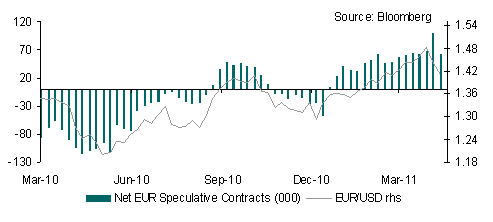
Nonetheless, at current levels, with EUR/USD on the path to its 4th May high around 1.4940 it appears that a lot is already priced in and the scope for disappointment is high.

 ECONOMETER