US Dollar On The Rise

There are plenty of US releases on tap this week but perhaps the most important for the USD will be the minutes of the April 26-27 Fed FOMC meeting. Taken together with speeches by Fed officials including Bernanke, FX markets will attempt to gauge clues to Fed policy post the end of QE2. The Fed’s stance at this point will be the major determinant of whether the USD can sustain its rally over the medium term. The lack of back up in US bond yields suggests that USD momentum could slow, with markets likely to move into wide ranges over coming weeks.

It is worth considering which currencies will suffer more in the event that the USD extends its gains. The correlation between the USD index and EUR/USD is extremely strong (even accounting for the fact that the EUR is a large part of the USD index) suggesting that the USDs gains are largely a result of the EUR’s woes. Aside from the EUR, GBP, AUD and CAD are the most sensitive major currencies to USD strength whilst many emerging market currencies including ZAR, TRY, SGD, KRW, THB, IDR, BRL and MXN, are all highly susceptible to the impact of a stronger USD.

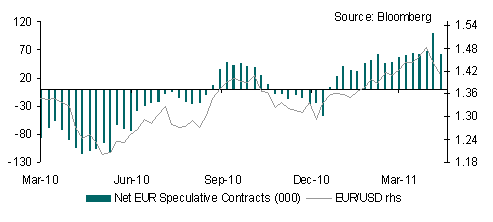
Robust Q1 GDP growth readings in both Germany and France helped to spur gains in the EUR but this proved short-lived. Sentiment for the currency has soured and as reflected in the CFTC IMM data long positions are being scaled back. Nonetheless, there is still plenty of scope for more EUR selling given ongoing worries about the eurozone periphery, which are finally taking their toll on the EUR. A break below EUR/USD 1.4021 would open the door for a test of 1.3980.
The eurogroup and ecofin meetings will be of interest to markets this week but any additional support for Greece is unlikely to be announced at this time. However, likely approval of Portugal’s bailout may alleviate some pressure on the EUR but any positive impetus will be limited. Even on the data front, markets will not be impressed with the German ZEW index of investor confidence likely to register a further decline in May.

Japanese officials have been shying away from further FX intervention by blaming the drop in USD/JPY over recent weeks on general USD weakness despite the move towards 80. However, this view is not really backed up by correlation analysis which shows that there is only a very low sensitivity of USD/JPY to general USD moves over recent months. One explanation for the strength of the JPY is strong flows of portfolio capital into Japan, with both bond and equity markets registering net inflows over the past four straight weeks.

This is not the only explanation, however. One of the main JPY drivers has been a narrowing in yield differentials. This is unlikely to persist with yield differentials set to widen sharply over coming months resulting in a sharply higher USD/JPY. As usual data releases are unlikely to have a big impact on the JPY this week but if anything, a further decline in consumer confidence, and a negative reading for Q1 GDP, will maintain the pressure for a weaker JPY and more aggressive Bank of Japan (BoJ) action although the BoJ is unlikely to shift policy this week.
Position Unwinding Boosts USD

The USD’s multi-month fall has come to an abrupt halt, with the currency registering gains in reaction to what appears to be a major position unwinding across asset markets, led by a drop in commodity prices.

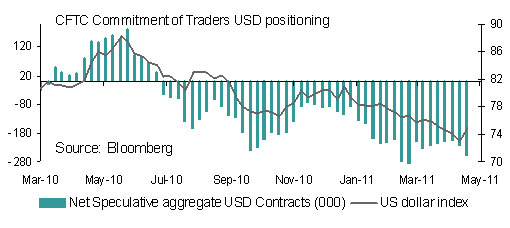
Will it continue? Whilst I am amongst the more bullish forecasters on the USD over the medium term, the current rally could prove to be short-lived in the absence of a shift in Federal Reserve rhetoric or end to quantitative easing (QE2). Nonetheless, the market had got itself very short USDs (as reflected in the CFTC IMM data as of early last week which showed an increase in net short positions) and the rally in the USD last week was likely spurred by major short-covering which could extend further into this week.

The move in the USD gained momentum as European Central Bank (ECB) President Trichet proved to be less hawkish than many expected in the press conference following last Thursday’s ECB meeting. Moreover, renewed worries about Greece at the end of last week, with a report in the German Der Spiegel, later denied by Greek officials, that the country was planning to leave the Eurozone dented the EUR,

Taken together with the improving trend in US April non-farm payrolls (April registered +244k increase, with private payrolls 268k), these factors colluded to provide further positive stimulus to the USD and negative fallout on the EUR. The room for EUR downside is evident in the net long EUR speculative position, which rose to its highest since December 2007 as of 3rd May.

This week’s batch of US releases including March trade data, April retail sales and CPI, are unlikely to result in a reversal in last week’s trend though a trend like reading for core CPI, with the annual rate below the Fed’s comfort zone will reinforce expectations of dovish Fed policy being maintained, which could inject a dose of caution into the USD’s rally.

Against the background of a likely widening in the US trade deficit in March there will plenty of attention on the annual strategic and economic dialogue beginning today, with markets interested in discussions on Chinese worries about the gaping US fiscal deficit and US concerns about China’s exchange rate policy.

Greece’s denial of plans to leave the eurozone and discussions over a further adjustment to Greece’s bail out package, may help limit any drop in the EUR this week though it will by no means mark the end of such speculation about the periphery especially with this weeks’ Q1 GDP data releases across the eurozone likely to further highlight the divergence between the core and the periphery even if the headline eurozone reading rebounds strongly as we expect.

In the UK the Bank of England Quarterly Inflation Report will be the main influence on GBP. Downward growth revisions will play into the view that inflation will eventually moderate, capping expectation of higher interest rates over the coming months. However, the likely upward revision to near term inflation forecasts will help limit any damage to GBP.

GBP has lost ground to the USD but it should be noted that it has outperformed the EUR over recent days, reversing some of the recent run up in EUR/GBP. Given that EUR sentiment is likely to remain fragile this week, GBP may continue to capitalise, with a test of EUR/GBP 0.8672 on the cards.

Risk Aversion Creeps Higher

The USD index has dropped by around 17% since June 2010 high and despite a slight bounce this week it is unlikely to mark the beginning of a sustained turnaround. Nonetheless, I would caution about getting carried away with positioning for USD weakness. Whilst an imminent recovery looks unlikely the risk/reward of shorting the USD is becoming increasingly unfavourable.

Until then Federal Reserve comments will be watched closely for clues on policy and there are plenty of Fed speakers this week including a speech by Boston Fed’s Rosengren today and Fed Chairman Bernanke tomorrow. The USD will also gain some direction from jobs data and markets will be able to gauge more clues for Friday’s non-farm payrolls data , with the release of the April ADP employment report today.

The EUR is one currency that has suffered this week. News that Portugal’s caretaker government has reached an agreement with the European Union / International Monetary Fund on a bailout of as much as EUR 78 billion has so far been greeted with a muted response. EUR attention is still very much focussed on the ECB meeting tomorrow and prospects of a hawkish press statement suggest that EUR/USD downside will be limited, with support seen around 1.4755.

The JPY has strengthened by around 5% versus USD since its 6th April USD/JPY high around 85.53, confounding expectations that Japan’s FX intervention following the county’s devastating earthquake marked a major turning point in the currency. A combination of narrowing interest rate differentials with the US (2 year US/Japan yield differentials have narrowed by around 20bps in the past month), strong capital inflows to Japan (net bond and equity flows in the last four weeks have increased to their highest this year), and rising risk aversion have all played their part in driving the JPY higher.

As a result USD/JPY is fast approaching the psychologically important level of 80, a level that if breached will likely lead to FX intervention. Although Golden Week holidays in Japan this week suggest that JPY liquidity may be quite thin, Japanese authorities are likely to remain resistant to further gains in the JPY, likely using thinning liquidity to their advantage.

Despite the JPY’s recent strength speculative positioning over the past four weeks has remained net short JPY, whilst Japanese margin traders have also increased their long USD/JPY bets, suggesting that these classes of investors are not to blame for the JPY’s appreciation. This suggests that FX intervention may not be as successful given that the market is already short JPY.

Given the risk of intervention on USD/JPY, the CHF appears to be an easier choice for safe haven demand against the background of rising risk aversion. The currency has risen to a record high against the USD, gaining around 8.3% so far this year. Given the hints of higher interest rates by the Swiss National Bank (SNB) and resilience economic performance, downside risks for CHF are limited at present unless risk appetite improves sharply. Further gains are likely with USD/CHF likely to test the 0.8570 support level over the short-term.

RBA on hold, RBI hikes rates

News of the death of Osama Bin Laden gave the USD a lift and its gains have extended for a second day. Extreme short market positioning as well as increasing risk aversion (perhaps due to worries about retaliation following Bin Laden’s death) have helped the USD.

However, the boost to the USD could be short-lived in the current environment in which it remains the preferred global funding currency. Indeed, the fact that US bond yields have dropped sharply over recent weeks continues to undermine the USD against various currencies.

The USD firmed despite the US ISM manufacturing index dropping slightly, albeit from a high level. The survey provided some useful clues to Friday’s US jobs report, with the slight decline in the employment component of the ISM survey to 62.7 consistent with a 200k forecast for April payrolls.

Ahead of the European Central Bank (ECB) meeting on Thursday hawkish rhetoric from new Council member and Bundesbank chief Weidmann (replacing Weber) and more reassurances from Greek and EU officials that there will be no debt restructuring or haircut on the country’s debt has helped the EUR although it is notable that it could not sustain a foot hold above 1.49. Eurozone bond yields have risen by around 20bps compared to US yields over the past month, a fact that suggests that the EUR may not fall far in the short-term.

USD/JPY is trading dangerously close to levels that may provoke FX intervention by the Japanese authorities. General USD weakness fuelled a drop in USD/JPY which has been exacerbated by a rise in risk aversion over recent days (higher risk aversion usually plays in favour of a stronger JPY). The biggest determinant of the drop in USD/JPY appears to a narrowing in bond yields (2-year bond yields have narrowed by around 20bps over the past month) largely due to a rally in US bonds.

Unsurprisingly the Reserve Bank of Australia (RBA) left its cash rate on hold at 4.75%. The accompanying statement showed little inclination to hike rates anytime soon, with credit growth noted as modest, pressure from a stronger exchange rate on the traded sector and temporary prices shocks which are expected to dissipate. The only indication that rates will eventually increase is the view that longer term inflation is expected to move higher.

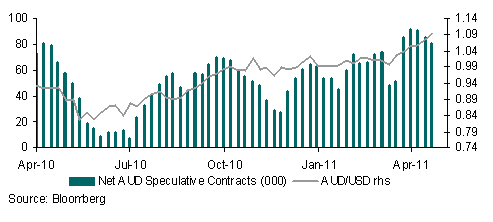
I look for further rate hikes over coming months even with the AUD at such a high level. AUD has lost a bit of ground after hitting a high just above 1.10 against the USD and on the margin the statement is slightly negative for AUD. A slightly firmer USD overall and stretched speculative positioning, with IMM AUD positions close to their all time high, points to some downside risks in the short-term.

In contrast India’s central bank the RBI hiked interest rates by more than many expected. Both the repo and reverse repo rates were raised by 50bps, with the central bank governor highlighting renewed inflation risks in his statement. The decision reveals a shift in RBI rhetoric to an even more hawkish bias in the wake of rising inflation pressures, which should be beneficial to the rupee.

Another Day, Another Drop In The US Dollar.

The USD index is now close to breaching its November 2009 low around 74.17, with little sign of any turnaround in prospect. A surprise jump in weekly jobless claims to 412k (380k expected) did little to help the USD’s cause whilst higher commodity prices, and in particular energy prices played negatively.

Indeed, many USD crosses have experienced an increase in sensitivity to oil price movements over recent weeks, with the USD on the losing side when oil prices move higher. Commodity currencies including CAD and NOK are the key beneficiaries but EUR/USD is also highly correlated with the price of oil.

Various Fed comments overnight including supportive comments on the USD’s role as a reserve currency have done little to boost USD sentiment despite the generally hawkish slant to comments. A host of US data releases will keep markets busy.

The data are unlikely to deliver any strong surprises but given the growing FX attention on Fed policy, CPI data may take on more importance than usual. Our expectation of a trend like 0.2% increase in core CPI, which is unlikely to cause any consternation within the Fed, suggests that the USD will garner little support.

The ability of the EUR to withstand a torrent of bad news regarding the eurozone periphery is impressive. In particular, peripheral bond yields continue to rise especially Greek yields as expectations of debt restructuring grow. Comments from Germany’s finance minister have added to such expectations. News that the Bank of Spain approved the recapitalisation of 13 bank and that Spanish banks borrowed only EUR 44 billion last month, the lowest since Jan 2008, may have provided some relief.

However, given that markets are already relative hawkish about eurozone interest rates and given growing peripheral worries as well as overly long EUR market positioning, the upside for EUR/USD is looking increasingly restrained, with a break above technical support around 1.4580 likely to be difficult to achieve over the short-term.

AUD and NZD have registered stellar performances over recent weeks as yield attraction has come back to the fore and risk appetite has strengthened. The gains since their post Japan earthquake lows have been in the region of 7.3% and 10.5%, respectively for AUD and NZD.

The additional element of support, especially for AUD has come from central bank diversification, an increasingly important factor for both currencies. The gains in both currencies have been impressive and neither is showing signs of reversing but there are clear risks on the horizon.

One indication of such risks is the fact that market positioning is stretched especially in terms of AUD positioning, with CFTC IMM contracts registering an all time high. The move in AUD especially has been well in excess of what interest rate / yield differentials imply. Whilst I would not suggest entering into short AUD and NZD positions yet, the risks to the downside are clearly intensifying.