High Hopes

EUR/USD has rallied over recent days from a low around 1.3146 last week. Market hopes of a eurozone solution may fall flat but the pressure on officials has ratcheted higher, and the risks of failure are now too significant to jeopardize with half measures. Weekend promises of banking sector recapitalisation by Germany and France have helped but will not be enough should such promises prove empty. Markets will likely give the benefit of the doubt to eurozone officials ahead of the delayed October 23 EU Summit and the November 3 G20 meeting.

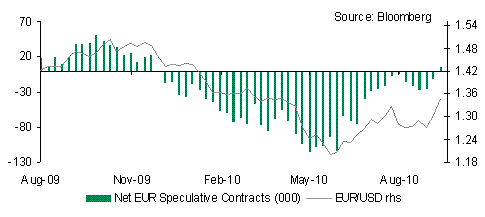
Consequently EUR will find some support over coming days and could extend gains as risk appetite improves; having broken above 1.3600 the next big resistance level for EUR/USD is 1.3800. The fact that EUR speculative positioning is very negative (biggest short position since June 2010 according to IMM data) highlights the potential for short covering.

Possible good news in Greece, with an announcement by the Troika (ECB, EU and IMF) on talks over the next tranche of the bailout will likely provide more EUR support. One stumbling block for the EUR could come from the Slovakian vote on EFSF bailout fund enhancement, which is by no means guaranteed to pass.

The JPY remains firm benefitting from higher risk aversion, registering one of the highest correlations with risk over recent months. However, the reason why the JPY is not even stronger is that bond yield differentials (especially 2-year) with the US have widened out in favour of the USD over recent days. If the recent improvement in risk appetite continues, combined with widening yield differentials it could push USD/JPY to finally move higher and sustain a break above 77.00.

GBP/USD has made an impressive bounce over recent days from a low around 1.5272 last week despite the Bank of England’s announcement of more quantitative easing last week and credit ratings downgrades of several UK banks. This resilience is impressive but it appears that GBP is caching onto the coat tails of a firmer EUR rather than benefitting from a domestically led improvement in sentiment. Nonetheless, there is scope for further gains in GBP given that speculative positioning in the currency moved close to its all time low early last week in anticipation of BoE QE.
US Dollar On The Rise

There are plenty of US releases on tap this week but perhaps the most important for the USD will be the minutes of the April 26-27 Fed FOMC meeting. Taken together with speeches by Fed officials including Bernanke, FX markets will attempt to gauge clues to Fed policy post the end of QE2. The Fed’s stance at this point will be the major determinant of whether the USD can sustain its rally over the medium term. The lack of back up in US bond yields suggests that USD momentum could slow, with markets likely to move into wide ranges over coming weeks.

It is worth considering which currencies will suffer more in the event that the USD extends its gains. The correlation between the USD index and EUR/USD is extremely strong (even accounting for the fact that the EUR is a large part of the USD index) suggesting that the USDs gains are largely a result of the EUR’s woes. Aside from the EUR, GBP, AUD and CAD are the most sensitive major currencies to USD strength whilst many emerging market currencies including ZAR, TRY, SGD, KRW, THB, IDR, BRL and MXN, are all highly susceptible to the impact of a stronger USD.

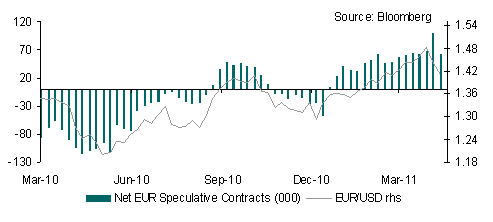
Robust Q1 GDP growth readings in both Germany and France helped to spur gains in the EUR but this proved short-lived. Sentiment for the currency has soured and as reflected in the CFTC IMM data long positions are being scaled back. Nonetheless, there is still plenty of scope for more EUR selling given ongoing worries about the eurozone periphery, which are finally taking their toll on the EUR. A break below EUR/USD 1.4021 would open the door for a test of 1.3980.

The eurogroup and ecofin meetings will be of interest to markets this week but any additional support for Greece is unlikely to be announced at this time. However, likely approval of Portugal’s bailout may alleviate some pressure on the EUR but any positive impetus will be limited. Even on the data front, markets will not be impressed with the German ZEW index of investor confidence likely to register a further decline in May.

Japanese officials have been shying away from further FX intervention by blaming the drop in USD/JPY over recent weeks on general USD weakness despite the move towards 80. However, this view is not really backed up by correlation analysis which shows that there is only a very low sensitivity of USD/JPY to general USD moves over recent months. One explanation for the strength of the JPY is strong flows of portfolio capital into Japan, with both bond and equity markets registering net inflows over the past four straight weeks.

This is not the only explanation, however. One of the main JPY drivers has been a narrowing in yield differentials. This is unlikely to persist with yield differentials set to widen sharply over coming months resulting in a sharply higher USD/JPY. As usual data releases are unlikely to have a big impact on the JPY this week but if anything, a further decline in consumer confidence, and a negative reading for Q1 GDP, will maintain the pressure for a weaker JPY and more aggressive Bank of Japan (BoJ) action although the BoJ is unlikely to shift policy this week.

US Dollar On A Slippery Path

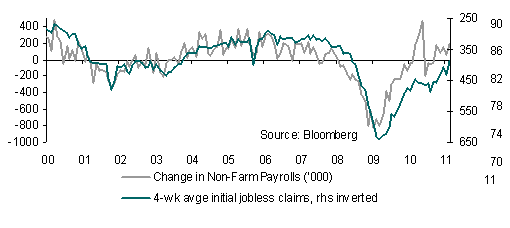
The USD has been a on a slippery path over recent weeks, weighed down by adverse interest rate differentials despite improving US economic data. Adding to the run of encouraging US data releases the February jobs report revealed a 192k increase in jobs and a drop in the unemployment rate to 8.9%.

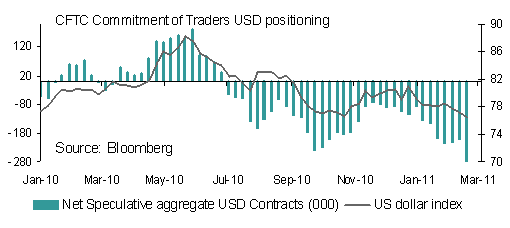
In particular the Fed’s dovish tone highlights that whilst asset purchases under QE2 will stop at the end of June, the failure to hit the Fed’s dual mandate of maximum employment and stable prices, implies that the Fed Funds rate will not be hiked for a long while yet. This dovish slant has undermined the USD to the extent that USD speculative positioning as reflected in the CFTC IMM data dropped to all time low in the week to 1 March. There is certainly plenty of scope for short-covering but the market is no mood to buy the USD yet.

This week’s releases will provide less direction, with a slight widening in the trade deficit likely in January, a healthy gain in February retail sales and a small drop in the preliminary reading of March Michigan sentiment.

In contrast, even the generally hawkish market expectations for the European Central Bank (ECB) proved too timid at last week’s Council meeting as Trichet & Co. strongly implied via “strong vigilance” that the refi rate would be hiked by 25bps in April. EUR/USD lurched higher after the ECB bombshell breaking the psychologically important 1.4000 barrier but appeared to lose some momentum at this level. Should EUR/USD sustain a break of 1.4000, the next level of resistance is at 1.4281 (November high), with support seen around 1.3747.

The lack of major eurozone data releases this week, with only industrial production data in Germany and France of interest, suggests that EUR may consolidate over the short-term with the main interest on the informal Heads of State meeting at the end of the week to determine whether credible plans can be drawn up to restore confidence in the periphery.

This week it is the turn of the Bank of England (BoE) to decide on monetary policy but unlike the ECB we do not expect any surprises with an unchanged decision likely. Further clues will only be available in the Monetary Policy Committee (MPC) minutes on 23 March. However, markets may be nervous given that it could feasibly only take another two voters aside from the three hawkish dissenters last month, to result in a policy rate hike. Notably one possible hawkish dissenter, Charles Bean did not sound overly keen on higher rates in a speech last week, a factor that weighed on GBP alongside some weaker service sector Purchasing Managers Index (PMI) data.

UK manufacturing data will be the main data highlight of the calendar but this will be overshadowed by the BoE meeting. GBP/USD could continue to lag the EUR and given a generally bullish EUR backdrop, our preferred method of playing GBP downside remains via a long EUR/GBP position.

USD Pressured As Yields Dip

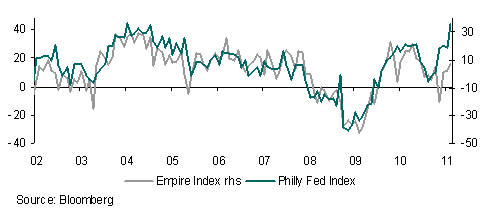
The USD came under pressure despite a higher than forecast reading for January US CPI and a strong jump in the February Philly Fed manufacturing survey. On the flip side, an increase in weekly jobless claims dented sentiment. The overnight rally in US Treasury yields was a factor likely weighing on the USD. The US calendar is light today leaving markets to focus on the G20 meeting and to ponder next week’s releases including durable goods orders, existing and new home sales.

The jump in the European Central Bank (ECB) marginal facility borrowing to EUR 15 billion, its highest since June 2009, provoked some jitters about potential problems in one or more eurozone banks. At a time when there are already plenty of nerves surrounding the fate of WestLB and news that Moody’s is reviewing another German bank for possible downgrade, this adds to an already nervous environment for the EUR.

Nonetheless, EUR/USD appears to be fighting off such concerns, with strong buying interest on dips around 1.3550. The G20 meeting under France’s presidency is unlikely to have any direct impact on the EUR or other currencies for that matter, with a G20 source stating that the usual statement about “excess volatility and disorderly movements in FX” will be omitted.

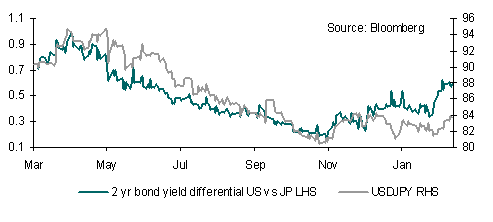
Although USD/JPY has been a highly sensitive currency pair to differentials between 2-year US and Japanese bonds (JGBs), this sensitivity has all but collapsed over recent weeks. USD/JPY failed to break the 84.00 level, coming close this week. There appears to be little scope to break the current range ahead of next week’s trade data and CPI.

Given the recent loss in momentum of Japan’s exports the data will be instructive on how damaging the strength of the JPY on the economy. In the near term, escalating tensions in the Middle East will likely keep the JPY supported, with support around USD/JPY 83.09 on the cards.

It seems that the jump in UK CPI this week (to 4.0%) provoked even more hawkish comments than usual from the Bank of England BoE’s Sentance, with the MPC member stating that the Quarterly Inflation Report understates the upside risks to inflation indicating that interest rates need to rise more quickly and by more than expected. Specifically on GBP he warned that the Bank should not be relaxed about its value.

Although these comments should not be particularly surprising from a known hawk, they may just help to underpin GBP ahead of the January retail sales report. Expectations for a rebound in sales following a weather related drop in the previous month will likely help prop up GBP, with GBP/USD resistance seen around 1.6279.

FX Tension

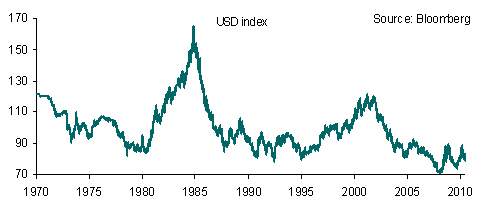
On September 22 1985 the governments of France, West Germany, Japan, US and UK signed the Plaza Accord which agreed to sharply weaken the USD. At this time it was widely agreed that the USD was overly strong and needed to fall sharply and consequently these countries engineered a significant depreciation of the USD.

It is ironic that 25 years later governments are once again intervening in various ways and that the USD is once again facing a precipitous decline as the Fed moves towards implementing further quantitative easing. This time central banks are acting unilaterally, however, and there is little agreement between countries. For instance Japan’s authorities found no help from the Fed or any other central bank in its recent actions to buy USD/JPY.

So far Japan’s FX interventions have been discreet after the initial USD/JPY buying on 15 September. The fact that Japan is less inclined to advertise its FX intervention comes as little surprise given the intensifying pressure from the US Congress on China for not allowing its currency, the CNY to strengthen. Tensions have deepened over recent weeks and the backing of a bill last week by an important Congressional committee to allow US companies to seek tariffs on Chinese imports suggests that the situation has taken a turn for the worse.

The softly softly approach to Japan’s FX intervention and US/China friction reflects the fact that unlike in 1985 we may be entering a period in which currency and in turn trade tensions are on the verge of intensifying sharply against the background of subdued global economic recovery.

The Fed’s revelation that it is moving closer to implementing further quantitative easing has shifted the debate to when QE2 occurs rather than if, with a November move moving into focus. Clearly the USD took the news negatively and will likely remain under pressure for a prolonged period as the simple fact of more USD supply weighs heavily on the currency. Markets will be able to garner more clues to the timing of QE2, with a plethora of Fed speakers on tap over coming days.

This week the US economic news will be downbeat, with September consumer and manufacturing confidence surveys likely to register declines, with consumer sentiment weighed down by the weakness in job market conditions. Personal income and spending will also be of interest and gains are expected for both. There will be plenty of attention on the core PCE deflator given that further declines could give clues to the timing of QE2.

Attention in Europe will centre on Wednesday’s recommendations for legislation on “economic governance” from the European Commission. Proposed penalties for fiscal indiscipline may include withholding of funding and/or voting restrictions but such measures would be politically contentious. Measures to enforce fiscal discipline ought to be positive for markets given the renewed tensions in peripheral bond markets in the eurozone.

The EUR was a major outperformer last week benefiting from intensifying US QE speculation and will set its sights on technical resistance (20 April high) around 1.3523 in the short-term. Notably EUR speculative positioning has turned positive for the first time this year according to the CFTC IMM data, reflecting the sharp shift in speculative appetite for the currency over recent weeks. The EUR has been surprisingly resilient to renewed sovereign debt concerns and similarly softer data will not inflict much damage to the currency this week.